
Nigeria News
No genocide, persecution of Christians in Nigeria – Bishop Kukah

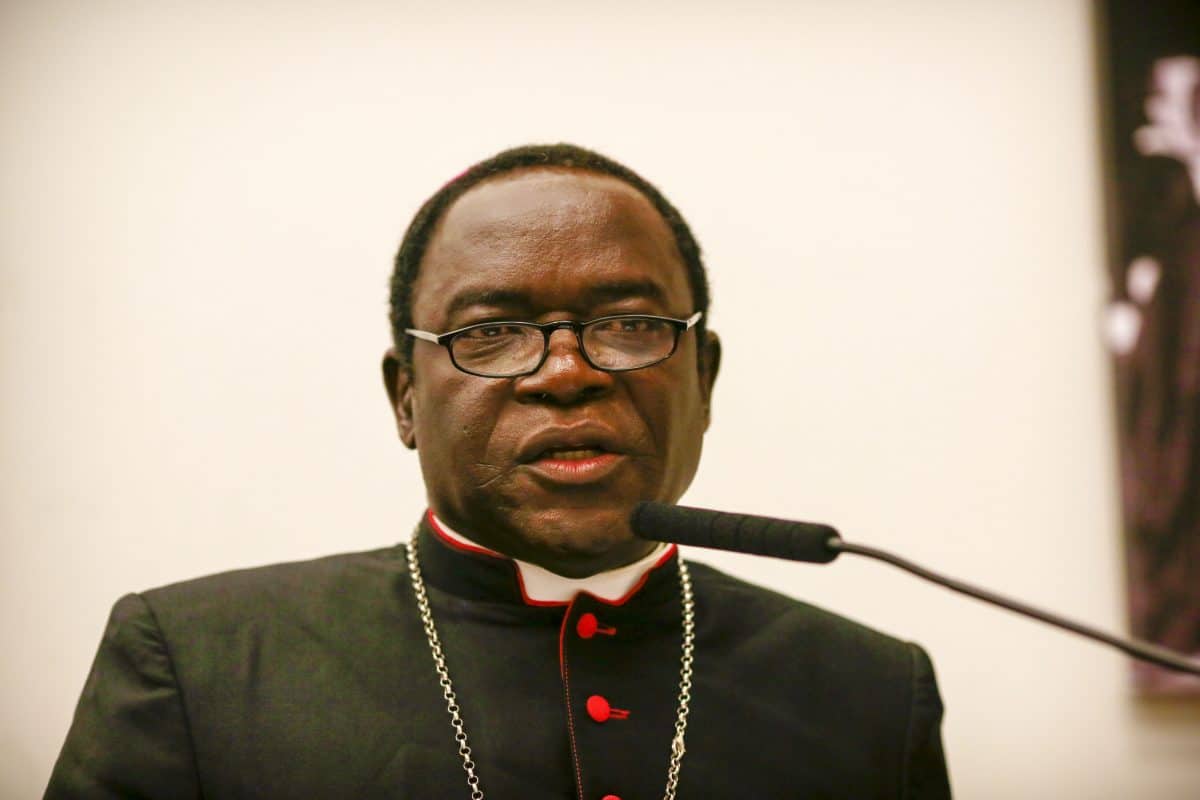
The Catholic Bishop of the Sokoto Diocese and Convener of the National Peace Committee (NPC), Most Rev. Matthew Kukah, has reaffirmed that Christians in Nigeria are not under persecution, insisting that what qualifies as genocide is not the number of victims but the intention behind the acts.
Kukah has faced backlash in recent days after reports quoted him as advising the international community against categorizing Nigeria as a “country of particular concern.”
According to him, such a designation could escalate tensions, deepen mistrust, and create openings for criminal groups to manipulate the situation ultimately weakening interfaith engagement and cooperation with authorities.
Delivering a presentation at the 46th Supreme Convention of the Knights of St. Mulumba (KSM) in Kaduna, Kukah said that regarding claims of mass Christian killings in the country, his position aligns completely with that of the Vatican Secretary of State, the President of the Catholic Bishops’ Conference of Nigeria, and the nation’s Catholic bishops.
He questioned the accuracy of figures being circulated: “They are saying that 1,200 churches are burnt in Nigeria every year, and I ask myself in which Nigeria? Interestingly, nobody approached the Catholic Church to get accurate data. We do not know where these figures came from.
All those talking about persecution has anyone ever called to ask, ‘Bishop Kukah, what is the situation?’ The data being circulated cleverly avoids the Catholic Church because they know Catholics do not indulge in hearsay.”
Speaking on the misuse of the term genocide, he added: “Genocide is not based on the number of people killed. You can kill 10 million people and it still won’t amount to genocide.
The critical determinant is intent whether the aim is to eliminate a group of people. So, you don’t determine genocide by numbers; you determine it by intention. We need to be more clinical in the issues we discuss.”
Kukah also pushed back against broad claims of Christian persecution: “If you are a Christian in Nigeria and you say you are persecuted, my question is: how? At least 80% of educated Nigerians are Christians, and up to 85% of the Nigerian economy is controlled by Christians. With such figures, how can anyone say Christians are being persecuted?”
According to him, what many describe as persecution is often the result of fragmentation within the Christian community: “The main problem is that Christians succumb to bullies. The day we decide to stand together believing that an injury to one is an injury to all these things will stop.”
He further warned against loosely labeling victims as martyrs: “Because someone is killed in a church, does that automatically make them a martyr? Whether you are killed while stealing someone’s yam or attacked by bandits, does that qualify as martyrdom? I am worried because we must think more deeply.”
Addressing controversies over his previous comments, he clarified: “People say there is genocide in Nigeria. What I presented at the Vatican was a 1,270-page study on genocide in Nigeria and elsewhere. My argument is that it is not accurate to claim there is genocide or martyrdom in Nigeria.”
Kukah urged members of the Knights of St. Mulumba to uphold the faith through their conduct, noting: “We are no longer talking about wielding swords, but about living as true witnesses.”










Idoma Hall of Fame to honour military icons from Idoma land

Fidelity Bank, Foremost Radiology Champion Early Breast Cancer Detection

Idoma Hall of Fame to honour 14 distinguished Idoma women

Idoma Hall Of Fame will preserve history, inspire future leaders – AVM Morgan

‘I used to translate english for him’ — Ronaldo on his relationship with Messi

Gombe governorship: Pantami gives INEC 48-hour deadline to publish his name

David Onoja awards scholarships to eight Ogbadibo students, gets NOAS endorsement for Enone Reps seat

Akume is APC leader in North Central – Gov Alia declares

BREAKING: Benue 2027: Owukpa-born Ada Chenge moves to unseat Alia, emerges as PRP guber candidate

Benue 2027: Full list of 12 governorship candidates released by INEC

BREAKING: INEC releases final list of Benue governorship candidates, retains Alia, Ode
