
Top Headline
2027: Andrew Aba unveils bold industrialisation plan for Benue economy if elected governor [FULL INTERVIEW]

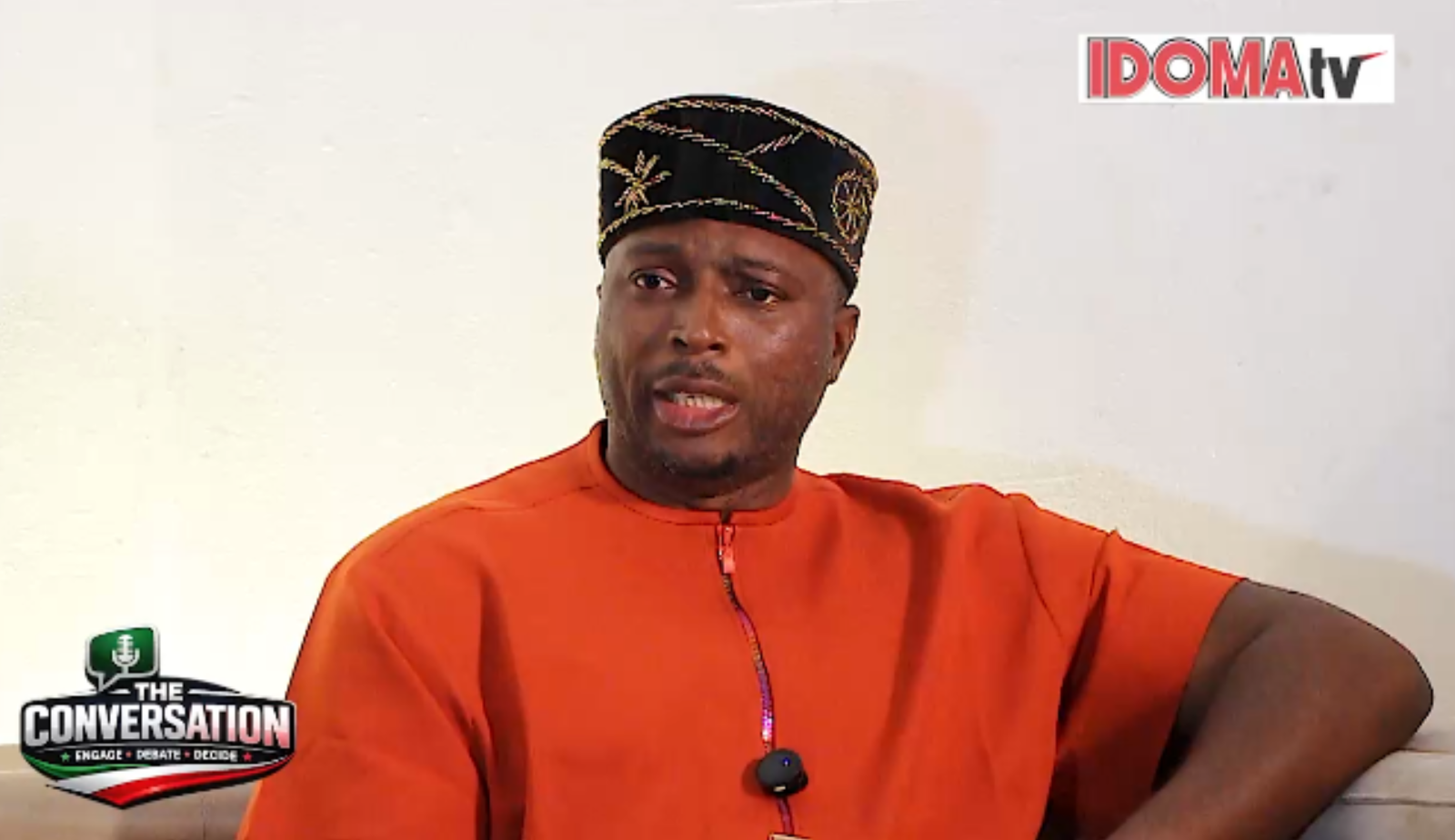
Governorship aspirant of the African Democratic Congress in Benue State, Engineer Andrew Aba, has pledged sweeping security reforms, including the acquisition of fairly used helicopters and deployment of advanced surveillance technology, as part of plans to decisively tackle insecurity if elected in 2027.
Speaking during an appearance on The Conversation, a political interview programme on Idoma Television, the governorship hopeful said if given the ADC ticket, he will break the jix of becoming the first Benue Governor of Idoma extraction.
He also outlined his ambitious strategies spanning security, agriculture, infrastructure, and economic revival aimed at restoring stability and prosperity to the state.
Exeprts:
Many people in Benue know you as a professional engineer. Why did you decide to join politics and contest the governorship position in Benue State?
Okay, I think… thank you very much, Idoma Television. Thank you, viewers at home. As an engineer, engineering is about using materials — raw materials — and processing them into finished products for the good of people. Engineering is part of solution provision. And as an engineer, there’s a limit to which I can provide solutions to society because my sphere of influence is limited.
But with the current trend in the political space, where we have people who are literally taking resources meant for the generality of the people for their own personal aggrandizement and not doing much for those they are meant to lead and govern, I saw it as a personal challenge to come out and avail myself to society to be able to provide solutions to the people.
Politics gives a wider range of influence in solving people’s problems than just the mere practice of engineering. So for me, that’s a major drive into politics, so that my leadership can have greater access to serving the people and solving their problems.
So, the people of Benue, why should they trust that your background in engineering and administration can actually translate into effective political leadership?
Well, as I earlier mentioned, an engineer is quite an efficient and effective person in society. If you check most places where you find engineers, especially those who know their onions, they are people who make things work. So the people of Benue State should be very comfortable handing over the reins to me because if I’ve done it in my private life, then for the generality of the people of Benue, it is going to be replicated.
We are here to make sure that the people come out of the chains they are facing, the chains of poverty, insecurity, and the quagmire of abysmal leadership. So the people should trust me and trust the process because, generally in the world, people who read widely and seek knowledge know that engineers in government usually perform very well, far above the average.
Now, as you know, your tribe, the Idoma in Benue State, historically has never produced a governor of Benue. How do you plan to overcome this long-standing challenge and give the people of your community a chance at the number one seat of the state?
Well, the Benue South Senatorial District, especially the Idoma Nation where I come from, yes, we haven’t produced a governor since the creation of the state about 50 years ago. And I believe this time around we’re going to break that chain.
I’m not coming out to be governor for the Idoma people alone. I’m coming out to be governor for the entire people of Benue State. That being said, I’m already doing a lot of consultations with people in the other two senatorial districts, Zone A and Zone B. I’m collaborating with them and appealing to them to see the reason why I want to serve them.
I want to let the people of Benue State know that after four years, we will have no need to lament over insecurity in the state because that has been identified as the major problem we are battling. I don’t deny evil, neither do I caress it. I call evil by its name, and I’m ready to eliminate the evil bedeviling our people.
After that, I believe we are going to have a state that will be self-reliant, such that whatever we receive from FAAC will only be an add-on — like a bonus for the state. After four years, I will show the people of Benue State that whatever we are getting as our annual allocation from the federal government, we can achieve even more than that by raising our own revenue.
To do that, we’re going to boost our industries. The agricultural sector will be a major focus. We’re going to bring back that “food basket” identity. We will have enough production to feed the people of Benue and also supply other states in the country, while working toward export-driven production.
We are also going to set up Industries that are agro-based, so that produce from the farms can be used for manufacturing. Agricultural production is not going to be limited to crop production alone; even animal production will be a major focus. We’re going to embark on massive animal production as well because, actually, we are not having enough protein.
I know the anti-grazing law that was established by the previous administration has been relaxed, and I’m going to enforce it so that people can naturally ranch their cattle and produce more meat. We will also attract investors who want to produce meat, either through cattle or other kinds of farm animals that are not alien to Nigeria but can thrive in the savanna region. We’ll import them where necessary and engage in massive animal production.
We’re also going to see a lot of industrial and infrastructural transformation. The river will become a major transport hub within the state. We’ll explore how people can move directly from Makurdi to other local governments, even all the way to Katsina-Ala and Agatu. We will desilt the river and see how we can dredge it.
After four years, every local government is going to have electricity. Right now, only about 14 local governments in Benue State have power supply through the electricity distribution network. It’s very appalling. Many people have not seen electricity for about six months in several areas, and in some local governments it is restricted to maybe one or two districts. Even in Makurdi, where we live, how much electricity do we actually have? In my community, we don’t have more than six or seven hours of power daily. It’s getting really bad.
So we’re not going to depend solely on connection to the national grid anymore. We will establish independent electricity generation through solar energy, and we’ll also explore the river — including the possibility of damming it, but using fast-paced, modern technology rather than outdated systems.
On electricity and water supply, I promise the people of Benue State that all 23 local governments will have potable water. Access to clean water will not be restricted to urban centres alone. Within the next six months, we will regulate water supply across Makurdi. We will ensure that where water can be pumped from central sources to other local governments, we will do so. And where alternative water sources are required, we will establish water schemes in those local governments. And where we cannot even have any natural water source, we will construct large-scale reservoirs, very large ones that can collect water during the rainy season, supported by boreholes during the dry season, so that pipe-borne water is supplied to people all year round.
We are going to have manufacturing, as I said. Before the end of my first tenure, we are going to start making our cars in Benue State. We will manufacture motorcycles, tricycles, and even phones. We are going to produce tractors for farming, and we will also manufacture boats and speedboats to transport people from Makurdi to other parts of the state because we are going to diversify transportation. Transportation should not depend on roads alone.
And as a joker, I’m also going to introduce light-speed rail in Benue State. We will implement this across parts of the state. We want to crash the cost of transportation and reduce the high cost of living. I saw statistics yesterday showing that Benue State ranks among the highest in cost of living in the country. So I’m going to introduce a lot of initiatives to ensure that the life of the average Benue person becomes easier than it has been in the past.
I know you touched a little on agriculture while answering the last question, but my interest here is this: what will you do differently to turn agriculture into real wealth for the people, especially farmers who are practically poor despite producing these agricultural products?
Okay, one of the main issues affecting agriculture now, as I mentioned earlier, is security. So we must quickly tackle insecurity and return people to their ancestral lands so they can farm. Government also has to intervene. Growing up in Benue State, we had government agencies actively involved in agricultural processes, but right now it has been completely left to individuals, especially peasant farmers.
Firstly, we are going to fully utilize the vast landmass of Benue State. Benue has a total land size of about 37,000 square kilometres, and the portion currently occupied or actively used by people is about 3,000 square kilometres, less than 10 percent of the state. The remaining land is vast.
We will work with landowners across the various local governments to lease land to individuals and investors who want to engage in large-scale agricultural production. The state government itself will also farm. We are going to acquire large portions of land in Makurdi and other local governments for government-driven agricultural production.
The Ministry of Agriculture will be fully restructured for seriousness and efficiency. We are going to engage in mechanized farming, and we will also improve access to farm inputs.
We will make sure that fertilizers and other farm inputs are available. Even seedlings will be subsidized so farmers can purchase them at affordable rates and practice effective farming. Most importantly, the state will engage in mechanized agriculture. Anyone who wants to farm will be able to hire mechanized equipment directly through the state.
When you secure land, your family can also farm on it, but we are going to actively encourage farming across all sectors. Civil servants will be encouraged to farm, people in the private sector will have access to farmland, and even those in the informal sector. Even if you are a non-indigene and you want to farm in Benue State, we will lease land to you.
Out of the 37,000 square kilometres of land in Benue State, about 34,000 square kilometres remain largely arable and unused. Even if we utilize just 10 percent of that — about 3,400 square kilometres — that translates to roughly 340,000 hectares of farmland. If we lease out those 340,000 hectares, it will generate massive revenue for the state while making enough land available for farming.
I can assure you that when we begin leasing land, people will be surprised at where investors will come from. Many people around the world have been looking for such opportunities. They will come, invest, take up land, and farm. We are going to witness a massive agricultural revolution in Benue State.
If you’re talking about tackling insecurity so people can return to their ancestral lands to farm, that has been a major challenge in the state, especially attacks on farming communities. As governor, what practical steps will you take within your first 100 days in office to secure lives and farmlands?
Okay, thank you for that. For me, the body language of the current government has undermined everything concerning the security architecture of the state. The current government is not ready to tackle insecurity. I can say that from the federal level to the state level.
We are going to be swift, decisive, and firm in our response. I don’t like to bind myself strictly to timelines because I don’t want to be constrained by them, but I want to assure people that very quickly — once I assume office — within one or two weeks, we will give those illegally occupying our lands a short window to vacate peacefully.
If they refuse, we will enforce the law decisively because people are tired of marauders coming to kill innocent citizens while nothing is being done. I don’t know when the life of the average Nigerian became so cheap. In other countries, the death of even a pet makes national news, but in Benue State you hear of 100 or 200 people dying and officials attempt to downplay the numbers.
We are going to take security very seriously. From day one, our body language will be clear. We will work closely with statutory security institutions — the army, the police, and civil defence agencies. We will empower them with the equipment and logistics they need to carry out their responsibilities effectively.
We will also reorganize local security personnel, including community protection agents deployed across local governments. Some of them remain stationed in one place for too long, which can lead to compromise. We will rotate deployments regularly to prevent that, while properly equipping them.
Most importantly, we will deploy technology. I don’t understand why, in this age and time, technology is not being fully used to fight crime. Within the first month, we will procure a minimum of 100 drones — including surveillance drones and precision-target drones — to strengthen monitoring and rapid response across the state.
Surveillance drones will help us identify where these people are operating across different parts of Benue State so we can deploy ground troops to pursue and confront them where necessary. Where precision-target drones are required, after adequate warning, we will deploy them.
We are also going to acquire helicopters. Right now, a fairly used 2023 helicopter costs about ₦1.2 billion, but there are other reliable models available for about ₦600 million — good five- or six-passenger helicopters. We can procure at least two. There is a security vote of over ₦3 billion, so why shouldn’t insecurity be decisively tackled? These aircraft will provide proper aerial surveillance so we can locate and neutralize threats.
We will also train our local security formations and collaborate closely with the police and the Air Force on coordinated operations. There will be massive collaboration, but it will be decisive. I know there will be resistance because insecurity has become very political — I dare to say that. But we are ready because we are determined to move the lives of our people forward. Whatever resistance comes, we will overcome it, and we will act swiftly and firmly.
Now, one of the most alarming challenges in Benue State is youth unemployment. What concrete plans do you have to create jobs for young people outside the civil service?
Yes. Benue State is blessed with many natural resources, and we are going to quickly identify and develop them. Where necessary, the government will establish industries directly. Where projects are too capital-intensive, we will collaborate with investors. Many investors want to invest in Benue — I have spoken with some of them, even discussions dating back nearly 20 years. They have the funds but often face resistance from government processes.
Sometimes, investors are asked to pay unofficial charges that exceed the actual cost of building the industries themselves. We are coming with an incorruptible approach. We will make sure industries are established without unnecessary bottlenecks.
Foreign companies willing to invest in Benue — whether in livestock production in areas like Jengbe and Ikem, coal deposits in Owukpa, zinc resources in other parts of the state, or even river sand resources — will be welcomed. Through this, we will build competitive industries capable of employing large numbers of young people.
You will be surprised that a single industry can directly employ between 500 and 1,000 people, with even more indirect employment opportunities created around it.
At the same time, we will review the state civil service structure — examining the number of active workers, salary obligations, and overhead costs. After a proper assessment, we will determine how many young people can be absorbed into the civil service. Within the first year, I believe we should be able to recruit at least 10,000 new workers.
Above all, I want to promote entrepreneurship. I worked as a banker for many years before moving fully into private business, so I strongly believe people should be encouraged to build businesses instead of depending solely on monthly salaries. That way, they can become employers of labour themselves and help reduce unemployment.
We are going to provide grants — substantial grants. Across the 22 local governments outside Makurdi, we will award ₦10 million grants to four beneficiaries every month in each local government. This programme will run continuously throughout my administration.
And for Makurdi Local Government, we will give 20 people ₦10 million each as grants per month. With this, we are going to closely monitor the beneficiaries so that, as we give them the money, they don’t squander it and end up worse than when they started. The aim is for them to become successful entrepreneurs. These are grants meant for new business startups.
For existing businesses, we are going to give ₦50 million to 20 people per month. We have done some calculations around this, and you will be surprised that with less than ₦25 billion, we would have empowered more than 1,600 people, turning them into millionaires and multi-millionaires who will circulate these funds within Benue State’s economy.
Another thing is that some people are contractors by profession; they prefer contract opportunities. Every project we undertake will be tied to the people of Benue State. Whether it is road construction, housing, hospitals, or schools, Benue people will have the opportunity to participate as subcontractors so that the value created from these projects can empower them as well.
Through multiple channels, we will elevate the lives of many people and ensure they become self-reliant instead of chasing politicians around for handouts or struggling just to survive.
Okay, now, in Benue State, the Idoma have never governed the state before. Do you think the state is ready for an Idoma governor?
Oh yes, I think so. The state has always been ready for an Idoma governor. Idoma people are not minorities in terms of competence. If you look at what Idoma people achieve in different sectors and organizations across the country, they stand out. We have always been ready, and by the grace of God, I believe I will be the next governor.
Okay, that’s beautiful. The current administration of Governor Alia — Rev. Fr. Hyacinth Alia — would you say he has failed totally? How would you rate his administration?
We cannot say any administrator has failed totally. Even when people feel an administration has not performed well enough, there are always areas where efforts were made. Since the return of democracy — from Akume to Suswam to Ortom and now the Reverend Gentleman — each administration has had its strengths. Every one of them did something commendable.
So even if expectations are not fully met, it does not mean they have completely failed. The ongoing road construction in Makurdi, the state capital, is commendable, and some other projects in parts of the state are also notable. However, the challenge is that development appears concentrated in limited areas while many other parts of the state continue to struggle.
In his own way, he is trying, but much more still needs to be done. Road construction alone is only a part of infrastructure — perhaps about 20 percent of it. We still lack adequate hospitals. I intend to build hospitals in each of the 276 wards before the end of my first tenure. Even if each hospital costs about ₦100 million, that amounts to roughly ₦55 billion.
There are very few functional primary healthcare centres in Benue State, and many existing ones are in poor condition. People travel long distances to the Benue State University Teaching Hospital for treatment, and some die on the road from illnesses that could have been treated locally.
Education is another concern. Academic performance in Benue State is declining. While this administration has carried out some renovations, many schools remain dilapidated. Beyond infrastructure, academic outcomes are also poor.
Then there are basic infrastructure issues — water supply and electricity. These remain major challenges that must be addressed.
And I want to assure the Benue people that when I tackle all these things, I don’t want anybody to applaud me, because these are basic responsibilities of government. Some of the things we are talking about are already being enjoyed by our neighbours, even in Togo. Go to Lomé — there is 24-hour electricity. And you want to clap for your government just for building roads? Who told you there are bad roads in countries where leadership is serious? Go to Rwanda.
Many people have become used to suffering, so they clap when small things are done. You can applaud us when we start manufacturing, when we begin building industries, when the skyline of Makurdi starts changing with high-rise structures, when people can stand proudly and say poverty has reduced in Benue State. When people can go to their farms safely, go to work confidently, and students can smile because life has become easier for them to attend school — then you can applaud.
But providing basic infrastructure is the duty of government. Paying salaries is the responsibility of government. So I don’t see why anyone should celebrate what is simply a basic obligation.
You are contesting on the platform of the ADC. How confident are you about the internal politics of your party?
Well, so far, based on my consultations, I believe I have done quite well compared to other governorship aspirants. Although I have covered a lot of ground, there is still more to be done. From the level of acceptance I am receiving from Zone C, where I come from — which is actually the stronghold of the ADC in Benue State — and also from Zones A and B, I am very confident that, by the grace of God, I will secure the party’s ticket as the flag bearer.
Okay, so with that confidence, if you secure the ticket, what is your plan? How do you intend to unseat a sitting governor?
Well, it still comes down to people aligning with my vision for the state and understanding why I should be governor. As I said earlier, I am confident that the people of Benue South will stand behind me, and I also believe other parts of the state will align with this vision.
Yes, the APC has caused concerns among many Nigerians, with fears that Nigeria could become a one-party state. But I want to assure Nigerians not to be carried away by what they are seeing. Power ultimately comes from God, and no human being has a permanent monopoly over it. The more people try to display absolute power, the more God shows that authority ultimately belongs to Him.
So people should not worry. I am fully confident that once I secure my party’s ticket, history will record that the incumbent governor of Benue State was defeated.
That’s very bold confidence, if you ask me, and we look forward to seeing how that unfolds. Now, Benue politics is often divided along ethnic and zonal lines. How will you run an inclusive government that carries every section of the state along?
Yes, there have been divisions in Benue State. Initially, people from Benue South — the Idoma, Igede, and Etulo — complained about exclusion from the affairs of the state. Unfortunately, even some of our Tiv brothers are now expressing similar concerns.
I want to assure everyone that as governor, development will be evenly spread. Any project executed in Makurdi will be replicated across the state. For example, if we provide water in Makurdi, the other 22 local governments will also have access to water. If we provide electricity, it will be extended across the state.
We will embark on mass housing projects — 1,000 housing units in Makurdi within the first year — and replicate this across the remaining 22 local governments with at least 100 housing units each. With that, people will feel included. Road construction will reach all parts of the state.
Industries may not be located in every local government, but every region will host at least one major industry. That way, economic opportunities will be fairly distributed.
Government appointments will also be carefully balanced so that everyone feels a sense of belonging. Inclusion will go beyond indigenes alone. Non-indigenes will also be carried along — the Hausa community, which has warmly received me, the Yoruba community, the Igbo community whom I am consulting with, the Igala community, and many other groups living in Benue State.
They should get ready because, for me, if you have lived in Benue State for at least 10 years, you are qualified to benefit from the state. For our grants, contracts, and even some appointments, people should not be surprised if a non-indigene becomes a commissioner in my cabinet. We want people to feel they belong to the state.
We also want to set up a model of governance that will resonate across the country. I want people to learn from what is happening in Benue State — a system where people embrace one another. The world is becoming a global village where people accept different races and tribes, but here we sometimes isolate ourselves and antagonize one another. That is not how we should live.
So I want to assure the people of Benue that one of the key pillars of my administration will be inclusivity, so that everyone feels a sense of belonging and warmth in government and has something meaningful to contribute to the state.
Now, concerning the bill currently before the National Assembly calling for the creation of Apa State, which is still under consideration — since you are contesting for governor, don’t you think it would be better to support the creation of Apa State instead of running for the governorship of Benue State? Wouldn’t that be more beneficial?
Well, I would liken that question to a young man who is saving money to buy a car and then decides to stop using other means of transportation while waiting. If the creation of Apa State eventually happens — which I believe will come — it does not stop me from aspiring to become governor of Benue State now.
In fact, if I become governor and the new state is later created for the people of Zone C, it will even become an added advantage for them. But we cannot live only in future expectations and forget the present. Has the state been created now? No. What if it is not created in the next 10 years? Should we continue waiting indefinitely?
Since I was a child, I have been hearing discussions about creating a state for the Idoma people. Today, I am 42 years old and the conversation is still ongoing. Should I continue waiting? We must keep working in the present while preparing for the future so that when the future comes, it will be better and more rewarding.
Now, within your party, the ADC, you also have another aspirant from Idoma land contesting for the same position. Wouldn’t it be better to have a consensus candidate instead of multiple aspirants from the same area? And secondly, if you were approached to step down for the other aspirant, Dr. Peter Adejoh, would you consider stepping down so that Idoma people can rally behind one candidate for victory?
Well, I began my consultations in September 2025 regarding my ambition to become governor of this state. It was a personal conviction to step forward at this time. I have consulted widely and I am still consulting. I also met with Dr. Peter Adejobe sometime in December, about three months ago, to inform him of my intention.
My focus remains on the goal. Yes, Idoma people can eventually have one candidate, but the beauty of politics is that anyone who wishes to contest within a party has the right to do so. Aspirants come forward, exchange ideas, and through dialogue people can reach understanding and see reasons together.
But for now, I have no intention of doing that because, as I said, I have met with the National Chairman of the party on two occasions, and he has insisted that there will be a level playing ground for all aspirants. I am not coming into this race to win any form of personal trophy or to step down for someone else in exchange for any reward. I am coming to solve problems in Benue State.
Anyone else may have their own reasons for contesting, but this is my purpose. I see it as a calling — something I must fulfil at this time. So I am not considering stepping down, and I don’t think that will change in the future. With all the efforts I am putting in, both in my zone and across the other zones, and with the wide acceptance I am receiving as a leading governorship aspirant in the ADC, I don’t see why I should abandon what I believe I have been led to do myself.
No one persuaded me to run for governor. In fact, at the beginning, I faced discouragement and many obstacles. Now people are beginning to see the possibility in this vision. So why should I step down for anyone? That is not something I am considering at the moment.
Engineer Andrew, at this stage, I would like you to tell your people why they should vote for you instead of every other candidate contesting in the 2027 governorship election. This is your opportunity to explain why you are the best person to serve them after 2027.
Okay. My dear esteemed viewers, I want to briefly share my background. I was born into the family of Barrister parents. They may not be widely known across the entire state, but they are respected for integrity. They are people without issues with others, and that same value reflects in my siblings as well.
I started primary school at the early age of three at Third International School in 1988 and completed my First School Leaving Certificate in 1994. I served as a prefect before graduating from primary school. I gained admission into secondary school at Mount Gabriel Secondary School, where I graduated with eight distinctions — one of the best results in the North Central region of Nigeria at the time.
I proceeded to the university and obtained a Second Class Upper degree in Chemical Engineering from FUT Minna. After graduation, I began my career in banking. I started at Zenith Bank in 2007 after serving there as a corps member. I remained with Zenith Bank for 15 years before moving to the Central Bank of Nigeria in 2022. I worked there for three years before retiring last year.
I had set a personal goal to retire at the age of 40 and focus fully on my business. Although I retired at 41, I was close to achieving that target. From the age of 23 when I started working, I had already been involved in business ventures, which grew to a level that made early retirement possible.
During this period, I continued my education. I obtained postgraduate qualifications, including a diploma in management and an MBA from the University of Agriculture, Makurdi. I am also currently pursuing a PhD in Management.
Professionally, I obtained my engineering certifications, including COREN and NSE registrations, alongside numerous certifications in health and safety, finance, and project management.
If you examine my history up to this moment as a businessman, you will not find anyone accusing me of misconduct. Even throughout my years as a banker, no one can say Andrew was involved in any financial impropriety. I safeguarded the bank’s funds and my clients’ resources. I always provided transparent financial accountability for every project I handled.
As a contractor involved in construction, I have successfully executed well over 300 projects.
For now, I have no intention of stepping down because, as I have said before, I have met with the National Chairman of the party on two occasions, and he has assured all aspirants of a level playing field. I did not enter this race to pursue any personal trophy or to withdraw in favour of someone else in exchange for rewards or political concessions. I am in this contest to solve the problems facing Benue State.
Others may have different motivations for seeking office, and that is their right. But for me, this is a purpose — a calling I believe I must fulfil at this time. I am therefore not considering stepping down, and I do not see that changing in the future. Considering the effort I have invested across my senatorial zone and other parts of the state, as well as the wide acceptance I am receiving as a leading governorship aspirant under the African Democratic Congress (ADC), I see no reason to abandon what I strongly believe I have been personally led to pursue.
No one persuaded or pressured me into contesting. In fact, at the beginning, I faced discouragement and several obstacles. Now, however, people are beginning to see the possibility within this vision. So why should I step aside for anyone? That is not an option I am considering at the moment.
At this stage, Engineer Andrew, why should the people vote for you instead of other candidates contesting the 2027 governorship election? This is your opportunity to explain why you are the best person to serve them after 2027.
Thank you. My dear and esteemed viewers, let me briefly share my background.
I was born into a family of legal professionals. My parents may not be widely known across the entire state, but they are respected for their integrity and upright character. They lived peacefully with others and earned respect within their community — values that also shaped my siblings and me.
I began my education at the age of three at Third International School in 1988 and completed my First School Leaving Certificate in 1994, graduating as a prefect. I proceeded to Mount Gabriel Secondary School, where I finished with eight distinctions — one of the best academic performances recorded in the North Central region at the time.
I later gained admission to Federal University of Technology, Minna (FUT Minna), where I obtained a Second Class Upper degree in Chemical Engineering.
After graduation, I began my professional career in banking. I started at Zenith Bank in 2007 after serving there as a National Youth Service Corps member. I spent 15 years with the institution before moving to the Central Bank of Nigeria in 2022. After three years of service, I retired last year.
I had set a personal goal to retire at the age of 40 in order to focus fully on my business interests. Although I eventually retired at 41, I came very close to achieving that target. From the age of 23, when I began working, I was already involved in business ventures that gradually expanded to the point where early retirement became possible.
Alongside my professional career, I continued to advance academically. I obtained postgraduate qualifications, including a diploma in management and an MBA from the University of Agriculture, Makurdi, and I am currently pursuing a PhD in Management.
Professionally, I hold engineering certifications with both the Council for the Regulation of Engineering in Nigeria (COREN) and the Nigerian Society of Engineers (NSE), in addition to numerous certifications in health and safety, finance, and project management.
If you examine my professional history, whether as a banker or now as a businessman, you will not find anyone accusing me of misconduct or financial impropriety. Throughout my years in banking, I safeguarded institutional funds and protected my clients’ resources with integrity. Every project entrusted to me has always been backed by transparent financial accountability.
As a contractor in the construction sector, I have successfully executed well over 300 projects.
What advice do you have for other politicians out there, both aspirants and and their supporters?
So, I want to pass this message to other aspirants, especially those seeking the same position I am contesting for: they should take this seriously and reflect. In this era, accountability, transparency, and integrity are the cornerstones of leadership.
Before embarking on any political journey, they should weigh these principles carefully and honestly assess whether they can uphold them and deliver on the promises that the people truly need. If they are confident in their ability to do so, then they are ready to join the race.












Drama as Lagos judge orders arrest of alleged fake lawyer (VIDEO)

Arise TV stops interview after Wike’s aide Lere refuses Rufai questions (VIDEO)

‘El-Rufai did a lot of terrible things in Kaduna’ — Defence Minister

Farmer loses left hand after alleged herdsman attack in Adamawa

Terrorism: ‘Halt motorcycle palliatives’ — Defence Minister tells governors

FCT police rescue two abandoned babies in Kurudu, Gwagwalada

NECO questions leaked before exams, sold for N3,000 – Education Minister

Jonathan lost as sitting president, Tinubu can lose too – Kwankwaso

2027: I’m ready to die for my vote – Peter Obi

Like Father, Like Son: Meet Idoma Generals following their fathers’ footsteps in Nigerian Army

13-year-old Ice King Ochacho gifts Peller £20,000
