
Benue news
Benue: Gov Alia under fire over plan to rehabilitate 400 repentant bandits

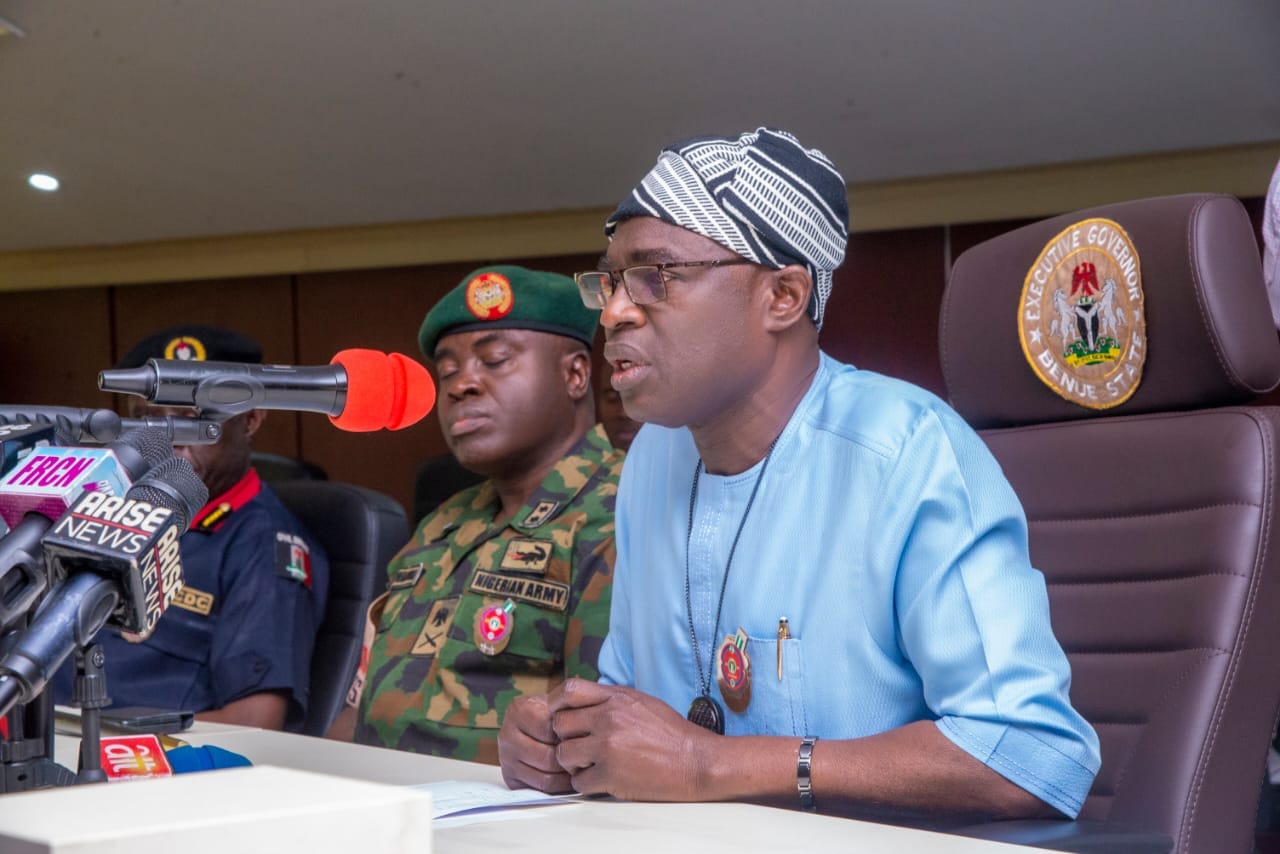
Governor Hyacinth Alia is facing mounting criticism following plans by the Benue State Government to rehabilitate about 400 repentant bandit recruits as part of a broader peace and reintegration programme aimed at tackling insecurity in the state.
The proposed initiative, which seeks federal approval, has triggered intense public debate, particularly among residents who argue that victims of violent attacks across the state remain largely unsupported.
According to officials, the rehabilitation programme is designed to break the cycle of recruitment into armed criminal networks operating in parts of the Sankera axis, including Katsina-Ala, Ukum and Logo local government areas.
Director-General of the Benue State Peace and Reconciliation Commission, Josephine Habba, clarified that the initiative targets youths allegedly forced or coerced into criminal activities rather than hardened terrorists.
“These are largely our children, young people who were drawn or forced into banditry,” she explained, adding that over 1,800 individuals were profiled during assessments, with more than 1,170 reportedly having no prior criminal records.
Habba said more than 400 youths have already expressed willingness to abandon criminal networks and would undergo psychological counselling, vocational training, and reintegration support at a Disarmament, Demobilisation and Reintegration (DDR) centre planned for Anyiin in Logo Local Government Area.
She insisted the programme does not involve Boko Haram fighters or external militants, describing contrary reports as “mischievous misrepresentations.”
Despite the clarification, reactions across social media platforms and community forums have been largely critical, with many residents questioning why government resources should be directed at rehabilitating suspected criminals while displaced families and victims struggle to rebuild their lives.
Some commentators warned that the policy could send the wrong signal by appearing to reward violence.
Others drew comparisons to past amnesty-style programmes across Nigeria, arguing that rehabilitation without visible justice for victims risks encouraging further criminality.
A social commentator wrote online: “Communities that lost loved ones are still in IDP camps, yet those who carried guns may receive training and empowerment. What message does that send?”
Benue has endured years of violent attacks linked to banditry, militia activity and farmer-herder conflicts, particularly across rural communities.
Government officials say the rehabilitation strategy aims to dismantle criminal supply chains by targeting recruitment networks rather than relying solely on military responses.
According to Habba, Governor Alia ordered assessments after reports emerged that young people were being abducted from markets and homes and forced to serve as foot soldiers, cooks and aides to criminal gangs.
“Our goal is to break the chain of recruitment,” she said.
Critics, however, are demanding greater transparency on screening processes and assurances that perpetrators of serious crimes will not escape accountability.
Civil society groups have also urged the state government to prioritise compensation and rehabilitation programmes for victims alongside reintegration efforts.
Some stakeholders argue that without community buy-in, the initiative risks deepening mistrust between affected communities and authorities.













Like Father, Like Son: Meet Idoma Generals following their fathers’ footsteps in Nigerian Army

13-year-old Ice King Ochacho gifts Peller £20,000

Why many countries deny Nigerians visas – Peter Obi

Idoma-born businessman Lawrence Oloche launches ProTaxi to transform urban transportation October 1

‘I would rather get married early’ — Singer Joeboy

‘Every business exit Is vote of no confidence in Tinubu’ — ADC

Troops rescue six kidnap victims after gun battle in Kebbi

Chelsea set transfer sales record after £519m summer revenue

Apochi Owoicho launches free AI bootcamp for Apa, Agatu youths

Edwin Ogbegbagha confirmed as new Taraba Commissioner of Police

KASTLEA denies death of three girls in Kaduna road accident
