
Benue news
2027: Igede absent in Benue South Senate race despite marginalisation cry

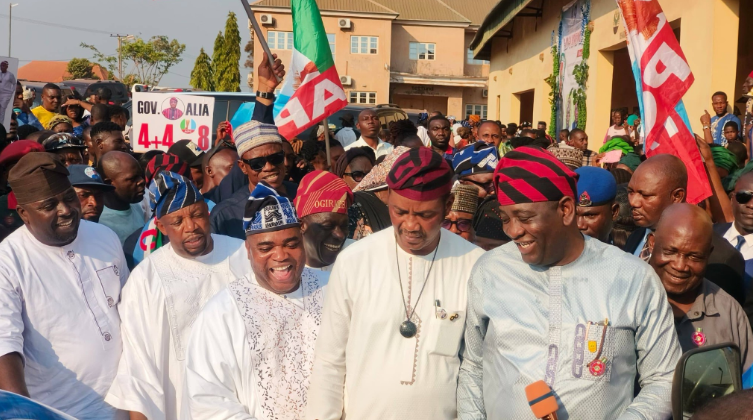
The Igede-speaking people of Benue State, particularly in Oju and Obi Local Government Areas, have for years raised complaints of political marginalisation. Many believe that the Benue South Senate seat, occupied by Idoma leaders since the return of democracy in 1999, should rightfully rotate to the Igede axis.
Following the return of democracy, while former military governor of Niger State, David Mark was elected to the Senate, Prince Ogiri Ajene was picked as Deputy Governor to George Akume, balancing the political equation, IDOMA VOICE reports.
However, since Akume’s tenure ended in 2007, no Igede politician has emerged as Deputy Governor, nor has the Senate seat been won by their community, thus fueling long-standing cries of marginalisation.
Despite these historical grievances, in the build-up to the 2027 elections, the Igede axis has largely shunned the Senate race.
Unlike the Idoma community, where over 15 aspirants are actively jostling for various political positions, only the relatively unknown Hon. Harmony Ogbor has stepped forward to contest the Benue South senatorial seat.
In fact, awareness of his candidacy remains limited, leaving many observers puzzled as to why other Igede elites have not entered the race.
At the same time, multiple contenders are battling to unseat the incumbent Oju/Obi lawmaker, David Agada, for the Federal House of Representatives seat.
Investigations by Idoma Voice reveal that while early consultations and alignments are ongoing across the district, no other prominent senatorial hopeful has publicly declared interest from the Igede community.
This stands in sharp contrast to other parts of the senatorial district, where consultations, grassroots engagement, and alliance-building are well underway.
A political analyst in Otukpo, speaking on condition of anonymity, described the situation as “a strategic puzzle.”
“If a group genuinely believes it has been marginalised politically, the logical response would be strong participation in available opportunities,” the analyst said.
“The Senate seat offers the biggest platform for negotiation and representation, yet the silence from the Igede elite is noticeable.”
Ironically, while the Senate contest is largely unattended within the Igede axis, political maneuvering around the Oju/Obi Federal Constituency House of Representatives seat has intensified.
Sources within major political parties disclosed that several aspirants from Oju and Obi LGAs have begun consultations with stakeholders and grassroots mobilisation.
Party insiders suggest that the contest for the single Reps ticket may become one of the most competitive races in the district.
“The energy currently going into the House of Representatives seat is massive,” a party chieftain said.
“Everybody seems comfortable contesting there, but the Senate race requires wider structures, stronger funding, and broader alliances.”
Stakeholders attribute the absence of a clear senatorial aspirant to financial demands, internal divisions, and lack of unified political direction among Igede leaders.
Unlike the Reps contest, which largely revolves around local influence, the Senate race demands district-wide acceptance across multiple blocs.
“There is no consensus candidate yet,” a community leader in Oju noted. “Different political tendencies exist, and until elders and stakeholders agree on a direction, many potential aspirants may remain cautious.”
Others also point to the daunting prospect of challenging established political heavyweights with long-standing networks across Benue South, including unseating the current senator, Abba Moro.
Youth groups within the axis have begun urging political leaders to take decisive steps to secure stronger representation at higher levels.
Many argue that continued absence from major contests could weaken future bargaining power in negotiations over zoning arrangements.
“If you don’t sit at the table, decisions will be taken without you,” a youth advocate said during a recent stakeholders’ engagement.
While some stakeholders believe time remains for aspirants to emerge before party primaries, others warn that delayed entry could limit mobilisation opportunities.



Troops foil terrorist attack on Benue yam market, neutralise two suspected terrorists

DSS raids Taraba warehouse, recovers allegedly diverted relief materials, arrests four

Judiciary journalists urged to ensure accurate court reporting ahead of 2027

Remi Tinubu’s akara advice was about self-reliance, not poverty – Ahmed Bala

Full List of youths, others arrested over death of MACBAN Chairman, Ardo Risku

BREAKING: Police Arrest 10 Suspects Over Killing of MACBAN Chairman, Ardo Risku [FULL LIST]

Uba Sani vows justice, support for family of mob-lynching victim

2031: Next Benue governor should be Idoma – Ochefu

‘Akara business is better than a bank job’ — Delta Gov’s aide backs Remi Tinubu’s advice

Idoma community condemns ‘hasty accusations’ over Ardo Risku’s death

Troops rescues 36 Benue indigenes allegedly held against their will in Cross River
