
Latest News
NCDC: Suspected Ebola cases in Adamawa test negative

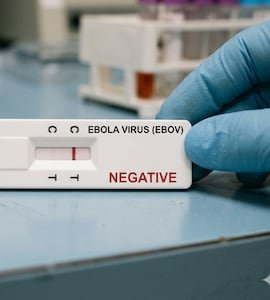
The Nigeria Centre for Disease Control and Prevention NCDC has announced that two suspected Ebola Virus Disease EVD cases in Adamawa State tested negative following two rounds of laboratory tests.
The agency clarified that Nigeria’s only laboratory-confirmed infection remains the previously reported Bundibugyo Ebola case in the Federal Capital Territory FCT.
The NCDC Director-General, Dr Jide Idris, disclosed this in a statement, saying the Adamawa State Public Health Emergency Operations Centre received reports of the suspected cases in the early hours of October 30, 2026.
He explained that the two individuals showed symptoms associated with Ebola and were immediately isolated while health authorities launched investigations and implemented precautionary measures.
“Fortunately, the samples turned out negative for EVD after two rounds of testing,” Idris said.
The NCDC boss emphasised that Adamawa had not recorded any laboratory-confirmed Ebola infection. He also praised the state government for its swift response to the suspected cases.
“At this juncture, I wish to commend the efforts of the Adamawa State’s Commissioner for Health and his team for their proactive approach.
“NCDC will continue to provide appropriate technical support to the Adamawa State Government to strengthen their response operations,” he said.
The development follows increased public health surveillance after Nigeria confirmed a case of Bundibugyo Ebola in Abuja involving a traveller who arrived from Uganda.
Reports of the suspected infections in Adamawa had raised fears of a possible spread of the disease, leading health authorities at both state and federal levels to begin investigations and activate precautionary measures.
However, the latest laboratory findings have ruled out Ebola infection in the two individuals.
Idris appealed to Nigerians to remain calm and refrain from circulating unverified reports or speculation about the situation.
“We urge members of the public to remain calm and avoid sharing unverified information or speculation about the situation.
“The public is encouraged to obtain information from official government and public health communication channels,” he said.
He further described Ebola as a serious infectious disease that requires early detection, proper medical treatment and strict infection prevention and control measures.
The NCDC director-general advised people experiencing symptoms such as fever, severe weakness, headache, muscle pain, vomiting, diarrhoea or unexplained bleeding, especially after possible exposure, to seek immediate medical attention.
He also urged patients to provide healthcare workers with relevant travel and contact histories.
“Individuals should avoid self-medication and follow the advice of healthcare professionals,” Idris said.
According to him, the NCDC will continue working with the Adamawa State Government and other relevant stakeholders to monitor developments and communicate verified updates to the public.
The agency reaffirmed its commitment to safeguarding public health through early detection, evidence-based interventions, transparent communication and coordinated national surveillance.













2027: Enone goes agog as Okanga Sisters hold strategic meeting in Ojigo, assure Agbese of victory

Enone 2027: My works will speak for me, I won’t be distracted by political attacks – Agbese

Plateau pastor raises alarm over alleged terrorist plan to attack christians at christmas

CIoD warns executives against neglecting health for work

Adeyanju seeks stronger regional cooperation as UN envoy visits Nigeria

FG’s N50,000 relief: OPay explains how to check eligibility, warns against scams

OK movement warns NDC, Obidients against dividing Obi’s camp

Gwarzo’s candidacy: APC dares Kwankwaso to produce evidence against Gov Yusuf

Police discover sophisticated cannabis farm in Lagos, arrest two

Obasanjo threatened to arrest me, forced me to flee to Ghana – Amaechi

2027: Opposition criticism won’t weaken Tinubu’s support in North – APC
