
news
‘Who is really in charge?’ – ADC questions Tinubu’s authority as removed FG director remains in office

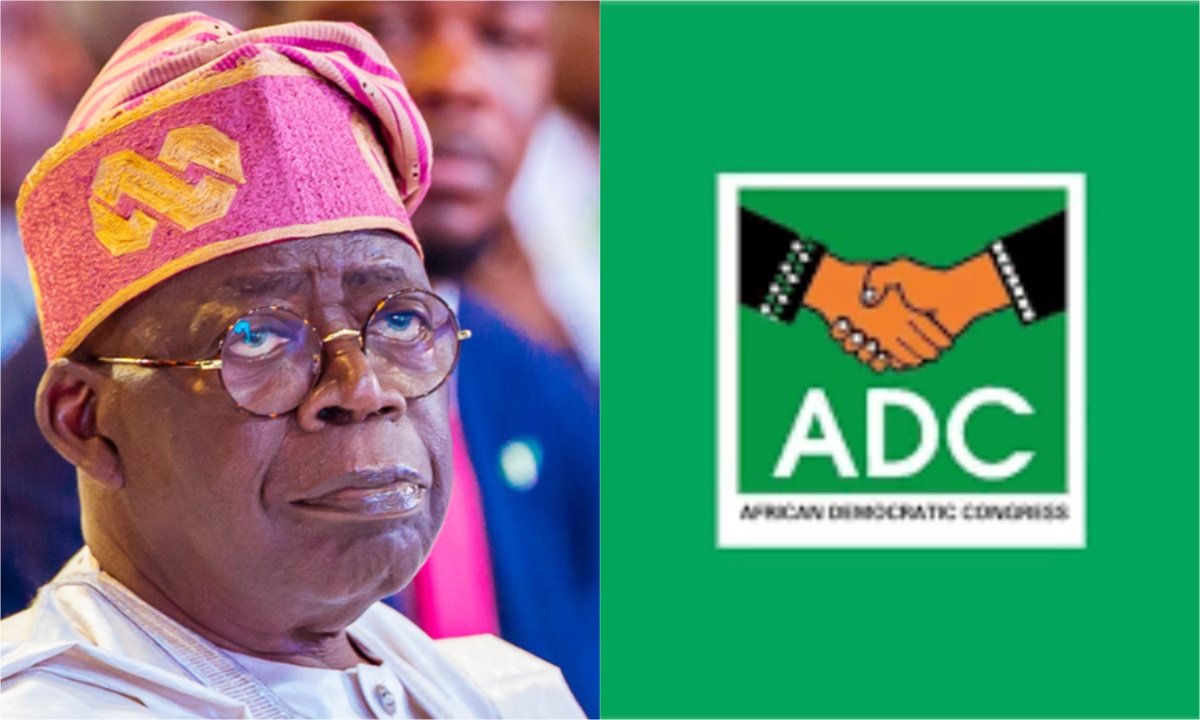
The African Democratic Congress (ADC) has criticised the President Bola Tinubu administration over what it described as an “appointment fiasco,” calling for clarity on recent developments surrounding government appointments.
In a statement issued by its National Publicity Secretary, Bolaji Abdullahi, the party urged the National Assembly to determine whether the President remains capable of effectively exercising the powers of his office.
The ADC said it was concerned by reports that an official who was publicly removed from office through a presidential directive allegedly continued to perform duties and engage with senior government officials.
The party argued that if the reports involving the Border Communities Development Agency (BCDA) are accurate, the matter goes beyond a disputed appointment and raises broader questions about the control and authority of the Presidency.
“Who is actually in charge of the Nigerian Presidency? When a President announces the appointment of one person and another simply ignores that directive and carries on in office, Nigeria is no longer witnessing administrative confusion. We are witnessing a struggle for control of the Presidency itself,” the statement said.
The ADC also linked the BCDA controversy to what it described as a pattern of administrative inconsistencies within the government, referencing previous controversies involving policy reversals and alleged irregularities in government agencies.
The party said Nigerians deserve explanations on who exercises presidential authority, who approves appointments and whether presidential directives can be overturned without public clarification.
According to the ADC, uncertainty over government decisions could weaken public confidence, affect institutions and create confusion within the bureaucracy.
The party maintained that the issues raised were not merely political criticisms but questions concerning executive authority, accountability and the stability of governance.









TRI TOWER: Another Idoma son, Lawrence Emmanuel of PromiseLand Estate unveils 22-storey luxury project in Abuja

NAF bombards kidnappers’ hideouts in Ogbadigbo

Why I don’t publicise my legacy projects, achievements — Enone Servant Agbese

REAL ESTATE TITANS: Meet Idoma natives making waves in property business

‘I sold my car to promote leadership values’ — Author Stephen Elaigwu

13-year-old boy allegedly sets family house ablaze, kills four sisters in Yobe

$100,000 too small — Lagos Life creator values viral game at $1bn

Man sentenced to death over facebook comment Saudi Arabia

Eight Nigerian soldiers killed in ISWAP attack on Borno military base

BREAKING: NAF helicopter makes emergency landing in Benue two days after Ondo crash

Deji Adeyanju celebrates Abulfatai Seriki at 53, hails contributions to Nigeria
