
Benue news
Benue blood on the altar: Catholic priests, pastors killed in rising attacks

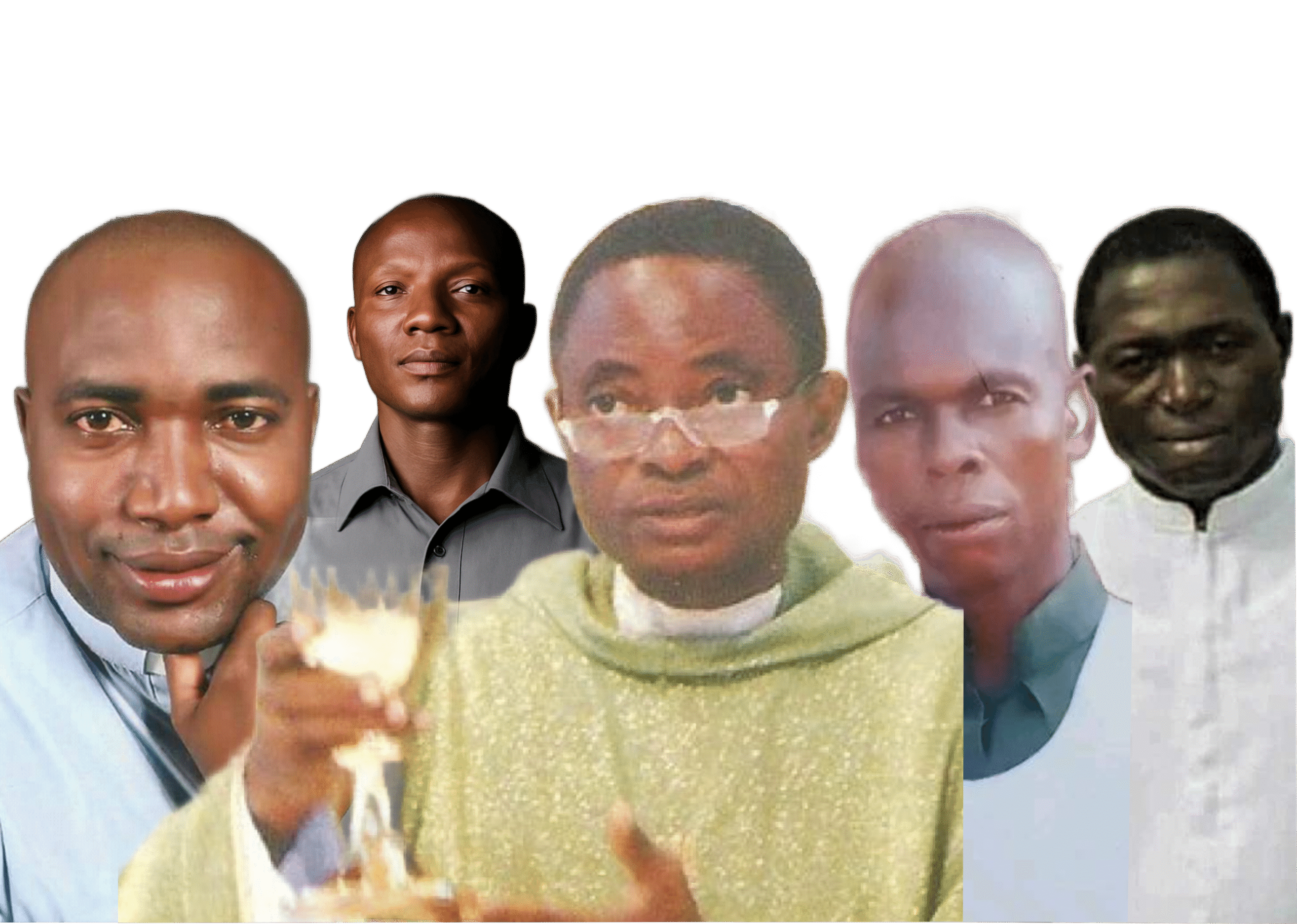
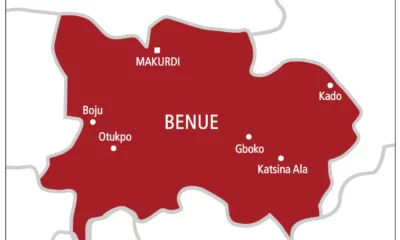
From 2015 onward, Benue has witnessed a disturbing rise in attacks targeting Christians, particularly clergy, church members, and worship centres. The violence has left priests, pastors, and congregants dead, while entire churches have been torched and abandoned, creating an environment where living a faith-led life has become perilous.
IDOMA VOICE observed that the predominantly Christian communities of Benue, including Yelwata, have repeatedly borne the brunt of these assaults.
Reports indicate that armed herders and other militias have conducted raids against farming communities, often targeting churches directly.
The pattern of attacks is alarming. Clergy members have been abducted and killed, congregations shot during services or in their homes and church buildings burned in what has become a systematic erosion of sanctuary.
Some of the most high-profile incidents include:
June 2016: Rev. Fr John Adeyi of the Otukpo Diocese was abducted and later found murdered. His death marked a grim turning point, highlighting the risks faced by church leaders in rural communities.
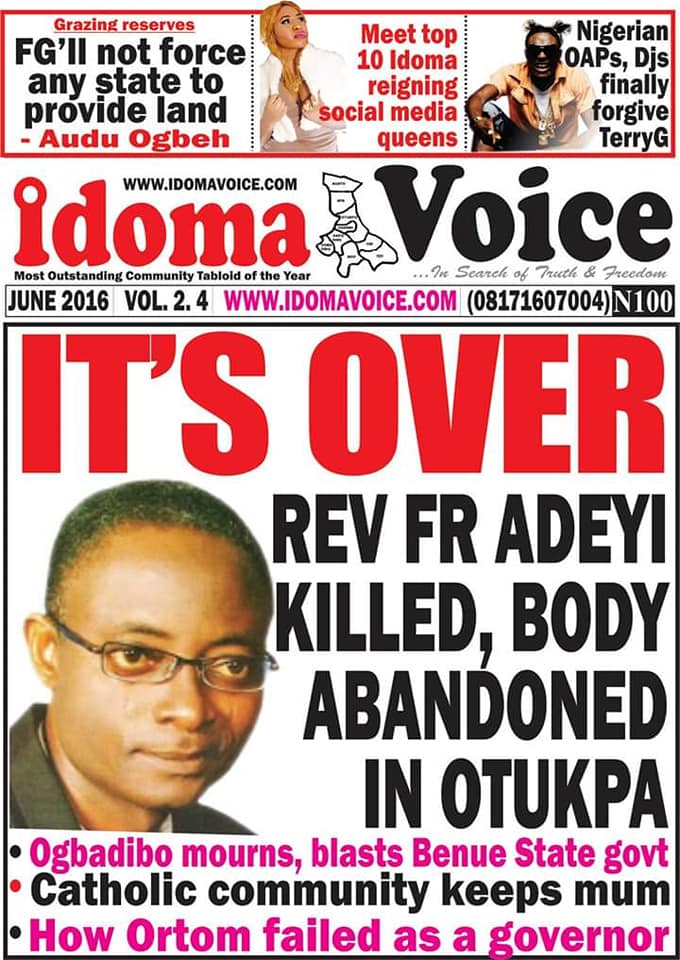
In 2016, the Nigeria Police arrested suspects responsible for the kidnap and gruesome murder of Rev. Fr. Adeyi. The police confirmed that the gang confessed to the crime and collected N1.7 million ransom from the priest’s family.
The suspects paraded are – Suleiman Gina (gang leader), Saidu Abdullahi, Aliyu Garba and Haruna Idi.
April 24, 2018: At the parish of St. Ignatius in Mbalom, two Catholic priests; Rev. Fr Joseph Gor and Rev. Fr Felix Tyolaha, were shot dead during Mass along with sixteen parishioners. 
August 2021: Methodist pastors Moses Ijoko Aleje and Emmanuel Aleje were ambushed and killed in Ochoro, Konshisha Local Government Area.
March to July 2025: Church leader Vitalis Kenvanger was killed in the Abata (Yogbo) mission area as attacks persisted.
November 3, 2025: Fulani herders killed at least ten Christians in Ohimini Local Government Area, including Rev. Simon Nbach of Flaming Fire Ministry. 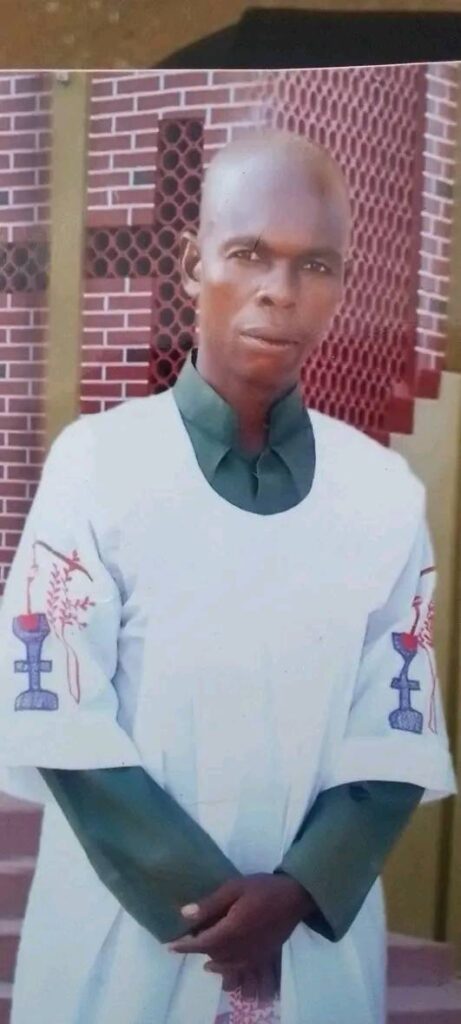
Perhaps most harrowing was a 2025 massacre in Yelwata, Guma Local Government Area, where approximately over a hundred people were killed while seeking refuge inside a church compound.
These attacks go beyond individual killings. Dozens of churches have been razed, ministries disrupted and pastors forced into hiding.
Reports suggest that over 200 Christians were killed and thousands displaced in one wave of attacks in 2025 alone.
Benue’s status as Nigeria’s food basket, combined with its largely Christian agrarian communities, places it at the crossroads of ethnic and pastoral conflicts. Investigations suggest that many of the attacks result from:
Clashes between armed herders, often Fulani, and farming communities
Disputes over grazing land, seasonal pasture migration and open-grazing bans
Symbolic targeting of churches and religious leaders to intimidate communities.
A report by Open Doors notes: “For many years, well-armed Fulani groups are operating with precious little opposition. Impunity for attacks on communities is now a major issue.”
Efforts to curb the violence have been met with mixed results. Under Governors Samuel Ortom and now Hyacinth Alia, the state has launched security initiatives, constructed rural infrastructure, and built liaison mechanisms between churches and security agencies.
Governor Alia, speaking in November 2025, stated: “In my State of Benue, we do not have any religious, ethnic, racial, national, or state genocide. We do not have that. Do we have a number of insecurities in the state? Yes, we do, but it is not genocide.”
His remarks triggered widespread debate. Many locals and international observers see the violence as systemic persecution.
Trump, during a recent statement, suggested the possibility of a military intervention to protect civilians, while Pope Leo expressed deep concern over the killings, calling for global attention and humanitarian action.
Reactions from Benue residents remain raw. Elder Stephen Iorli of Yelwata said, “We live in constant fear. Even the church, which should be our sanctuary, has become a place of death. We are asking the world to see our suffering and respond.”
Similarly, Elder Ruth Abaye from Otukpo lamented, “We continue to bury our people, and no one is brought to justice. Our faith is under attack, and we feel abandoned by those who should protect us.”
These developments have drawn increasing international attention, framing the Benue crisis not merely as a local security issue but as a humanitarian and religious rights concern.
Human rights groups have warned that unless decisive measures are taken, Christian communities may continue to face what many describe as genocide by attrition.
Benue’s rural towns and villages, once peaceful farming communities, now face the harrowing reality that faith alone cannot shield them from violence.
With clergy and congregants alike under threat, residents are calling for urgent protection, accountability, and recognition of the ongoing suffering.
As attacks continue, as churches burn and as lives are lost, the faithful of Benue remain under siege, their sanctuary violated, their cries unanswered and once again, there is blood on the altar.








FULL LIST: Godstime Iyare, Eze Okpoto, Yan Group NLBDG named among 48 individuals, groups linked to terrorism financing in Nigeria

Suspected herdsmen attack Agatu community, kill farmer

Bishop Oyedepo, Ibiyeomie to dedicate Master’s Place Dreamland City Mega Complex July 17

Nigerian govt names 48 people, groups over alleged terrorism financing

FG slashes import duties on rice, cars, drugs in new tariff policy

FG orders revocation of passports of Nigerians who renounced citizenship

‘I lost my wife, kids, then herdsmen killed my parents’ – Idoma son, Otache battles pain after losing entire family

No zoning approval yet — Benue APC

Benue Assembly approves four bills to strengthen infrastructure, others

JAMB delists 23 CBT centres in 11 states, FCT over 2026 mock UTME issues

David Mark-led ADC seeks court order to reverse INEC decision
