
Nigeria News
FG approves six-year ban on new universities, other tertiary institutions

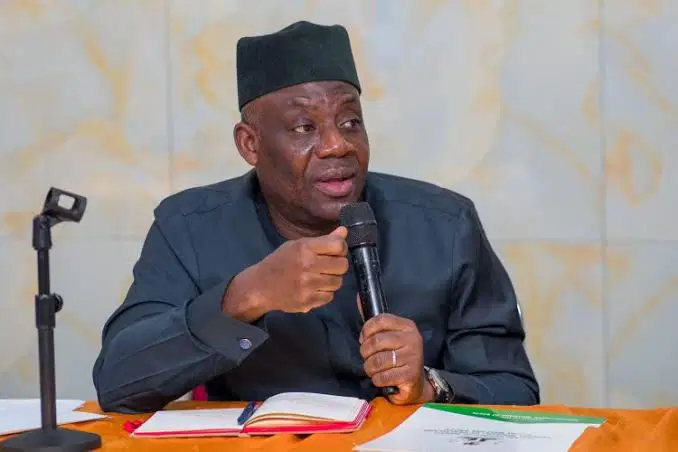
The Federal Government has announced a six-year moratorium on the establishment of new private universities and other tertiary institutions as part of efforts to strengthen the quality and sustainability of Nigeria’s higher education system.
The decision was approved by the Federal Executive Council (FEC) during its meeting chaired by President Bola Ahmed Tinubu at the Presidential Villa in Abuja.
Minister of Education, Dr. Tunji Alausa, disclosed this while addressing State House correspondents after the meeting.
He explained that the temporary ban would enable the government to concentrate on improving standards and stabilising existing institutions.
According to the minister, the moratorium will affect the creation of new universities, polytechnics and colleges of education across the country for the next six years.
He said the policy became necessary due to the rising number of tertiary institutions and the need to strengthen quality assurance mechanisms.
“Today, access is not easy in the country. We have lots of tertiary institutions, both public and private. We need to help these private institutions be sustainable financially,” he said.
Alausa noted that despite the large number of institutions, admission opportunities remain limited for many Nigerians.
He revealed that about 2.3 million candidates applied for admission through JAMB last year, but fewer than 228,000 secured placements in public universities.
He added that recent reforms aimed at making public universities more affordable could further reduce the number of students enrolling in private universities.
“What will now happen is that there will be fewer people going to private universities. We need to make private educational institutions sustainable as we improve quality in public and private universities,” he added.
The council also approved reforms in medical education that would recognise medical fellowships as equivalent to doctoral degrees.
Alausa said the decision followed proposed amendments to the National Postgraduate Medical College Act developed with the Office of the Attorney General of the Federation. The reform is expected to address challenges faced by specialised medical professionals in academic career progression.
“We need to remove the dichotomy of doctors who spent almost 16 years from medical school, their residency and then doing their fellowship, becoming super-specialised,” he said.
He noted that many doctors spend more years in training than PhD candidates but are still required to obtain doctoral degrees before advancing academically.
“This set of people in the medical sector have spent more years than the average candidate who gets a PhD. So we need to harmonise that,” he added.
Alausa explained that once the executive bill is transmitted to the National Assembly and passed, medical fellowships will officially be recognised as equivalent to PhDs for academic and professional purposes.
The council also approved the restoration of the National Commission for Mass Literacy, Adult and Non-Formal Education as a full commission after it was earlier reduced to a department within the ministry.
According to the minister, the decision aligns with the government’s plan to significantly reduce illiteracy in the country.
“In view of Mr. President’s expansive agenda to educate over 50 million young adults in the next two to three years and make them digitally literate, we sought the approval of the council to revert it back to a commission,” he said.
He revealed that Nigeria currently has about 56 million illiterate citizens and stressed the need to address the challenge.
“Today, we have about 56 million Nigerians that are illiterate. We cannot continue to have a high number of citizens that are illiterate,” he said.
The commission, established in 2013, will intensify adult literacy programmes in rural areas using radio, television, advocacy campaigns and community learning centres.
FEC also approved insurance coverage for the country’s 180 Federal Unity Schools to safeguard infrastructure and key assets in the institutions.
Alausa said the government would engage underwriters to provide comprehensive fire and general insurance for facilities across the schools.
He reaffirmed the administration’s commitment to improving education standards nationwide.
“I’m going to make sure that every single child in this country, every single citizen of this country, gets the highest quality of education that is comparable to anywhere in the world,” he said.



Benue: Pressure mounts on Gov Alia to dump APC

FG approves six-year ban on new universities, other tertiary institutions

10 things to know from Nigerian newspapers, Thursday, March 5, 2026

BREAKING: No World Cup for Nigeria as FIFA confirms DR Congo for intercontinental play-offs

Benue: Gov Alia vows to restore peace in Sankera axis

Adeyanju slams Dangote Refinery over sudden fuel price hike, calls it exploitative

2027: Adaje’s candidacy answer to Enone’s quest for effective representation — Campaign Organisation

Pentagon identifies first US troops killed in Iran war after Kuwait drone strike
10 things to know from Nigerian newspapers, Wednesday, March 4, 2026

BREAKING: Nigerian Govt suspends pilgrimage to Israel amid Middle East crisis

Israeli bombs Iran’s Supreme Council meeting during vote to elect new leader
