
Nigeria News
FG moves to end HND–BSc discrimination with degree-awarding polytechnics

The Federal Government has announced plans to overhaul Nigeria’s tertiary education framework by allowing polytechnics to award Bachelor’s degrees, a move aimed at eliminating the long-standing disparity between polytechnic and university graduates.
For decades, holders of the Higher National Diploma (HND) have faced systemic discrimination, particularly in employment, remuneration and career advancement, when compared with graduates who possess Bachelor’s degrees from universities.
Within the public service, polytechnic graduates are typically recruited on Grade Level (GL) 07 and are capped at GL13, making them ineligible for director-level positions unless they obtain additional qualifications such as postgraduate diplomas or master’s degrees from universities. In contrast, university graduates are employed on GL08 and can progress to GL17 without further academic requirements.
Several efforts to address this imbalance have failed over the years, including policy declarations and a bill passed by the National Assembly that did not receive presidential assent.
Policy shift
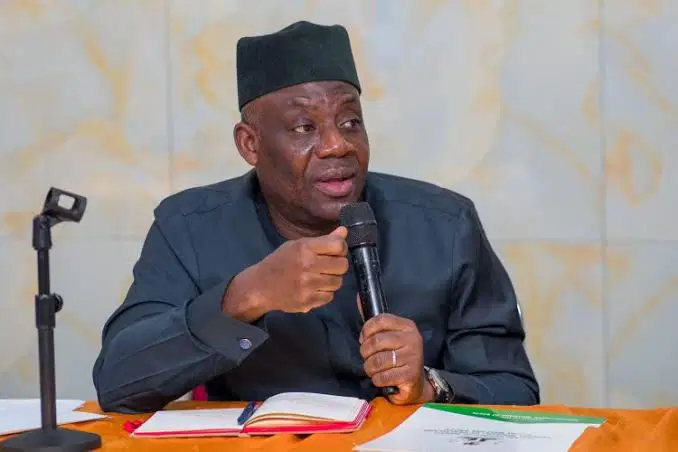
Addressing stakeholders at a high-level retreat attended by governing council chairpersons, commissioners of education, rectors, registrars and bursars of polytechnics, the Minister of Education, Tunji Alausa, said the proposed reform reflects the government’s renewed focus on Technical and Vocational Education and Training (TVET).
He assured participants that the reform process would be anchored on “clear standards, strong regulation and quality assurance mechanisms” to guarantee quality, relevance and international competitiveness.
According to the minister, granting degree-awarding powers to polytechnics would strengthen industry collaboration, open up new funding streams and boost public trust in the institutions.
Mr Alausa reiterated that TVET remains central to Nigeria’s broader education and economic agenda, adding that the reform would “elevate polytechnics into centres of excellence within Nigeria’s tertiary institutions and education sub-sector.”
He stressed that Nigeria’s ability to compete globally depends on a workforce equipped to innovate, create and solve practical problems, noting that the policy would reposition polytechnic education in line with its core mandate.
TVET prioritised for economic growth
The minister said the education ministry is deliberately strengthening technical and vocational education to produce graduates who are “industry-ready, innovative and capable of driving economic growth.”
He explained that the reforms are designed to “bridging the gap between theoretical knowledge and practical application” in order to stimulate growth across industrial, agricultural and commercial sectors.
According to him, a revitalised TVET system is expected to accelerate national productivity and development.
Focus on innovation, accountability
Mr Alausa charged polytechnic administrators to foster innovation by establishing entrepreneurship hubs, research centres and deeper partnerships with industry players.
He identified key focus areas to include renewable energy, agri-technology, digital manufacturing and climate-resilient solutions.
The minister also emphasised the need for transparency, accountability, fiscal discipline and ethical leadership, insisting that the new era of polytechnic administration must be defined by these principles.
He further called for regular audits, responsible financial management and a strict ‘zero tolerance for corruption.’
Sustainability, local production
Mr Alausa urged polytechnics to pursue sustainability by boosting internally generated revenue through the production of goods and services, adopting eco-friendly campus models and investing in resilient infrastructure.
He encouraged institutions to “produce what they consume” and contribute to national self-reliance by reducing dependence on imported products.
The minister reaffirmed the Federal Government’s commitment to supporting polytechnics through sustained policy reforms, infrastructure development and strategic collaborations.
Long-standing HND–degree divide
The divide between HND and BSc qualifications has remained a contentious issue within Nigeria’s tertiary education system, often sparking disputes between regulatory agencies and frustration among graduate.
Polytechnics were originally created to deliver hands-on, skills-oriented education tailored to technical proficiency and industry demands.
Despite this mandate, HND holders have, for many years, suffered unequal treatment in employment, promotions and pay, particularly within the public sector.
In 2023, PREMIUM TIMES reported that the National Universities Commission (NUC) cautioned the National Board for Technical Education (NBTE) against introducing a one-year “top-up” degree programme for HND holders, warning that it could undermine university degree standards and bypass regulatory approval.
The dispute underscored the enduring inequality between polytechnic and university graduates, as well as unresolved disagreements over how best to harmonise practical training with academic qualifications.



Fear grips Benue South APC as loyalists of Rep Philip Agbese dump party

Benue: Senate calls for military base in Kwande to tackle rising insecurity

Powerful interests working against Tompolo’s war on oil theft – Adeyanju

Abuja fertility case: Defence counsels warn against misrepresentation of facts

10 Things to Know from Nigerian newspapers, Friday, 13th March 2026

Benue Assembly approves second reading of Security Trust Fund Bill

Burial of 13 Benue attack victims postponed as mortuary attendant disappears

NELFUND extends student loan application portal for 2025/2026 session

Nine Senators dump different parties for ADC

BREAKING: NNPCL reduces fuel price by N95

Tinubu nominates Lamido Abubakar Yuguda as CBN Deputy Governor
