
Nigeria News
‘If we attack, it will be fast, vicious and sweet’ — Trump threatens military action in Nigeria over killings of Christians

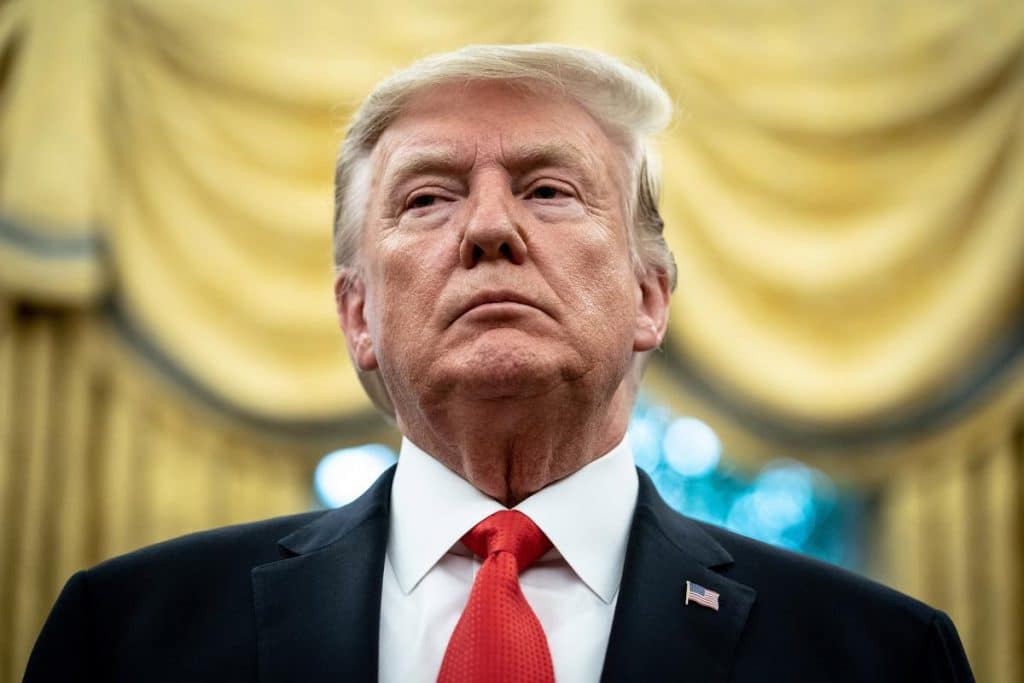
United States President Donald J. Trump has warned that America may take swift military action against Nigeria if the government fails to stop what he described as the “killing of Christians” in the country.
In a strongly worded post on his Truth Social account on Saturday, Trump said he had directed the “Department of War” to prepare for possible action, declaring that if an attack happens, “it will be fast, vicious, and sweet.”
“If the Nigerian Government continues to allow the killing of Christians, the U.S.A. will immediately stop all aid and assistance to Nigeria, and may very well go into that now disgraced country, ‘guns-a-blazing,’ to completely wipe out the Islamic Terrorists who are committing these horrible atrocities,” Trump wrote.
“If we attack, it will be fast, vicious, and sweet, just like the terrorist thugs attack our cherished Christians! WARNING: THE NIGERIAN GOVERNMENT BETTER MOVE FAST!”
The post, which has drawn wide reactions from Nigerians on social media, follows Washington’s recent designation of Nigeria as a “Country of Particular Concern” over alleged religious persecution and rising violence against Christian communities.
Mixed Reactions Trail Threat
Nigerians have taken to X (formerly Twitter) and Facebook to express mixed feelings over the threat.
While some users said Trump’s comments might pressure Nigerian authorities to act decisively against killers, others warned that a U.S. military intervention would cause chaos and mass casualties.
“Let them come. Maybe that will make our leaders wake up,” wrote one user from Plateau State.
Another countered, “We don’t need bombs. We need justice, police reform, and leadership.”
A Long History of Bloodshed
Communal and religious violence has plagued Nigeria’s Middle Belt for years, with states like Benue, Plateau, Taraba, Nasarawa, and Southern Kaduna among the hardest hit.
In Benue, often called the “Food Basket of the Nation,” hundreds have been killed in attacks attributed to armed herders and bandits. Plateau has witnessed repeated waves of killings between farming and pastoralist communities, while Taraba and parts of Nasarawa have recorded similar tragedies.
Local observers and rights groups say thousands have been displaced, churches and mosques burned, and rural economies destroyed, as government efforts to contain the violence remain weak and uneven.
Diplomatic Ripples
The Nigerian government has not issued an official response to Trump’s latest statement, but diplomatic sources say the presidency views the comment as “unnecessary interference in a sovereign nation’s internal affairs.”
Security analysts also warn that Trump’s tone could inflame tensions and risk portraying Nigeria’s complex security crisis as a purely religious conflict.
A senior foreign policy expert told our correspondent, “It’s dangerous rhetoric. The United States knows that most of these conflicts are about land, resources, and local governance—not just religion.”
Global Context
Trump’s comments echo a pattern of U.S. involvement in other conflict zones. Past interventions in Iraq, Afghanistan, and Libya began with humanitarian or counterterrorism motives but later spiraled into prolonged instability.
Experts say a similar scenario in Nigeria could worsen displacement, cripple local economies, and fuel anti-American sentiment across Africa.
“The first casualties in any external strike are always civilians,” said Dr. Yemi Obadina, a security analyst. “The United States may destroy camps, but they won’t fix the politics that created those camps.”
Tense Silence in Abuja
As of Sunday night, the Defence Headquarters and Ministry of Foreign Affairs had yet to issue statements.
However, sources within the presidency confirmed that top-level security meetings were held over the weekend to assess possible implications of Trump’s warning.
Nigeria currently enjoys limited U.S. military cooperation under counterterrorism frameworks, but analysts warn that Trump’s threat to cut aid could affect ongoing joint operations and intelligence sharing.
The Bigger Question
For many Nigerians, Trump’s words have reopened old wounds. The killings that prompted his outrage have persisted for years, often met with silence or slow response from authorities.
As one community leader in Benue told our reporter, “We have buried too many people. If America’s threat will make the world finally see us, maybe something good will come. But we don’t want another war on our soil.”
Whether Trump’s threat becomes action or fades as political posturing, it has once again exposed the deep scars of violence in Nigeria’s heartland — and a government struggling to convince its citizens, and the world, that it is in control.



Benue: Police inspector shot dead by gunmen in Makurdi, rifle stolen

Gunmen abduct 24-year-old herder in Otukpo, demand N4m ransom

2027: Resign before March 30 if you want to contest — Gov Alia tells appointees

Nigerian govt not accepting foreign deportees – Presidency

Wale Adenuga trademarked my stage name – Pa James opens up

Arsenal must prove they can win trophies – Arteta

CONFIRMED: Ronaldo dropped from Portugal’s squad

We have started ending insecurity in Benue – Gov Alia

Delta: Police arrest five over assault of women at Ozoro Festival

Iran confirms death of top official, Ali Mohammad in US-Israel airstrike

BRM insists Idoma must produce Benue Governor in 2027
