
Benue news
Mary Patricia Akut: First Idoma woman to Become Permanent Secretary in Nigeria

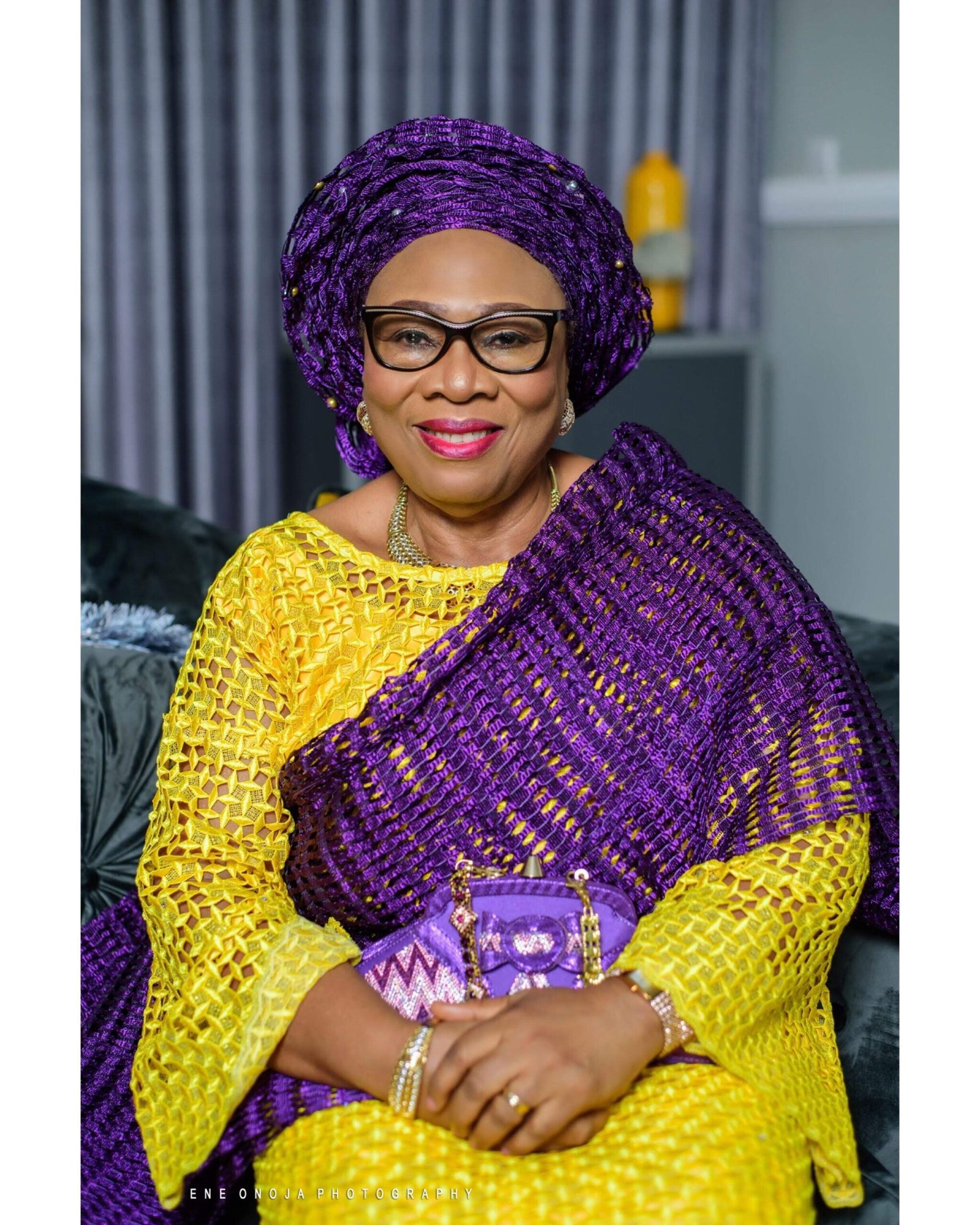
History does not always announce itself with fanfare; sometimes, it arrives in the quiet determination of a woman who dares to rise where none of her kind has gone before.
For Mary Patricia Akut, that defining moment came in 2000, when she shattered a long-standing administrative barrier to become the first woman of Idoma origin to be sworn in as a Permanent Secretary in Nigeria. It was a landmark achievement that placed her name in the annals of Idoma history and opened a new chapter in the story of women’s participation in public administration.
But Akut’s story is bigger than the distinction of being first. From the classroom to the corridors of government, from championing educational opportunities for disadvantaged students to overseeing ministries responsible for women’s affairs, sports, commerce and industry, she built a career spanning decades and diverse responsibilities. Her journey is a portrait of perseverance, public service and quiet trailblazing—a reminder that behind every historic milestone is a lifetime of work, sacrifice and the courage to break barriers.
Her appointment was the culmination of years of professional growth, beginning in the classroom and extending through education administration, social development and the management of government ministries.
Yet, beyond the historic milestone, her story is also one of commitment to public service, educational advancement and the pursuit of opportunities for women and vulnerable groups.
FROM ZARIA TO THE CLASSROOM
Born on October 14, 1948, in Zaria, Otukpa, Ogbadibo Local Government Area of Benue State, Mary Patricia Agada grew up with roots in a family whose history is closely connected to the Idoma community.
She is the daughter of Joseph Eko Agada of Adepe, Ipiga, and Iyojo Itodo, of the royal family of Chief Itodo Ena Akor of Ola’dede in Ola’Owonu, Otukpa.
Her educational journey laid the foundation for a career that would eventually take her to the top of the state civil service.
She graduated from Holy Rosary Teachers’ College, Adoka, in 1967 before obtaining a National Certificate in Education from the Advanced Teachers’ College, Zaria, in 1973.
She later proceeded to Ahmadu Bello University, Zaria, where she earned a Bachelor of Arts degree with honours in English in 1984.
Armed with her qualifications, she began her professional career as a teacher, serving in primary and secondary schools. Her experience in the classroom provided an early understanding of the challenges facing education and the importance of creating opportunities for students.
Between 1988 and 1993, she worked in the Inspectorate Division at the Benue State Ministry of Education headquarters in Makurdi, marking an important transition from classroom teaching to education administration.
BUILDING AN EDUCATION SUPPORT SYSTEM
In 1993, Akut was appointed the pioneer Executive Secretary of the Benue State Scholarship Board.
The appointment placed her at the forefront of an institution responsible for administering educational support to students. As its pioneer executive secretary, she helped establish the board’s administrative foundation and expand its support for learners.
One of the initiatives associated with her tenure was the introduction of dedicated state scholarships for students with disabilities, covering education from primary school through university.
The initiative reflected an approach to educational support that recognised the needs of students who might otherwise face additional barriers to accessing schooling.
Akut also advocated an increase in the session allowance for Benue State law students from ₦1,500 to ₦10,000.
These efforts formed part of her wider contribution to educational administration, demonstrating how public officials can influence the opportunities available to students through policy and institutional support.
Her work at the Scholarship Board also prepared her for broader responsibilities within the state government, where she would move from education administration into the wider field of social development.
WOMEN’S AFFAIRS AND SOCIAL DEVELOPMENT
In 1997, Akut was appointed the pioneer Commissioner for the newly established Ministry of Women Affairs and Social Development in Benue State.
She served until 1999 under the military administrations of Colonel Aminu Isa Kontagora and Colonel Dominic Oneya.
Her appointment made her the second woman of Idoma origin to serve as a commissioner in the state, following Dr. Enyantu Ifene, who had served as Commissioner for Education under Colonel Fidelis Makka.
At the Ministry of Women Affairs and Social Development, Akut took part in initiatives intended to improve the welfare of women and children and expand economic opportunities for women in Benue communities.
One of her notable responsibilities was preparing and defending the executive memorandum for the establishment of maternal and child cottage hospitals across the state’s 23 local government areas.
The proposal formed part of a broader effort to improve access to community healthcare for women and children through the Family Support Programme.
She also worked to connect women in Benue communities with economic opportunities under the Federal Economic Advance Programme.
Her tenure placed her at the intersection of social policy, public administration and women’s development, giving her the opportunity to contribute to programmes aimed at addressing some of the needs of vulnerable groups.
BREAKING THE ADMINISTRATIVE GLASS CEILING
Akut’s most prominent career milestone came in 2000, when she was sworn in as Permanent Secretary.
Her appointment marked a historic breakthrough for women of Idoma origin and placed her among the women who challenged the barriers that had limited access to senior administrative positions.
The Permanent Secretary position carries significant responsibility in the civil service, including administrative coordination, policy implementation and the management of ministry operations.
For Akut, the appointment represented the culmination of decades of experience across teaching, education administration and political office.
She was first posted to the Ministry of Youth and Sports, where she served from 2000 to 2003.
During this period, she supported sports development, building on facilities provided for the 1996 National Sports Festival hosted in Makurdi.
Her tenure also coincided with Lobi Stars’ victory in the African Challenge Cup in 2001, a notable moment in the history of the Benue-based football club.
From 2003 to 2006, she served as Permanent Secretary in the Ministry of Commerce and Industries.
Her responsibilities during this period included overseeing initial processes for the proposed Igumale Cement Processing Factory, also known as Star Cement, in Ado Local Government Area. The project, however, never became operational.
She also had oversight responsibilities involving industrial development initiatives associated with the Benue State Plastic Company, Benue Fruits Company and Cassava Processing Company.
During the same period, she served as Alternate Permanent Secretary in the Ministry of Finance, further broadening her experience in state administration.
Across these postings, Akut occupied positions that required administrative oversight and engagement with government policies spanning sports, commerce, industry and finance.
Her career demonstrated the range of responsibilities that women could undertake at the highest levels of the state civil service.
LIFE AFTER GOVERNMENT
After retiring from public service in 2006, Akut moved into the private sector.
She served as Chairperson of Salujo-wu Nigeria Limited, a company involved in manufacturing woven sacks for farmers.
The business supported agricultural commerce by producing materials used in the sector and provided employment opportunities for young people in Benue State.
Her transition from government service to private enterprise reflected another phase of a career that had moved across different sectors of public and economic life.
Although her years in government had given her a place in the administrative history of Benue State, her post-retirement work allowed her to remain involved in economic activity and enterprise.
FAMILY AND PERSONAL LIFE
Akut’s personal life has also been marked by family responsibilities and loss.
She was married to retired Nigerian Air Force Flight Lieutenant Joseph Waje Akut, a native of Zango Kataf, Kaduna State, who died in February 2000.
She is a mother of five, a grandmother and a mother figure to many others.
She currently lives in Makurdi, the Benue State capital.
A LEGACY THAT DESERVES TO BE REMEMBERED
Mary Patricia Akut’s story is significant not simply because she attained the rank of Permanent Secretary, but because of the professional journey that brought her there.
From her early years as a teacher to her work in education administration, her appointment as a commissioner and her subsequent leadership roles in the civil service, she built a career across several important areas of government.
Her contributions to scholarship administration, initiatives for students with disabilities, women’s development programmes and industrial administration form part of the record of her years in public service.
Her historic appointment as the first woman of Idoma origin to become a Permanent Secretary in Nigeria, as stated in her biographical record, remains the defining milestone of that career.
For younger women pursuing careers in public administration, her journey offers an example of professional advancement across institutional and administrative boundaries.
For the Idoma community, her career represents an important chapter in the participation of women in public leadership.
History is often remembered through the most visible offices people occupy. But the fuller measure of public service lies in the responsibilities undertaken, the institutions served and the opportunities created for others.
In Mary Patricia Akut’s case, the record is one of a woman who moved from the classroom into the upper ranks of administration, breaking a barrier along the way and leaving behind a career worth documenting for future generations.



Enone 2027: Aida Nath Names Akor Ikwuoche, Ochigbo Abah to campaign positions

Nigeria may remain in darkness if govt controls power sector – Obasanjo

I will join APC if Tinubu ends insecurity in North – Sule Lamido

VIDEO : Seyi Tinubu faces backlash over cash giveaway to tricycle occupants in Kebbi

Obla Foundation donates 23 solar-powered fans to Otukpo Teaching Hospital

I will consider myself a failure if Nigerians remain in IDP camps after 18 months in office — Peter Obi

2027: ‘We will, we will’: Nigerians mock Tinubu over fresh campaign promises

Nigerian govt raises alarm over use of carbide to ripen fruits, paracetamol to soften meat

Tinubu has failed Nigerians, don’t re-elect him in 2027 — Obasanjo

You say nigeria is finished, why seek photo ops? — Keyamo tackles Obi

Flamingos: Bashir Ahmad reacts as Peter Obi accuses NFF officials of stopping him
