
Nigeria News
No room for terrorism, banditry in Islam – Religious leaders

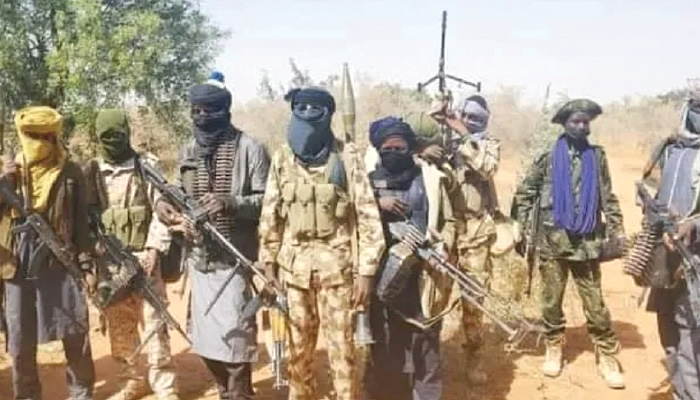
Islamic scholars and clerics have affirmed that acts of criminality, including terrorism and banditry, are completely incompatible with Islam.
The declaration came during the 17th Annual Islamic International Conference, hosted by Daaru Na’im Academy for Shariah Sciences in Lagos, Nigeria.
The event drew over 20,000 participants from Nigeria, the United States, Saudi Arabia, Africa, Asia, and Europe.
According to a statement from the organisers, Sheikh Mohammad Ali Wahiso, Deputy Mufti of Uganda, along with representatives from Saudi Arabia, highlighted that Islam is founded on principles of peace, justice, and the sanctity of human life.
Sheikh Abdul Mojeed Eleha, Director-General and Chief Imam of Daaru Na’im, explained that the conference sought to address the significance of authentic Islamic belief across African societies, especially in the context of social behaviours that contradict traditional Islamic teachings.
“This challenge is further compounded by discourses hostile to the sound creed, propagated by groups that claim affiliation with Islam and the qiblah, yet remain far removed from the true methodology of Islam in belief and actions,” he stated.
The clerics emphasised that the core of Islam lies in the belief in the oneness of Allah, forming the foundation for all subsequent teachings and spiritual development. Sheikh Eleha further urged Nigerian scholars to unite under the word of Allah, overcome fragmentation, and focus on collective scholarly efforts rather than engaging in divisive debates on social media.
Guest speakers at the conference also highlighted the importance of national unity, calling on Nigerians of all faiths to practice religious tolerance and peaceful coexistence.
They stressed that only through mutual respect and understanding can the country effectively tackle the widespread insecurity it faces.
Professor Abdul Mojeed Alaro of the University of Ilorin’s Islamic Law Department reinforced this point, urging citizens to embrace civic responsibility. “I’m calling on all Nigerians, irrespective of your faith, irrespective of your tribe.
We don’t have any other country except this one, and we must preserve and protect it. We are brothers. We are citizens. We can sit on the round table and find solutions to our problem,” he said.
He reminded participants that respect and tolerance are crucial for peaceful coexistence: “You don’t necessarily impose your faith on me, and I don’t have to impose my faith on you, and that is basically categorically stated in the glorious book of Islam.
The verses of the Quran state clearly that there should be no compulsion in religion. We need to tolerate one another. We need to respect one another.”
Justice Kamaldeen Abdulateef, Grand Kadi of the Kwara State Sharia Court of Appeal, highlighted the conference’s long-term impact on youth, focusing on moral values and civic duty. “I believe that our entire upcoming generation will learn from this international conference by emulating, as they say, our good practices in Islam.
They will imitate many positive aspects demonstrated at this conference. It will help our future generations to foster strong relationships between Muslims and non-Muslims, as well as good relations between ourselves and the government.
In particular, it will teach the incoming generation that we need to stay away from corruption and promote discipline within our society, especially concerning the environment.”
The Deputy Mufti of Uganda also stressed the need for modern approaches to preserve the integrity of Islamic teachings among youth.
“Therefore, it is important that we build the capacity of the Muslim scholars in addressing the needs of society in a contemporary way and especially using online and technological approaches to be able to reach the societies at large.
Otherwise, the youth will always be dependent on the misinterpretations that are rendered through Google and others, which are not appropriate,” Sheikh Mohammad Wahiso concluded.



FULL LIST: Godstime Iyare, Eze Okpoto, Yan Group NLBDG named among 48 individuals, groups linked to terrorism financing in Nigeria

Suspected herdsmen attack Agatu community, kill farmer

Bishop Oyedepo, Ibiyeomie to dedicate Master’s Place Dreamland City Mega Complex July 17

Nigerian govt names 48 people, groups over alleged terrorism financing

FG slashes import duties on rice, cars, drugs in new tariff policy

FG orders revocation of passports of Nigerians who renounced citizenship

‘I lost my wife, kids, then herdsmen killed my parents’ – Idoma son, Otache battles pain after losing entire family

No zoning approval yet — Benue APC

Benue Assembly approves four bills to strengthen infrastructure, others

JAMB delists 23 CBT centres in 11 states, FCT over 2026 mock UTME issues

David Mark-led ADC seeks court order to reverse INEC decision
