
idoma news
Ochanya Ogbanje: Why Benue court freed Andrew Ogbuja

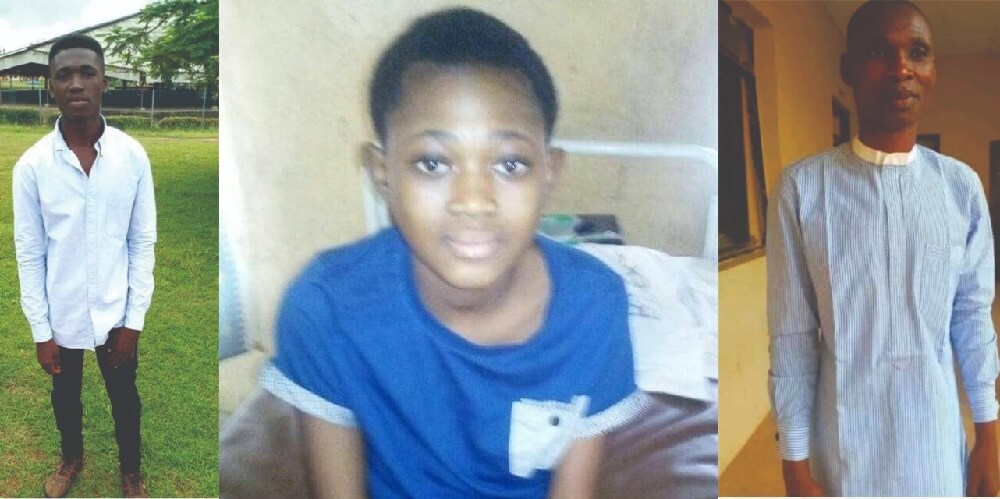
Three years after a Benue State High Court discharged and acquitted Andrew Ogbuja, a lecturer at the Benue State Polytechnic, Ugbokolo, over the alleged rape and death of 13-year-old Ochanya Ogbanje, activists have again raised their voices — demanding a fresh review of the case and justice for the late schoolgirl.
IDOMA VOICE reports that the renewed agitation follows what activists describe as a “painful miscarriage of justice”, after the court cleared Ogbuja of rape in 2022, citing investigative lapses and conflicting medical evidence.
Why the Court Freed Ogbuja
Justice Augustine Ityonyiman of the Benue State High Court, in his 2022 judgment, said the prosecution failed to prove the four-count charge against the lecturer beyond reasonable doubt.
He noted that the police did not conduct a medical examination on Ogbuja to match his DNA with findings from medical reports presented in court.
Worse still, the court said there were two contradictory autopsy reports:
One from the Federal Medical Centre, Makurdi, which stated that Ochanya died of natural causes, and another from the Police Forensic Laboratory in Lagos, which linked her death to diseases related to sexual abuse.
“I cannot pick and choose which of the autopsy reports to rely on,” the judge had ruled, adding that the lack of conclusive evidence left him in a quandary.
Contradictory Judgments
On the same day that Ogbuja was acquitted, the Federal High Court in Makurdi, presided over by Justice Mobolaji Olajuwon, convicted his wife, Felicia Ochiga-Ogbuja, for negligence — after finding that she failed to protect Ochanya from sexual abuse by her husband and son, Victor (who remains at large).
Felicia was sentenced to five months imprisonment without an option of fine.
Unclear appeal and a fading legal window
Three years after the acquittal, it remains uncertain whether the Benue State Ministry of Justice or the prosecution team filed an appeal against the judgment.
Legal experts note that the statutory period for filing an appeal in criminal cases is generally 90 days from the date of judgment, unless an extension is sought and granted by a higher court.
This means that, more than three years later, the window for appeal may have legally closed, effectively sealing the state judgment — unless new evidence emerges strong enough to warrant a retrial.
Activists React
Reacting to the renewed calls, social justice campaigners led by Meddy Olotu expressed shock that three years after, the victim’s memory is being “targeted and insulted,” rather than justice being pursued for her.
“It’s heartbreaking that some people are now trying to blame the dead, instead of demanding justice for a girl who suffered and died,” Olotu said.
He added that the state failed Ochanya by bungling investigations, allowing technical errors and conflicting reports to overshadow clear signs of abuse.
The Case That Shocked a Nation
Ochanya, a 13-year-old student of the Federal Government Girls College, Gboko, reportedly suffered years of sexual abuse in the home of the Ogbujas, who were her relatives.
She fell critically ill and later died in October 2018 after being hospitalized for two months at the Federal Medical Centre, Makurdi.
While the court ruled that the prosecution failed to prove its case against Andrew, activists insist that the judgment remains a scar on Nigeria’s justice system and are now calling for a review or retrial.
“Justice may have delayed, but it must not be denied,” Olotu declared.











APC panicking despite 34 governors, ADC calm – Bolaji Abdullahi

Court to rule on suit seeking to bar Ireti Kingibe from ADC activities

Benue declares one-week Easter holiday for civil servants

Benue ranks second as Nigeria records 20,838 new HIV cases in Q1 2026

Happy New Month of April Prayers, Wishes, Text Messages for Parents, Husband, Wife

100 Happy New Month of April 2026 Messages, Prayers, Wishes, Quotes

El-Rufai returns to court for trial after mother’s burial

Benue: Two injured as suspected herdsmen strike Yelewata again

Stakeholders lament rising number of awaiting trial inmates in Benue

2027: John Ngbede, Chris Adaba ‘Mad Lion’ to lead ADC Campaign in Benue South

Benue: Two injured as armed herdsmen attack Yelwata community again
