
Politics
2027: Do Nigerians still believe their votes can change the government

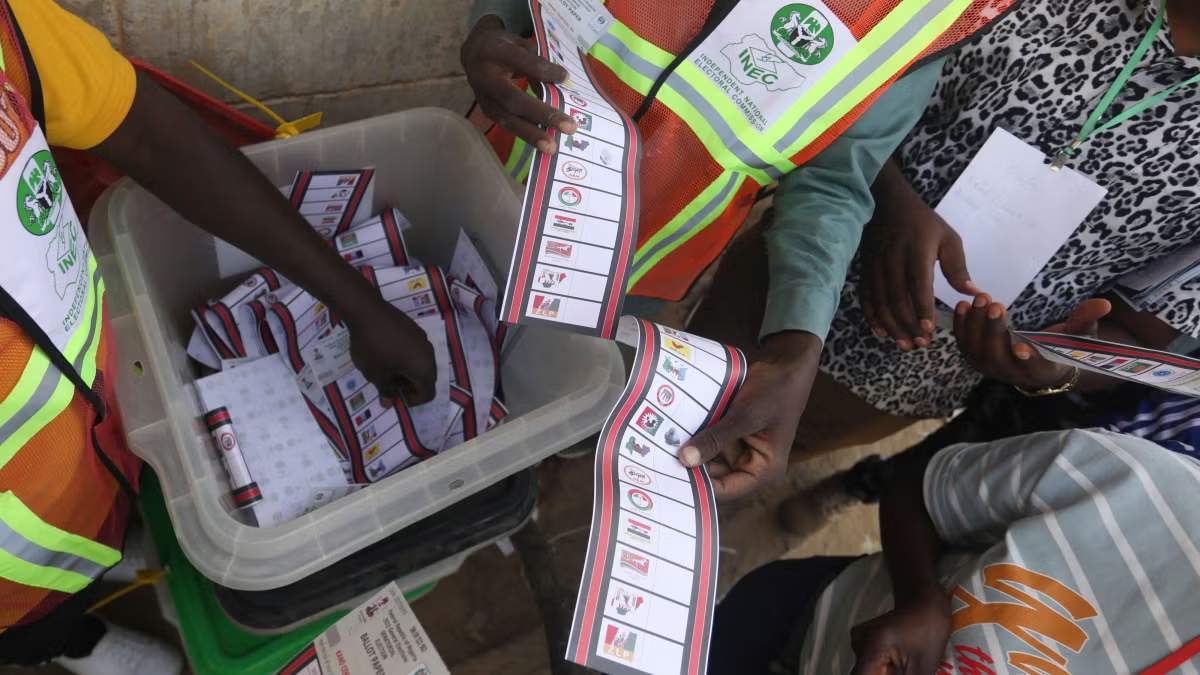
As Nigeria moves closer to the 2027 general elections, growing concerns over electoral credibility, political violence, vote buying and public confidence are raising questions about the future of democratic participation in the country.
Although millions of Nigerians are expected to participate in the next elections, recent surveys suggest that many citizens remain doubtful about whether their votes will count and whether the electoral process will reflect the actual choices of voters.
The concerns come against the background of the 2023 general elections, which left significant disagreements over the credibility of the process, particularly the transmission and collation of results.
For many Nigerians, the challenge ahead is no longer simply choosing their preferred candidates. It is having confidence that the electoral system will respect their choices.
A survey released by Afrobarometer on November 11, 2026, paints a troubling picture of public confidence ahead of the next elections.
The survey found that only 37 per cent of Nigerians expect the 2027 elections to be largely free and fair, while 48 per cent believe the polls will be neither free nor fair.
It also revealed that 89 per cent of respondents consider vote buying likely during the elections.
More concerning is that 79 per cent fear that valid votes may not be counted, while the same proportion anticipate political violence. Another 78 per cent believe political parties and candidates may disregard electoral laws, with an equal percentage expressing concern that incorrect results could be announced.
These figures raise serious questions about the level of trust citizens have in the country’s electoral institutions and the ability of political actors to respect democratic principles.
The 2023 experience and the question of voter confidence
The 2023 general elections remain an important reference point in discussions about Nigeria’s electoral future.
The elections introduced significant expectations surrounding the use of technology, particularly the Bimodal Voter Accreditation System BVAS and the INEC Result Viewing Portal IReV.
Many voters believed the technology would reduce electoral irregularities, improve transparency and strengthen confidence in the process.
However, disagreements over the electronic transmission of presidential election results generated controversy and criticism from opposition parties, civil society organisations and sections of the electorate.
The experience has continued to influence public discussions about whether technological improvements alone can guarantee credible elections.
INEC has maintained that it is committed to improving its operations ahead of 2027. However, rebuilding public confidence will require more than assurances. Voters want an electoral process that is transparent, consistent and accountable.
The turnout figures from the last presidential election also reveal a significant challenge.
Nigeria had 93,469,008 registered voters in 2023, but only 25,286,616 were accredited to vote, representing approximately 27 per cent of registered voters.
The figures highlight the gap between voter registration and actual participation.
Although several factors can influence turnout, including insecurity, logistics, accessibility and personal circumstances, the declining participation trend deserves serious attention.
The question is whether Nigerians who stayed away from the polling stations in 2023 will return in 2027 or whether distrust will further discourage participation.
Nigerians want to vote, but fear what could happen
Despite concerns about electoral credibility, there are indications that many Nigerians still want to participate in the democratic process.
Yiaga Africa’s National Voting Intentions Survey 3.0, conducted in September 2026, found that 84 per cent of respondents were likely or very likely to vote in the 2027 general elections.
However, the survey also identified insecurity and declining institutional confidence as major obstacles to participation.
About 61 per cent of respondents said fear of violence could prevent them from voting, while confidence in INEC had dropped to 34 per cent.
The findings reveal an important contradiction: Nigerians may still want to exercise their democratic rights, but concerns about their safety and the credibility of the process could discourage them.
In communities affected by insecurity, the decision to vote may involve more than political preference.
For residents who fear attacks, intimidation or violence around polling centres, staying away from elections may appear safer than risking their lives.
This raises questions about the responsibility of security agencies, political parties and electoral authorities to guarantee a peaceful environment before, during and after the elections.
Vote buying and the growing influence of money
Another major threat to electoral confidence is the influence of money in Nigerian politics.
Vote buying has remained a recurring concern in the country’s electoral process, with allegations of politicians and their agents offering cash or other incentives to voters in exchange for support.
The latest Afrobarometer survey indicates that 89 per cent of Nigerians consider vote buying likely in 2027.
The report also found that 19 percent of potential voters indicated they would vote for a presidential candidate who gave them money or a gift.
The figures highlight the challenge of ensuring that electoral choices reflect the genuine preferences of citizens rather than financial inducements.
Nigeria’s economic difficulties have also intensified concerns about the vulnerability of low-income voters to political inducement.
For citizens struggling with food prices, unemployment, school fees and other basic expenses, money offered during election campaigns may become difficult to reject.
However, accepting such inducements can undermine the power of voters to hold political office seekers accountable.
When elections become transactions, public policies and leadership performance risk taking a back seat to immediate financial benefits.
The responsibility therefore extends beyond punishing those involved in vote buying. Political parties must also demonstrate that they can compete through credible programmes, transparent campaigns and meaningful engagement with voters.
Political parties and the crisis of public trust
Public confidence in political parties is another important factor ahead of the 2027 elections.
Afrobarometer survey found that only 33 percent of respondents felt close to a political party.
The finding suggests that many Nigerians do not have a strong attachment to the existing political structures, despite the intense competition for power.
Party defections, internal leadership disputes, disagreements over candidate selection and political alliances have also dominated the political environment.
While political realignments are part of democratic competition, frequent movements between parties can raise questions about ideological consistency and the commitment of politicians to the interests of their supporters.
For many citizens, the focus is increasingly shifting from party identity to the credibility, competence and policy positions of individual candidates.
Indeed, 92 per cent of potential voters surveyed by Afrobarometer said they intended to support a presidential candidate whose policies they agreed with.
This suggests that political parties seeking electoral success must pay greater attention to the concerns of citizens rather than relying solely on established political structures and campaign machinery.
What must change before 2027?
The responsibility for restoring public confidence does not rest with INEC alone.
Political parties, candidates, security agencies, the judiciary, civil society organisations and voters all have important roles to play in protecting the electoral process.
INEC must demonstrate transparency in its preparations, voter accreditation, results transmission and collation.
It must also communicate clearly with citizens and address concerns about its procedures before they develop into wider controversies.
Security agencies must provide equal protection to voters and political participants, regardless of their party affiliations.
Political leaders must discourage violence, intimidation and the use of financial inducements to influence electoral choices.
The judiciary must also ensure that election-related disputes receive timely and credible attention.
Beyond these institutional responsibilities, citizens need sustained voter education to understand their rights, the secrecy of their ballots and the importance of participating peacefully.
INEC has already begun nationwide preparations for the 2027 elections, including a six-zone readiness assessment aimed at identifying operational challenges.
However, the success of these preparations will ultimately depend on whether voters can see and trust the improvements.
The North-Central question
For states such as Benue and Plateau, the debate over electoral confidence carries additional significance.
Communities affected by insecurity, displacement and political tensions face particular challenges when it comes to participation in elections.
Displaced residents may struggle to access polling centres or exercise their voting rights in their places of temporary residence.
The experiences of these communities should form part of the national conversation about electoral inclusion.
Political leaders in the region must also demonstrate that their campaigns are centred on security, economic opportunities, infrastructure and other issues affecting ordinary residents.
For voters in Benue and Plateau, the 2027 elections will provide another opportunity to decide who represents their interests at different levels of government.
But that opportunity can only be meaningful if citizens feel safe enough to vote and confident that their choices will be respected.
A test for Nigeria’s democracy
The findings from recent surveys do not suggest that Nigerians have completely lost interest in elections.
Rather, they reveal a population that still wants to participate but has serious reservations about the conditions under which elections are conducted.
The willingness of citizens to vote is important, but willingness alone cannot guarantee credible elections.
The real test will be whether electoral institutions can protect the integrity of the process, whether political actors will respect democratic rules and whether voters can participate without fear or intimidation.
As the 2027 general elections approach, Nigeria faces an important democratic challenge.
Citizens must be convinced that their votes are more powerful than money, political influence and intimidation.
Ultimately, an election is not credible simply because millions of people queue at polling stations. Its credibility depends on whether their votes are accurately counted, transparently declared and respected.
For many Nigerians, the question ahead of 2027 remains simple but fundamental: Will their votes truly determine who governs them?








Plateau people needed you during killings, not campaign — Atiku tackles Tinubu

Benue South 2027: Ottah seeks Och’Idoma’s blessing, presents Certificate of Return ahead of APC Campaign

Ocheje Deborah eyes Face of Art 2026 crown, champions boy child support

2027: Do Nigerians still believe their votes can change the government

Philip Agbese pledges N400m for construction, equipping of ICT Centre in Otukpa

Driver shot, three passengers kidnapped in Otukpo-Oweto highway

2027: APC presents governorship flag to Alia, assures him of victory

“Forgive me for not entering Plateau last time” – Tinubu appeals to residents

2027: Control your supporters or violence will consume us all – Gumi warns politicians

Tinubu delivered on security, infrastructure promises to Plateau – Yilwatda

Enone 2027: Aida Nath names Agbese’s Ex-Campaign DG, Akor Ikwuoche Committee Chairman
