
idoma news
2027presidency: Idoma’s Peter Agada, Ada Okwori make INEC final list to face Tinubu, Atiku, Obi, others

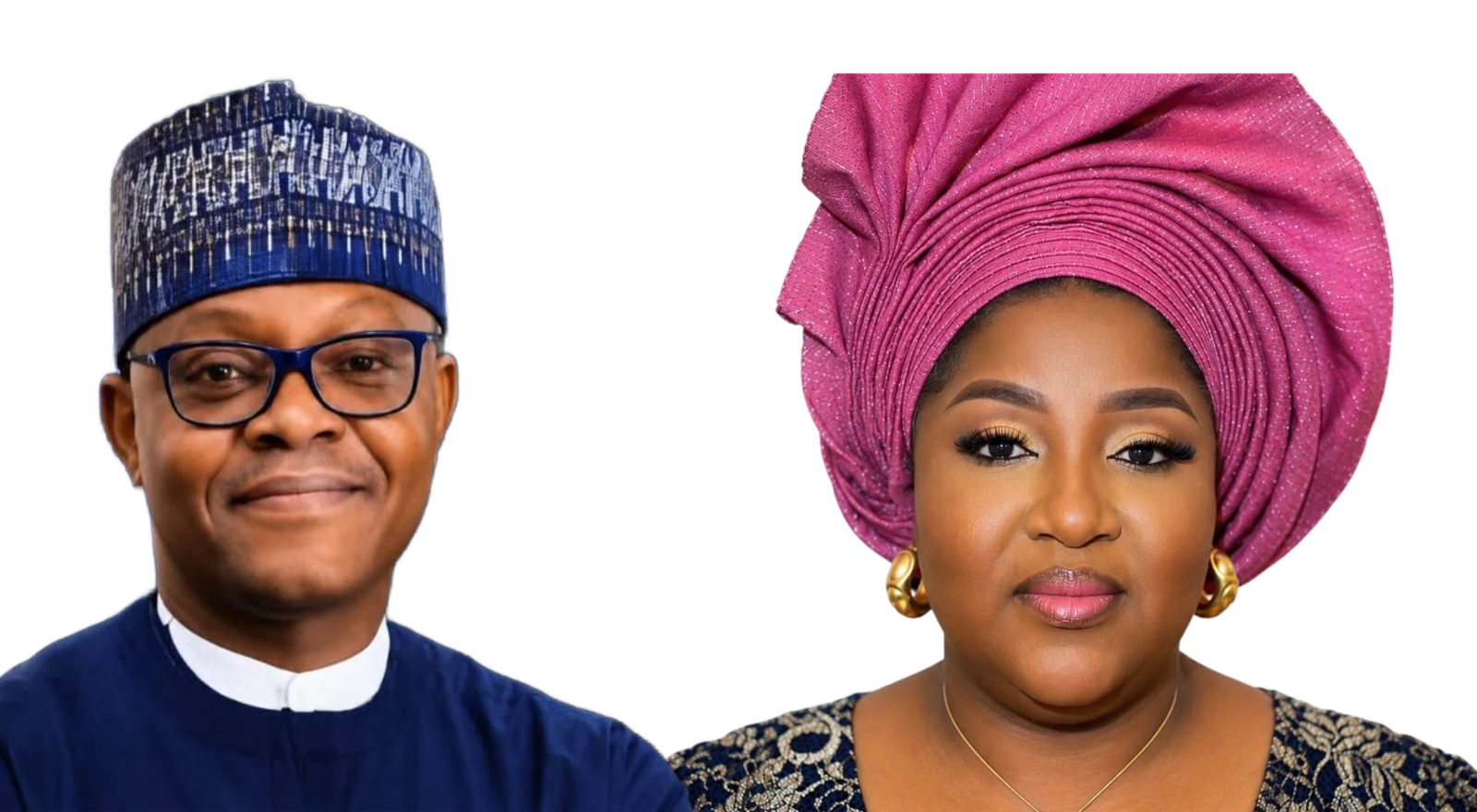
For a people whose political history stretches back to Nigeria’s First Republic, the appearance of two Idoma natives on the final list of presidential candidates for the 2027 election is more than another entry in the electoral calendar, IDOMA VOICE reports.
It is a fresh moment in the long and sometimes complicated story of the Idoma people’s contribution to the Nigerian project.
When the Independent National Electoral Commission (INEC) released its final list of presidential candidates on Saturday, September 12, two names from Benue South stood out: Peter Ada Agada of the Young Progressives Party (YPP) and Ada Elizabeth Frederick Okwori of the National Democratic Party (NDP). They are among the 18 presidential candidates cleared for the January 16, 2027 election.
Their presence puts an Idoma man and an Idoma woman in the contest for Nigeria’s highest political office alongside President Bola Tinubu, former Vice President Atiku Abubakar, former Anambra State Governor Peter Obi and other presidential contenders.
But the significance of Agada and Okwori goes beyond the novelty of having two Idoma names on a presidential ballot.
It raises an old question in a new form: After decades of producing ministers, legislators, diplomats, Senate presidents and other national figures, can an Idoma son or daughter finally move from participating in the Nigerian project to seeking its highest office?
Agada: From architecture and enterprise to the presidential race
Peter Ada Agada, an architect, entrepreneur and politician, did not begin his 2027 journey with the YPP.
He was previously a presidential aspirant of the Labour Party before leaving the party after his disqualification from its presidential primary. He joined the YPP in June 2026 and was subsequently selected to replace Anita Zugwai-Chukwu as the party’s presidential candidate.
The YPP formally affirmed Agada as its presidential candidate at a substitution primary in Abuja in August, with Patience Ndidi Key as his running mate.
INEC’s final list gives Agada’s age as 54 and records his qualifications as WAEC, BSc and MBA.
Agada has presented his candidacy as an attempt to move Nigerian politics away from personality-driven contests towards production, enterprise and measurable development.
Among the ideas he has promoted is what he calls “Ward Capitalism”, a model that would make the ward a major unit of economic development by directing resources, infrastructure and enterprise support closer to communities.
He has also spoken about decentralised development, technology, youth employment, education, healthcare and production.
In explaining his decision to seek the presidency, Agada has repeatedly argued that Nigeria’s challenges, particularly poverty, insecurity, unemployment and the exclusion of millions of children from formal education, require a different approach to governance.
His candidacy therefore represents one strand of the emerging Idoma presidential story: a professional and entrepreneur stepping into national politics with a message centred on economic transformation and grassroots development.
Okwori: Building a party before seeking the presidency
If Agada’s journey has been shaped by professional and political experience, Ada Elizabeth Frederick Okwori’s path has been defined by the attempt to build a political platform of her own.
An Idoma from Otukpo, Okwori founded the National Democratic Party and currently serves as its national chairman.
Her political project suffered a major setback when INEC initially declined to register the NDP. Okwori and other party officials challenged the decision in court, and the Federal High Court in Abuja ordered INEC to register the party after finding that the applicants had met the relevant constitutional and statutory requirements.
INEC now lists Okwori as the NDP’s national chairman, with the position recorded “by court order.”
Her presidential candidacy subsequently emerged through a consensus process within the NDP.
The commission’s final list records Okwori as 48 years old, with FSLC, SSCE and HND Accountancy qualifications.
Okwori has positioned the NDP as a platform for Nigerians she says have been excluded by the established political order, particularly women, young people and people without powerful political sponsors.
The party’s stated principles include integrity, accountability, inclusion, service and nation-building.
Her candidacy therefore adds another dimension to the Idoma story: an Idoma woman not merely seeking elective office but attempting to create a national political vehicle through which she can pursue the presidency.
But the story did not begin with Agada and Okwori
Long before the two candidates appeared on INEC’s 2027 presidential list, Idoma men and women had been leaving their footprints across Nigeria’s political history.
One of the earliest prominent names was Chief Abutu Obekpa, who emerged during the First Republic.
Obekpa, from Otukpa in present-day Ogbadibo Local Government Area, was elected to represent Idoma West in the Northern Regional Assembly in 1954 and later became a regional minister responsible for Kaduna Affairs under Prime Minister Tafawa Balewa.
His significance went beyond occupying office. Accounts of his political career describe him as one of the early political figures who encouraged and mentored younger Idoma intellectuals and politicians.
Among the names associated with that generation was Jacob C. Obande.
J.C. Obande and the First Republic generation
Jacob C. Obande occupies a special place in the history of Idoma participation in Nigeria’s national politics.
He served as parliamentary secretary to Prime Minister Tafawa Balewa in 1958 and later served as a federal minister, including responsibilities connected with the Nigerian Army and Establishment and later Mines and Power.
Obande had already been active in representative politics before independence, serving in the Northern House of Assembly and later winning the Idoma South-East parliamentary election in 1959.
The significance of that era cannot be separated from the broader struggle of minority communities in the emerging Nigerian federation to gain representation and influence.
For Idoma, participation in the First Republic established an enduring pattern: political representation at the national level would be pursued not simply as an ethnic entitlement, but as a route into the wider Nigerian conversation.
From Obekpa and Obande to Ogbu
Another towering figure of that generation was Ambassador Edwin Ogebe Ogbu, who became one of the prominent diplomats produced by the Idoma community.
Records compiled on notable Benue South pioneers describe Ogbu as the first graduate from Northern Nigeria in 1951, the first master’s degree holder from Northern Nigeria in 1955, and a long-serving Nigerian permanent representative to the United Nations.
He also chaired a United Nations committee on action against apartheid, placing an Idoma name in international diplomacy at a time when Nigeria was establishing its place in the global community.
That contribution is important because the Nigerian project was never built only in parliament or ministries. It was also built in education, diplomacy, administration, law, agriculture, the military, academia and international institutions.
Audu Ogbe: From young minister to elder statesman
Few Idoma political careers span as many eras as that of Chief Audu Innocent Ogbe.
The Efugo-Otukpa born farmer entered politics in the Second Republic and became deputy speaker of the Benue State House of Assembly in 1979. In 1982, at the age of 33, he was appointed Minister of Communications under President Shehu Shagari and later served as Minister of Steel Development.
His political career did not end with the collapse of the Second Republic.
Ogbe later returned to national politics, became national chairman of the Peoples Democratic Party from 2001 to 2005 and subsequently returned to the federal cabinet as Minister of Agriculture and Rural Development between 2015 and 2019.
In other words, an Idoma politician who entered federal politics in the early 1980s remained relevant across different political generations.
Ameh Ebute and the Senate Presidency
The story then moved into the legislative arm of government.
Senator Ameh Ebute, representing Benue South, became President of the Senate in 1993 during the short-lived Third Republic. His tenure was brief, but historically significant.
Ebute was also among the politicians and pro-democracy activists detained by the military regime after the political crisis surrounding the annulment of the June 12, 1993 presidential election. Amnesty International documented his detention as that of a prisoner of conscience.
His story reflected another side of the Nigerian project: the struggle for democratic rule itself.
Then came David Mark
If Ebute’s Senate presidency was brief, David Alechenu Bonaventure Mark’s was anything but.
The former Army Brigadier-General represented Benue South in the Senate for five consecutive terms, spanning 20 years, and served as Senate President from 2007 to 2015.
His eight years as Senate President made him one of the most powerful political figures in the country.
His tenure also meant that Benue South produced a remarkable legislative record: the senatorial district had produced two Senate presidents — Ameh Ebute and David Mark.
Mark’s national role extended beyond the Senate chamber. During the constitutional crisis surrounding the illness of President Umaru Musa Yar’Adua in 2010, he was part of the political process that culminated in the invocation of the Doctrine of Necessity, allowing Vice President Goodluck Jonathan to assume presidential powers.
The wider roll call
The list does not end there.
Idoma and Benue South have produced figures such as Jerry Agada, who served as Minister of State for Education; Abba Moro, who served as Minister of Interior and now represents Benue South in the Senate; and Sam Ode, who served as Minister of State for Niger Delta Affairs before becoming Deputy Governor of Benue State.
There have also been Idoma contributions in the civil service, academia, diplomacy, media, military and private enterprise.
The pattern is striking: from the First Republic to the present Fourth Republic, Idoma professionals and politicians have repeatedly occupied positions through which they participated in the making, administration and political contest of Nigeria.
Now, the presidency
That history provides the backdrop against which the 2027 candidacies of Peter Agada and Ada Okwori should be viewed.
Neither candidate is guaranteed victory. The presidential contest features 18 candidates, including Tinubu, Atiku, Obi and other nationally known politicians.
But for the Idoma people, the significance lies partly in the fact that two of their own have moved from the traditional roles of legislators, ministers and political appointees into a direct contest for the presidency.
For decades, the Idoma contribution to Nigeria’s political history has largely been measured by participation in governments led by others.
Obekpa served under Balewa.
Obande worked within the First Republic’s federal structure.
Ogbe served under Shagari and Buhari.
Ebute and Mark presided over the Senate.
Moro served as Interior Minister.
Others have contributed through diplomacy, education, administration, business and public service.
Now, in 2027, an Idoma man and an Idoma woman are asking Nigerians to consider them for the office at the very top of that structure.
Agada and Okwori may ultimately win or lose the presidential contest. But their presence on the INEC final list has already added a new chapter to the long Idoma political journey — from participation in the First Republic to an open bid for Aso Rock.
And perhaps that is the real significance of the 2027 moment:
Idoma is no longer merely asking who will represent it in Abuja. Two of its citizens are asking whether they can represent Nigeria itself.








Woman remanded for allegedly cutting husband’s manhood in Niger

Govt that cannot protect lives does not deserve power — Kwankwaso

‘I saw a dead vulture on my bed after winning election’ — Okpebholo

Ballon d’Or 2026: Five players who could win the award

Ballon d’Or: Gerrard explains why Kane should beat Yamal, Mbappe

Edo: Okpebholo removes regent, restores traditional ruler 11 months later

2027: Obi, Kwankwaso to hold Middle belt Town hall meeting in Jos

2027 election: APC chieftain Okechukwu warns of possible run-off

Tinubu’s arrival: Kaduna steps up security ahead of APC campaign rally

Five Sheikhs abducted after Tinubu re-election prayer still in captivity 41 days later

Lagos-Calabar coastal highway not land grabbing, Umahi insists
