
Nigeria News
End of the road: Inside the rise, battles and exit of Nigeria’s Police IG, Kayode Egbetokun

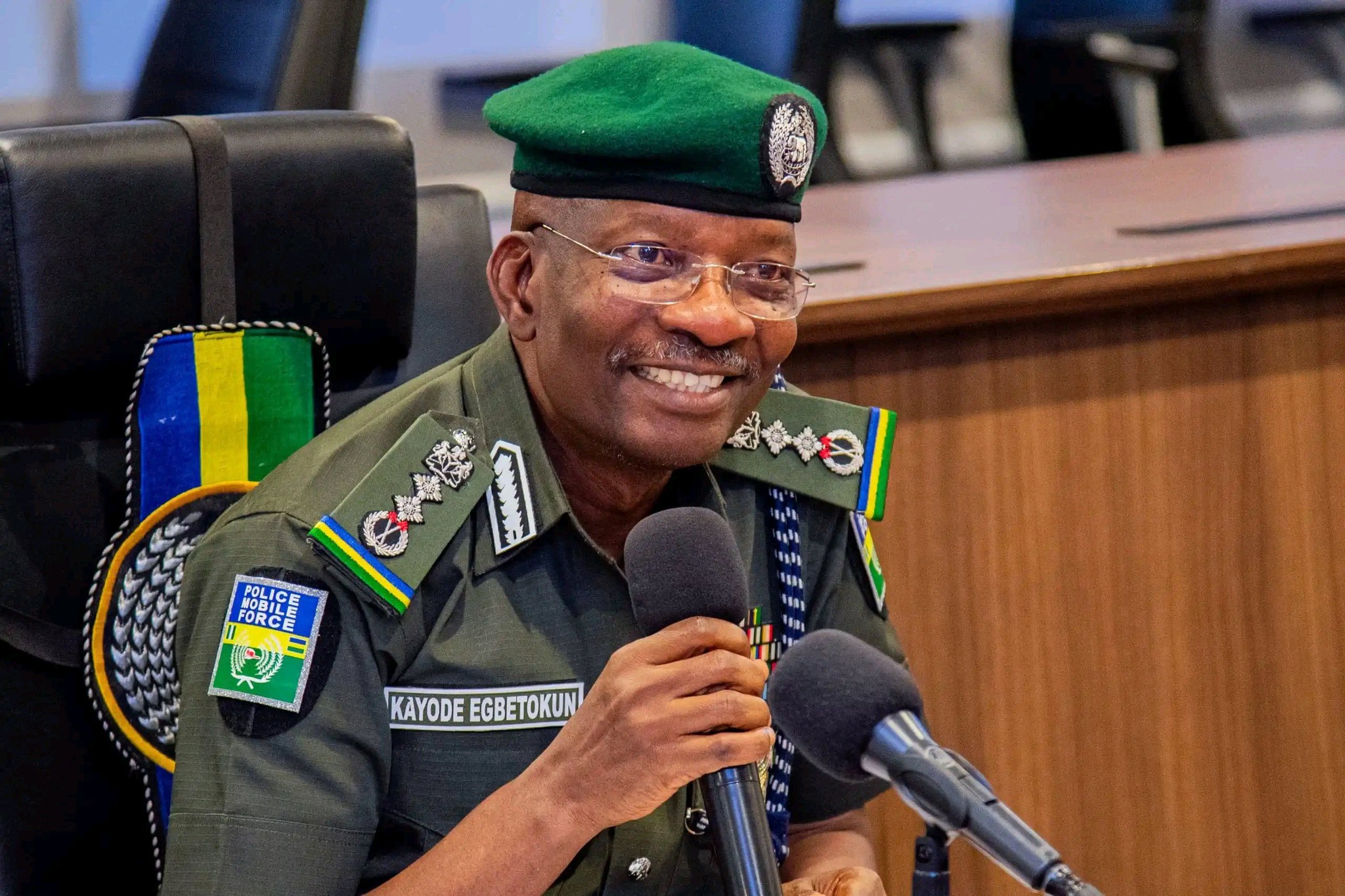
After months of speculation, political calculations and mounting institutional pressure, the tenure of former Inspector-General of Police, Kayode Egbetokun, has come to an end, closing one of the most debated chapters in recent policing history in Nigeria.
From his dramatic appointment in 2023 to the controversies that trailed his extended stay in office, Egbetokun’s leadership journey reflected both the complexities of policing Africa’s most populous nation and the delicate intersection between politics, law enforcement, and public perception, IDOMA VOICE reports.
Egbetokun’s emergence as Inspector-General followed his appointment by President Bola Tinubu on June 19, 2023, shortly after the President assumed office.
A seasoned officer with decades of experience, he had built a reputation within the Nigeria Police Force as a disciplined administrator and intelligence-driven strategist.
Prior to becoming IGP, he served in several operational and strategic roles, including as Chief Security Officer to Tinubu during the latter’s tenure as Lagos State governor, a relationship that many believed played a role in his eventual elevation.
His appointment was later confirmed by the Nigeria Police Council, cementing his position as the 22nd Inspector-General of Police.
At the time, expectations were high. Nigeria faced rising insecurity across multiple fronts, banditry in the North-West, farmer-herder conflicts in the Middle Belt, separatist tensions in the South-East, and urban crime challenges nationwide.
Egbetokun promised professionalism, intelligence-led policing, and institutional reforms.
Early battles and security challenges
From the outset, his tenure was defined by crisis management.
Kidnappings for ransom surged in several states, attacks on rural communities intensified, and public criticism mounted over the police response to violent crimes. Critics argued that despite strategic deployments and operational directives, insecurity persisted at troubling levels.
Supporters, however, maintained that the police were overstretched and underfunded, battling deeply rooted criminal networks that required broader inter-agency coordination.
Under his leadership, the police launched multiple nationwide operations targeting kidnappers and organized crime syndicates. Yet each security breakthrough was often overshadowed by fresh incidents elsewhere.
The controversial extension
Perhaps the most defining controversy of Egbetokun’s tenure revolved around his retirement status.
Appointed at age 58, he was originally due to retire in September 2024 upon reaching the mandatory retirement age of 60. Instead, legislative adjustments and executive backing enabled his tenure to continue beyond that date, a decision that triggered intense national debate.
Opposition voices and civil society groups questioned whether the extension undermined institutional norms within the police hierarchy. Some senior officers reportedly felt promotion pathways were blocked, creating internal tensions within the force.
For example, activist Omoyele Sowore repeatedly described Kayode Egbetokun as an “illegal IGP” following the extension of his tenure beyond the statutory retirement period and that controversy became part of the broader national debate about police leadership and legality.
Government allies defended the move, arguing that continuity was necessary during a fragile security period and that experienced leadership should not be sacrificed to bureaucratic timelines.
The controversy never fully faded.
Public relations storms and institutional pressure
Egbetokun’s administration also navigated recurring accusations of heavy-handed policing, allegations of selective enforcement, and debates over protest management.
Human rights advocates repeatedly called for stronger accountability mechanisms within the force, while social media amplified public dissatisfaction whenever viral incidents involving officers emerged.
Internally, the balancing act between maintaining discipline and reforming entrenched institutional culture proved challenging.
Despite these pressures, he remained publicly resolute, often emphasizing professionalism and operational modernization.
The final exit
His eventual removal signals more than a routine leadership change. For many observers, it represents the closing phase of a tenure shaped as much by political expectations as by security realities.
Assistant Inspector-General Tunji Disu, widely regarded as an operationally experienced officer, has now stepped into the role amid expectations of renewed reforms and a different policing direction.
Legacy: reformist or survivor?
History may ultimately judge Egbetokun’s tenure through competing lenses.
To critics, his era symbolized institutional stagnation and controversial precedent-setting decisions. To supporters, he was a steady administrator navigating one of the most volatile security periods in modern Nigerian history.
What remains undeniable is that his time in office was rarely quiet.
From legislative debates over tenure to relentless security crises and public scrutiny, Egbetokun’s leadership tested both the resilience of the police institution and the patience of Nigerians demanding safer communities.
Now, with the final curtain drawn, the question shifts from how he governed to what lessons his successor and the institution he leaves behind, will carry forward.










Military Pension Board: Onoja Declares Full Support for Abdulraheem

Police confirm abduction of 14 JAMB UTME candidates in Otukpo, Benue

Gunmen kidnap 18 passengers in Benue Links bus attack in Otukpo

Army foils abduction, rescues two victims in Benue

Late Brigadier General Braimah, others buried with full military honours in Maiduguri

BREAKING: 2027 will be my last attempt at the presidency – Atiku

‘I’ll send you to scatter them, they’re already confused’ – Tinubu tells Akpabio
Why ADC lost Anambra, FCT polls – Aregbesola

‘Road to Aso Rock begins now’ – David Mark speaks as ADC alters constitution at convention

Herdsmen Declare War on Idoma Community – Untold story of Edikwu-Ankpali massacre

Gov Alia orders immediate flush-out of armed herders from Benue forests