
Nigeria News
Senate moves to ban recruitment of underage persons into military

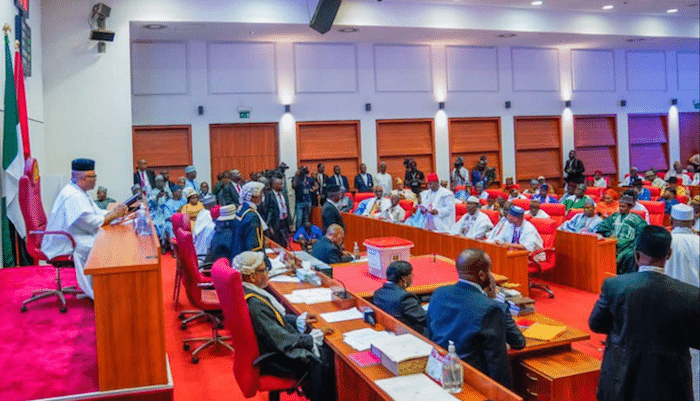
The Senate has taken a major step toward ending the recruitment of minors into Nigeria’s Armed Forces, passing the Armed Forces (Repeal and Re-enactment) Bill, 2025, for second reading.
The proposed law expressly prohibits the enlistment of persons under 18 years old, aligning Nigeria’s military recruitment standards with the Child Rights Act (2003), the UN Convention on the Rights of the Child, and the African Charter on the Rights and Welfare of the Child.
Sponsored by Senator Abdulaziz Yar’Adua (Katsina Central), the bill seeks to repeal the current Armed Forces Act of 2004 and replace it with a more constitutionally compliant, transparent, and operationally modern framework.
Leading debate on the motion, Yar’Adua said the reform was long overdue, noting that the existing law—originally derived from a military decree—no longer fits Nigeria’s democratic and security realities.
“Our Armed Forces are a symbol of national unity and pride, but the laws guiding them have not evolved at the same pace as our democracy. This Bill rebuilds the military’s legal foundation to reflect justice, professionalism, and respect for human rights,” he said.
The bill introduces broad reforms, including redefining military offences, imposing proportionate punishments, and protecting the independence of courts-martial by criminalizing interference from superior officers—aimed at curbing abuse of power.
For the first time, legally trained military officers will be allowed to represent the Armed Forces in civil courts, while a standing litigation fund will be established to handle military-related legal cases efficiently.
It also replaces outdated fines—some as low as ₦200 or ₦500—with percentage-based penalties linked to the offender’s salary, ensuring punishments remain fair and economically relevant.
Additionally, the bill strengthens the chain of command and reinforces civilian control over the military by clearly vesting operational command in the Chief of Defence Staff, under the President’s authority, in line with Section 218 of the Constitution.
This measure, lawmakers say, removes ambiguity in command structure and upholds the principle of civilian supremacy—an essential element of any constitutional democracy.
The legislation has been referred to the Senate Joint Committee on Army, Navy, and Air Force, which is expected to present its report within four weeks.








BREAKING: Many trapped as Ugo West Hotel under construction collapses in Jikwoyi, Abuja

Raphinha injury is a shame – Barcelona president

INEC spoils David Mark’s homecoming party, axes ex-Senate President as ADC National Chairman

BREAKING: We will no longer recognise David Mark as ADC chairman – INEC

BREAKING: Court sends Blord to Kuje prison over alleged impersonation of VeryDarkMan

Benue: 11 schoolgirls expelled after attack on female student

Panic in Jos as violence returns hours after curfew ease

BREAKING: DSS detains El-Rufai again; bail application ruling scheduled for April 14

EFCC arrests popular Abuja property agent, Hajia Adama Ahmed Adamu over alleged N288m fraud

Polaris Bank Strengthens Legacy of Excellence with Major Renovation of Historic Faculty Building at University of Ibadan

When 8 million Customers Trust You, Safety Cannot Be an Afterthought
