
idoma news
[OPINION] Enone APC Primaries: When a stranger decides the fate of Idoma people, By Amos Apeh

By Amos Apeh
The events that played out during the All Progressives Congress, APC, House of Representatives primary election in the Ado/Okpokwu/Ogbadibo Federal Constituency, popularly known as Enone, have once again exposed the deep political contradictions confronting the Idoma nation.
For many observers, what happened was not merely about the emergence of a candidate. It was about power, control, and the growing fear among Idoma people that their political destiny is increasingly being determined outside their own collective will.
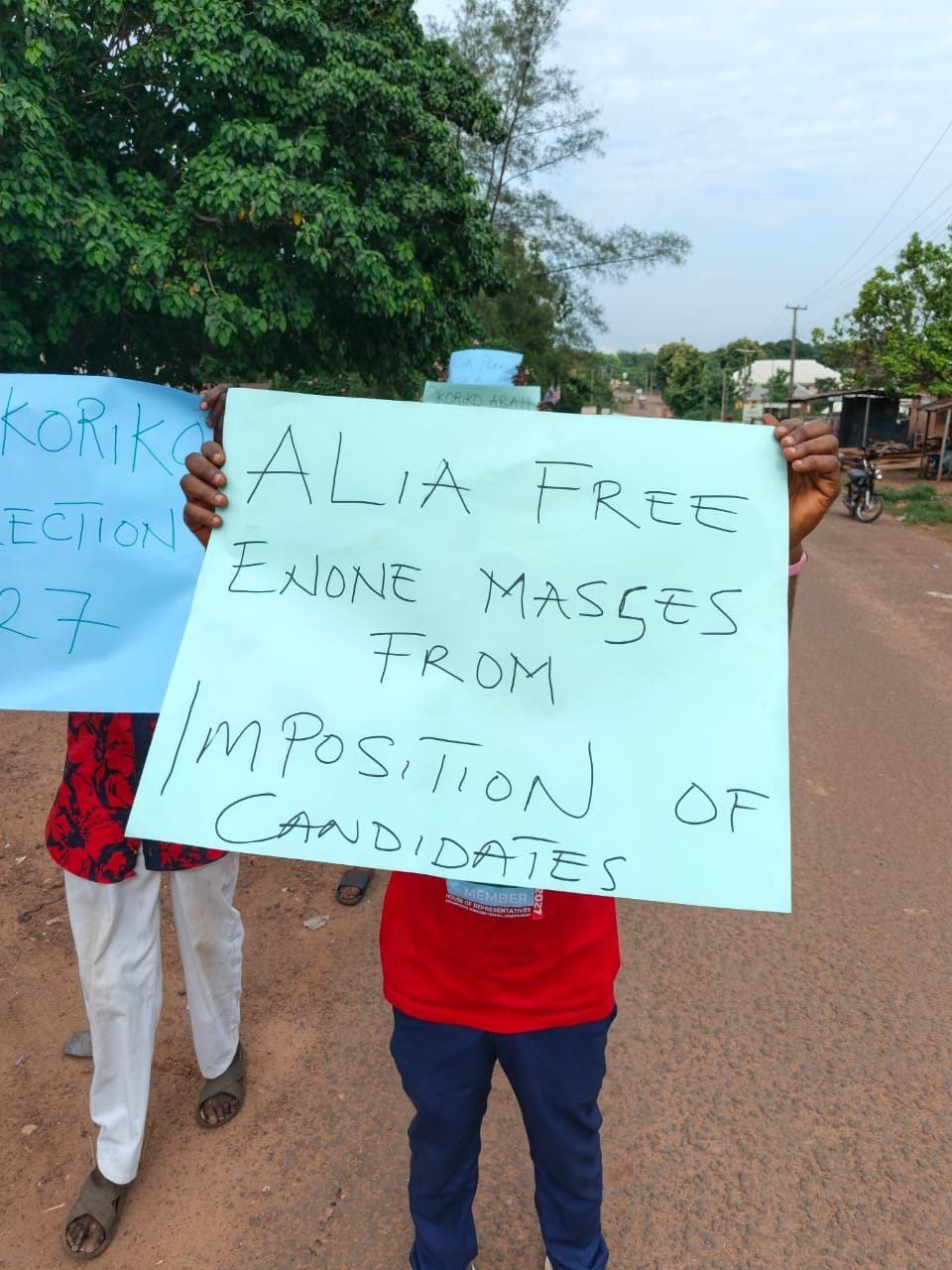
At a time when the Idoma nation is clamouring for emancipation, equity, fairness, and stronger political relevance in Benue State, it is disturbing that allegations of imposition and external interference continue to dominate political processes in Enone.
Across the constituency, party members and supporters openly complained that no real primary election took place. Aspirants alleged that electoral materials never reached the wards, while protests erupted in Okpoga amid claims that party officials disappeared with results.
What angered many people most was the growing perception that the process was carefully manipulated to favour a preferred aspirant allegedly backed by forces outside Enone.
For many Idoma youths and stakeholders, the situation raises an uncomfortable question: How did a contest involving the future of Idoma people become one allegedly dictated by the political interest of a Tiv power bloc?
The resentment is not necessarily against any ethnic group. Benue remains one state, and political alliances are expected in every democracy. However, the bitterness comes from the feeling that Enone people were denied the opportunity to freely decide who represents them.
The Idoma political struggle has always centred on inclusion, respect, and self-determination within the Benue political equation. From agitation for fairness in appointments to calls for political balance, the cry has consistently been that Idoma people deserve the right to shape their own future.
Unfortunately, what transpired during the APC primaries appears to many as the exact opposite.
Several party faithful insist that the process was stage-managed long before delegates gathered. The protests witnessed in Okpokwu and Apa, including youths carrying symbolic coffins to reject the exercise amid insecurity concerns, reflected deeper frustrations beyond ordinary party disagreements.
To many young people, the APC primary became a symbol of how disconnected political leaders have become from the realities facing ordinary citizens in Idoma land.
Even more concerning is the political implication of these developments ahead of the 2027 senatorial election.
The Enone crisis may only be a rehearsal for a bigger political battle within Benue South. If party structures can allegedly be manipulated to impose candidates at the federal constituency level today, many fear the same template could be deployed during the Benue South senatorial contest tomorrow.
That is why the current outrage should not be dismissed as mere post-primary frustration.
The Idoma political class must understand that suppressing internal democracy carries dangerous consequences. When people repeatedly feel ignored, sidelined, or politically conquered within their own territory, resentment naturally grows.
The real strength of democracy lies not in producing winners by force, but in giving the people confidence that their votes, voices, and choices matter.
If APC truly hopes to remain strong in Enone and across Benue South, it must rebuild trust among its grassroots supporters. Anything short of that may deepen political divisions and weaken the party ahead of future elections.
Ultimately, the issue before Enone is larger than one candidate or one primary election. It is about whether Idoma people will genuinely control their political future or continue to watch others determine it for them.
Ameh Apeh writes from Jimeta, Adamawa State





OPINION: Deputy Speaker Lami Danladi Ogenyi represents a handshake across Ado blessed with organic followers for APC

CSOs, Falana demand investigation into deaths of 37 NSCDC detainees in Niger

PenCom: FG pays N1.1bn additional benefits to 175 retirees

Suspected robbers raid TSU students’ residences in Jalingo

NSCDC releases names of 37 suspected illegal miners who died in custody

Politicians are turning Nigerian youths into political labourers – Sule Lamido

Shettima arrives New York for 81st UN General Assembly

Imo LG elections: APGA asks High Court to stop september 26 Poll

Man allegedly hacks mother to death with machete in Abia

NSCDC arrests 35 year-old over alleged cable theft in Jigawa

Minna miners’ deaths: Adeyanju rejects honorarium, vows to expose cover-up
