
Benue news
Samuel Ortom at 65: Celebrating the Defender of the Benue Valley

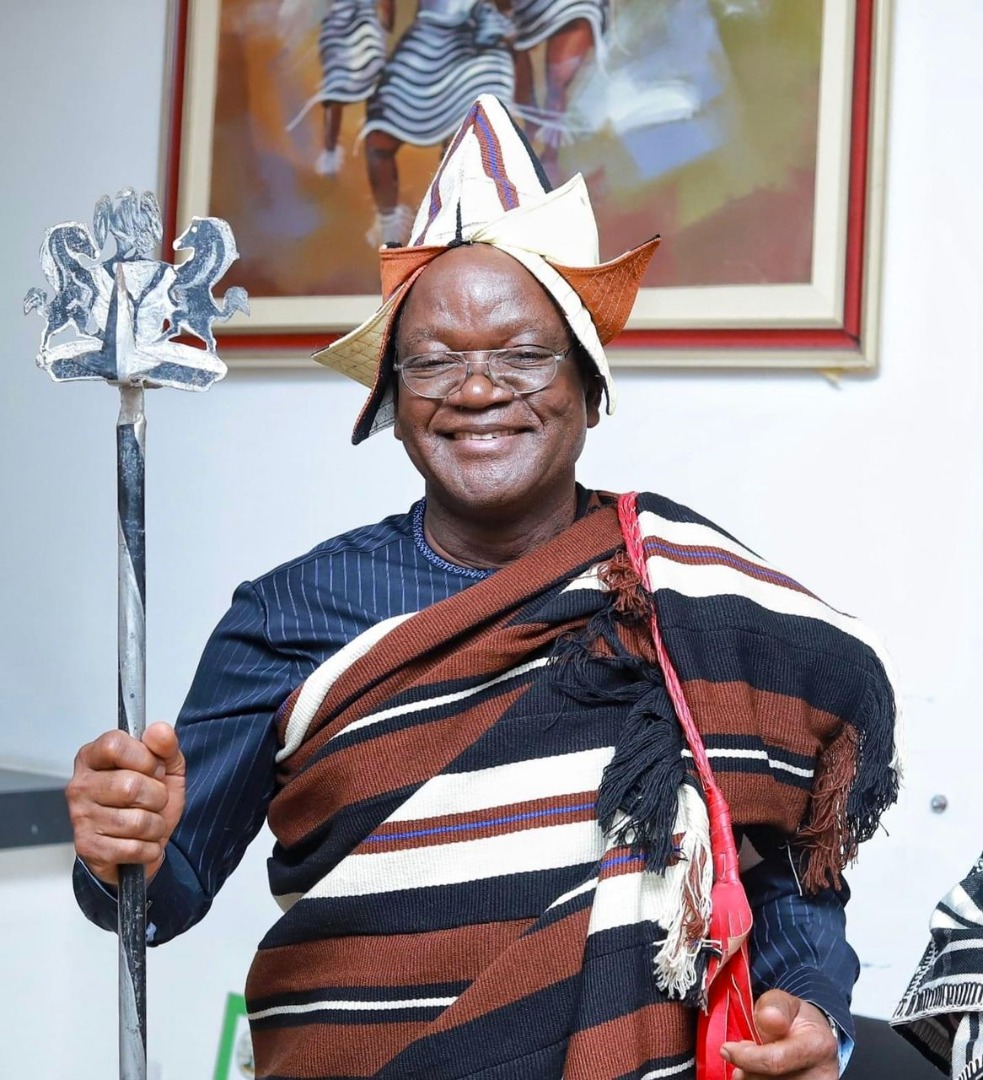
Idoma Voice Editorial
At 65, Samuel Ortom stands as one of the most consequential figures in the contemporary history of Benue State, a leader whose years in office were defined not by ease, but by resolve in the face of relentless adversity.
His years in office were forged in extraordinary circumstances. At a time when the Benue State faced grave security challenges that threatened lives, livelihoods, and the very fabric of rural communities, Ortom emerged as a rallying figure.
He confronted the crisis directly, amplifying the fears and concerns of his people while placing their safety above all else. He refused to downplay the violence as mere “skirmishes,” instead describing it unequivocally as genocide. That unwavering stance, maintained even in the most uncertain moments, earned him the enduring title, Defender of the Benue Valley.
It was this posture that earned him the enduring title: Defender of the Benue Valley.
Ortom’s leadership was anchored on a clear principle, that the primary duty of government is the protection of lives and property. At a time when many called for restraint or compromise, he amplified the voices of his people, insisting that the security and dignity of Benue communities could not be negotiated.
His stance resonated far beyond the state, drawing national attention to the plight of agrarian populations caught in cycles of violence.
Central to his legacy was his relentless support for policies aimed at safeguarding local communities, including legislative measures designed to regulate land use and protect farming activities. While such decisions attracted debate and, at times, fierce opposition, Ortom remained steadfast, convinced that history would ultimately judge his actions through the lens of courage rather than convenience.
Yet, beyond the headlines of conflict and advocacy, Ortom’s administration also pursued a deliberate agenda of rebuilding and development. His approach to governance recognised that security and infrastructure are intertwined, that lasting peace must be supported by economic opportunity, access, and social investment.
In infrastructure, his administration prioritised road construction and rehabilitation across key urban and rural corridors. Strategic link roads were developed to ease movement within Makurdi and other major towns, while rural access roads opened up farming communities, connecting producers to markets and reducing post-harvest losses. These interventions, though often understated, contributed significantly to local commerce and mobility.
Urban renewal also featured prominently. Efforts to improve drainage systems and road networks in Makurdi helped address perennial flooding challenges and enhanced the city’s functionality. Public buildings, including government offices and institutions, saw upgrades aimed at improving service delivery and administrative efficiency.
In the education sector, Ortom’s government undertook the renovation and construction of schools, particularly at the basic education level. Investments were directed toward improving learning environments, providing classroom blocks, and supporting teacher welfare. These efforts reflected a recognition that human capital development is central to the state’s future.
Healthcare was another area of focus. Primary healthcare centres received attention through upgrades and equipment provision, while general hospitals were strengthened to deliver better services. The administration also supported health interventions aimed at improving maternal and child care, particularly in underserved rural areas.
Agriculture: long the backbone of Benue’s identity as the “Food Basket of the Nation”, remained central to Ortom’s development strategy. His government introduced policies and support mechanisms designed to empower farmers, enhance productivity, and protect agricultural land. By promoting value chains and improving access routes, the administration sought to reposition agriculture as both a livelihood and a driver of economic growth.
Civil service reforms and efforts to maintain wage stability, despite fiscal pressures, also formed part of his governance record. In a challenging economic climate, his administration navigated revenue constraints while striving to meet obligations to workers and sustain government operations.
Importantly, Ortom’s tenure elevated Benue’s voice in national discourse. He became a prominent advocate on issues of security, federalism, and land rights, ensuring that the experiences of his people were neither ignored nor diminished. His leadership style—direct, outspoken, and people-centred, resonated strongly with many who saw in him a leader willing to stand firm regardless of political cost.
To his supporters, Ortom embodied a rare kind of leadership, one that spoke plainly, acted decisively, and refused to abandon its people in moments of distress. To others, he represented a bold, if controversial, voice in Nigeria’s evolving conversation on federalism, land rights, and internal security.
At 65, his legacy is best understood not in isolation, but as a convergence of courage and construction, of standing in defence while simultaneously building for the future. He governed in a period where easy choices were scarce, yet he remained guided by a conviction that leadership must be both protective and progressive.
At 65, Samuel Ortom’s story remains inseparable from the story of the Benue Valley itself—a narrative of struggle, resilience, and the enduring quest for safety and justice. His legacy, forged in the crucible of conflict, continues to echo in the fields, towns, and communities he vowed to defend.
For many, the title endures not as a slogan, but as a testament: Defender of the Benue Valley.



NAF commissions solar-powered modern market in Okpoga

James Oche recounts two years at PCC, salutes Bashir Abubakar

Nigerian researcher Peter Akor makes history with double win At UK’s Vitae 3MT Final

Insecurity: I refused to pay ransom after bandits abducted my brothers – Zamfara gov

2027: Don’t treat Tinubu’s re-election as a done deal, lawyer warns

BREAKING: FG confirms 32 onboard crashed military aircraft in Ondo

FCT Minister Nyesom Wike to deliver keynote at maiden edition of Idoma Hall of Fame induction
Ban DNA tests, they’re destroying marriages — Nigerian woman

Peter Obi destroyed APGA, reject him in 2027 — Anambra govt

Seven passengers injured as gunmen attack traders in Plateau

Police arrest two suspected kidnappers after N10.3m ransom payment in Rivers
