
idoma news
[Apa/Agatu 2027: ‘We need leaders who understand the pain of our people’ — Apochi Nelson [INTERVIEW]

Published
5 months agoon
By
Agbenu James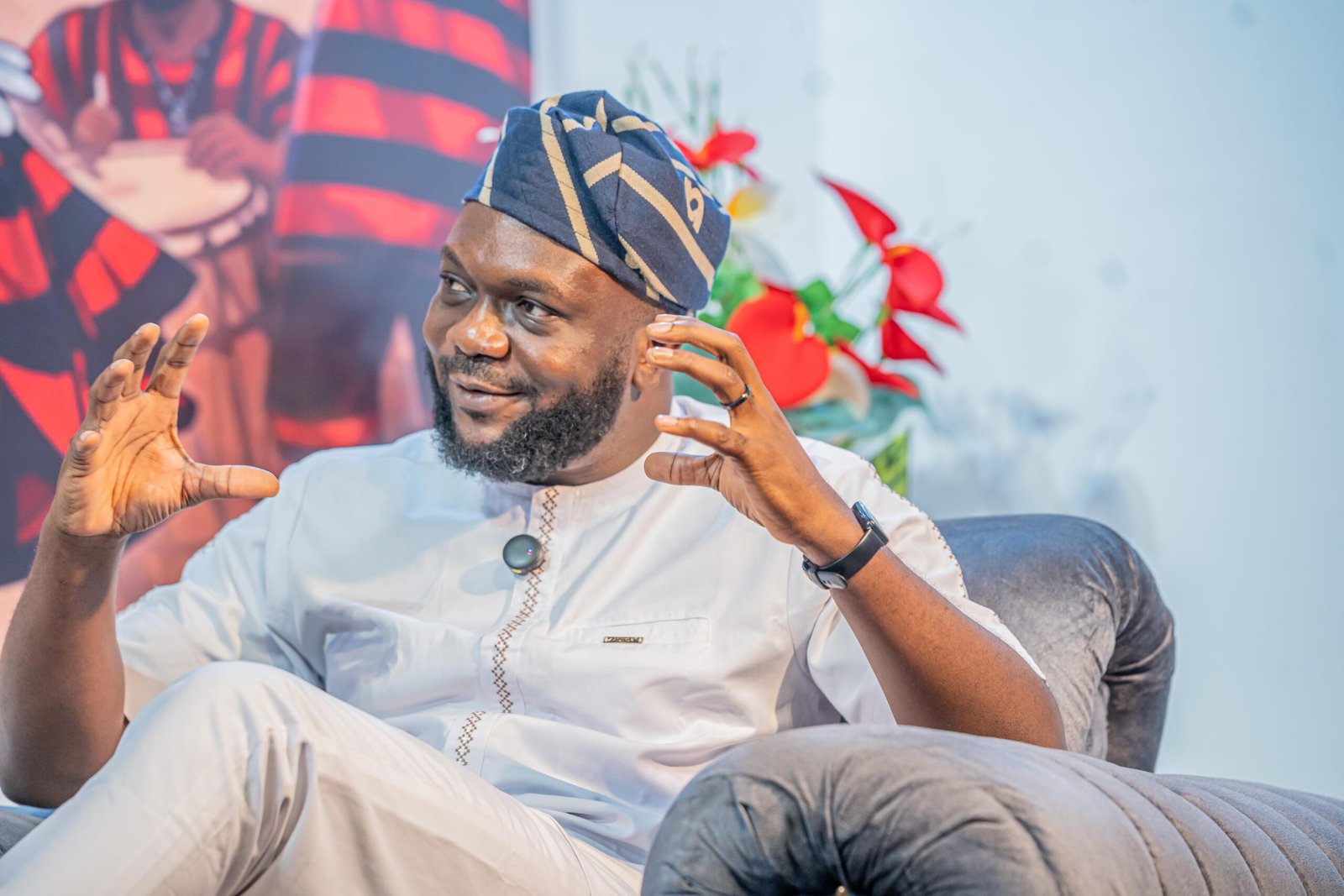
Speaking during an interview on The Conversation on IDOMA Television, the communications professional and humanitarian advocate said his ambition was driven by the desire to close the leadership gap in Apa/Agatu and restore hope to residents struggling with insecurity, poverty and displacement.
Excerpts:
Can we meet you properly?
My name is Apochi Nelson Owoicho. I am from Odugbo, Edikwu District, in Apa Local Government Area of Benue State, and I am happy to be here.
I was born and raised in Benue State. I grew up in Odugbo, my community, and had my education within the state. Over time, I developed a strong interest in working with people across communities because I have come to understand that where we come from and what we become are very important.
Why did you decide to join the House of Reps race?
Like someone once said, geography is destiny. But many of us have been fortunate to experience life beyond the limitations our communities placed on us.
I have worked majorly in the development sector as a communications professional. I studied at the University of Agriculture, Makurdi, and later proceeded to the University of Sussex, where I obtained a Master’s degree in Media Ethics and Social Change.
I also have several certifications, including one in Public Leadership from the Harvard Kennedy School Executive Education Centre. I am a Rotary Peace Fellow, among other qualifications that shape who I am.
I have worked with several organisations and currently work on a World Bank project across 19 countries. Previously, I served as the Digital and Creative Lead at the African Centre for Economic Transformation, an African-led and African-driven think tank.
As this conversation progresses, you’ll get to know more about me. 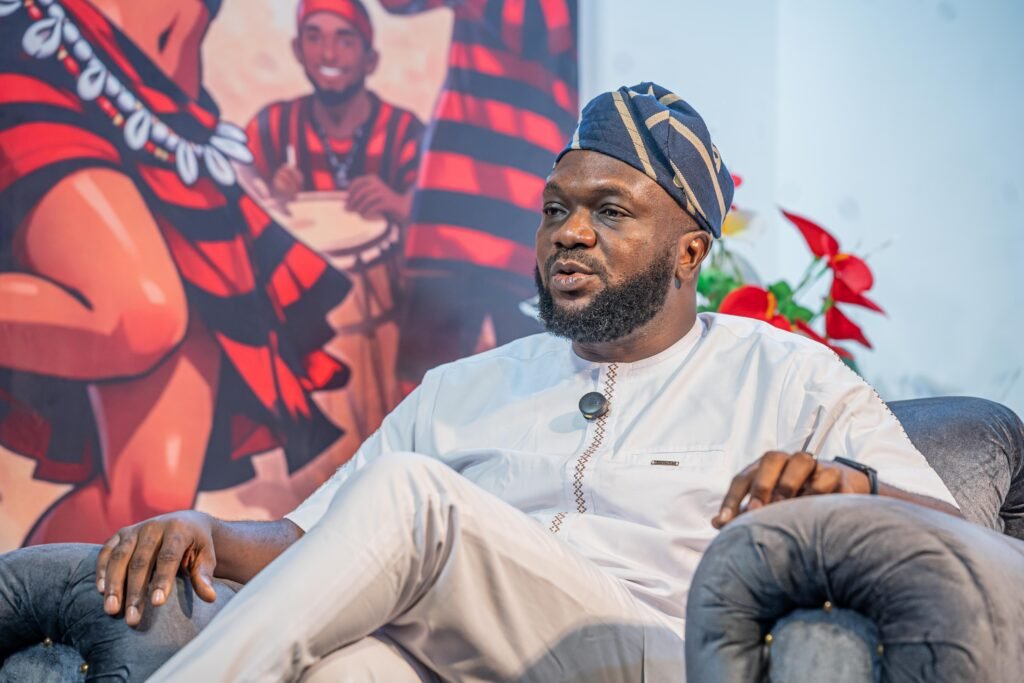
Tell us, what inspired your decision to contest for the Apa/Agatu Federal Constituency seat?
I strongly believe that everything in society rises and falls on leadership. The leadership of every community determines the outcome of that community.
It is not tied to the amount of natural resources available, nor the level of human intellect present. Once leadership is missing, many things go to waste.
You can have diamonds beneath your feet, but without leadership, they cannot be utilised. You can have able men ready to work and contribute their strength, but without leadership to channel that strength properly, it all goes to waste.
My desire to run for the position and represent the good people of Apa/Agatu is born out of the need to close the leadership gap that exists in our communities.
I believe we have enough human capital and resources. I believe we are hardworking people with the energy and vigour to thrive. With the right leadership, we can channel all these resources into building a prosperous Apa/Agatu within our lifetime.
That is our belief — that a prosperous Apa/Agatu is possible if we all work together towards it.
I am not bringing anything entirely new. The people, the talent, the resources and the intellect already exist. What we need is the right leadership to channel them in the right direction.
Why do you believe this is the right time for your candidacy?
There is a saying that the best time to plant a tree was 100 years ago, while the next best time is now.
Nigeria as a country, Benue State, and by extension Apa/Agatu, are passing through very difficult times. We have marauders in our land, insecurity ravaging our people and changing the course of our lives.
People are struggling to find meaning and purpose.
As a legislator, your responsibility goes beyond representation and lawmaking. You become one of the most influential office holders within the constituency. You provide direction and convene people.
Because of where we are today as a nation and as a constituency, it is important to present bold leadership capable of confronting these issues.
More importantly, leadership requires someone who is ready and willing. I have experienced these realities personally and have also been on ground to see firsthand the challenges our people face and how innovative solutions can be developed around them.
I believe I have spent the last few years doing exactly that, and now I am ready to provide solutions to some of the longstanding challenges facing our people.
What distinguishes you from other aspirants seeking this position?
Everybody running for this office, I believe, has a plan for the constituency, and I also believe they are qualified in their own ways. But like I stated earlier, we have been on ground. We have done our homework. We have met our people and understand their plights.
I visited all 21 council wards in the constituency and have seen firsthand the issues we are facing. Over the past few years, we have worked closely with the people.
If you go through our 2024 Apa/Agatu Impact Report, you will see the work we have done in women empowerment, youth development, education, and changing the narrative about our people. 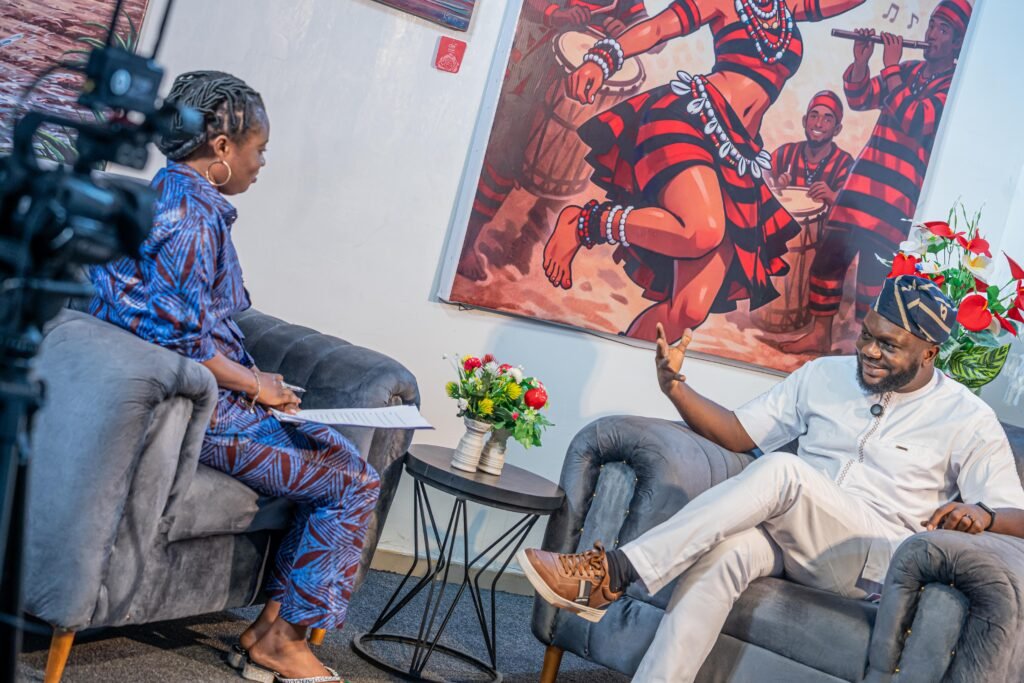
These projects were designed as pilot programmes to test the effectiveness of some of the ideas we hope to implement if elected into office. So, we are not just making promises; we have already started delivering on what we believe in.
For instance, in 2024, we distributed 40 POS terminals to women — not just because they needed them, but because we believe financial literacy and access to economic tools are important for women’s empowerment.
We also trained over 1,000 women in partnership with Jobberman. That is one way to build society — by building people. Intellect drives society.
In 2024, we also launched the Climate Change Community Trackers Fellowship focused on young people from Apa/Agatu. Through that initiative, we had the opportunity to mentor and train young minds.
Last year, we brought participants to Abuja, where they visited off-grid communities and engaged with entrepreneurs. It was our own way of expanding their minds and encouraging them to dream bigger because the work we want to do cannot be done by one person alone.
It requires collective effort, and the more minds we have working together, the easier it becomes.
So, what sets me apart is the fact that we have been there, we understand the issues, we have tested our ideas, and we are ready to move forward.
So, If elected, what would be your top three priorities for the people of Apa/Agatu?
We have a manifesto titled Eko Kalo — This Is Our Time — and we are building around that vision.
Within the first three months in office, one of the first things we will do is set a clear agenda because what you cannot measure, you cannot be held accountable for.
Too often, leaders make promises they believe are right for the people without actually involving the people themselves. We want to run an inclusive system of governance.
So, within the first three months, we will bring together youths, women, community leaders and stakeholders from all 21 council wards to collectively determine our priorities.
Security will definitely top the list because it is a major concern. But beyond that, people may prioritise roads, employment, healthcare or other pressing needs.
As leaders, we do not know everything. That is why we will engage professionals who can help structure these priorities into actionable plans — a security plan, infrastructure plan, employment plan and other development strategies.
This will not be my effort alone as a House of Representatives member. It will involve collaboration with all elected officials, including House of Assembly members, councillors and local government chairmen.
Everyone will contribute to that development document.
Why is this important? Because we need to be accountable for the promises we make. That document will serve as the basis for measuring implementation.
For example, if we promise to create jobs, people should be able to ask at the end of the year how many jobs were actually created.
So, my priorities are clear: security, employment and responsible leadership.
Without proper leadership, I can hand somebody a cup of garri or a motorcycle and receive applause, but I would not truly be solving the people’s problems.
How prepared are you for the political realities and demands of the National Assembly?
There are really two questions in one. First, the political realities. Nigeria’s political environment is what experts describe as a VUCA environment, volatile, uncertain, complex and ambiguous.
You wake up today and politics is moving in one direction; a few hours later, everything changes. It requires emotional stamina, resilience and adaptability.
Recent developments in Nigeria’s political space have made things even more unpredictable. However, we are prepared emotionally and physically because we have been on ground, engaging with the people and building structures over time.
Recent developments in our political space, though quite unfortunate, have made it difficult to predict anything with certainty. But we are prepared emotionally and physically because we have been on ground.
Like I said earlier, we already have structures in place to deliver on the things we want to achieve, and we have consistently engaged with the people, communicating our vision and plans.
We are also ready to involve more people in this process.
Regarding the demands of the National Assembly, I have taken time to study how the institution works. Of course, there are trainings you receive after getting into office, but beyond that, I have also interacted with people already serving there.
Just last week, I visited the National Assembly, attended plenary sessions and asked questions to better understand how the system operates.
So, I am learning, and I consider myself a fast learner. I believe I will adapt quickly and effectively navigate the workings of the National Assembly.
According to some popular beliefs, it is said that for someone to become a good political office holder, they must have something personally at stake in the economy or society. What do you personally have at stake?
Well, for someone coming from Apa/Agatu, my entire life is at stake.
I cannot freely go to my village anymore. My culture, identity and existence are all at stake. Right now, I have to arrange security before travelling to Odugbo. I am practically a prisoner in my own land.
My children cannot travel freely. People cannot farm. Children cannot attend school safely. Some hospitals are shut down.
Our entire existence is threatened.
The kind of life we are currently living is not normal anywhere in the world. So, this decision to run for office is not because there are no politicians already contesting. It is because there is urgent work to be done.
Today, even basic things like going to the farm, eating food, or attending school have become difficult.
As a child, I could walk from Odugbo to Ugbokpo for examinations without fear. Today, even if you travel by motorcycle, you still need armed security personnel accompanying you, and even then, you are not completely safe because security operatives themselves have been killed in those areas.
So yes, everything is at stake — my people, my community, our identity, our culture and our economy.
The last time we truly had cultural festivals freely in my community was a long time ago because people are now afraid to travel home.
At this point, everything is on the table.
So, considering that you have so much at stake, are you prepared to do everything possible to become a good leader?
Yes, absolutely. I believe good leadership is about people.
One thing I have always maintained is that you cannot lead people who have not given you the approval to lead them. That is what politics is about — holding in trust a mandate given to you by the people.
People vote for you because they believe you can serve them. Once elected, you must not abandon them.
You bring them to the table because democracy is about the people, not about yourself.
That is why I said earlier that before I stand on the floor of the National Assembly to speak, I must first engage the people. I should not speak for myself; I should speak for them.
And how do I do that? By consulting them first, understanding their concerns and presenting their realities before the National Assembly.
At the end of the day, whether I am a good leader or not will be determined by the people based on how accountable I remain and whether their lives improve under my leadership.
I can sit here and speak beautifully, but if the lives of my people do not improve, then I would have failed as a leader.
You have built a reputation as a communications professional. How has that experience shaped your worldview?
Everything in life thrives on communication. Perception is very important because people are often defined by the stories told about them.
Growing up, people from my area were stereotyped in certain ways. When we travelled from Otukpo covered in dust, people mocked us and used derogatory expressions.
Those stereotypes followed many of us even into secondary school. Some people assumed that because you came from a rural area, you were less intelligent or less exposed.
That experience shaped my understanding of how communication influences perception and identity.
So, what does communication do? Conversations like this can change perceptions. If someone previously had certain biases, engaging in discussions can make them realise that those assumptions were wrong.
Communication influences everything. It shapes how we see the world because the lens through which we understand society is communication itself.
That is why it is important to integrate communication into everything we do — our work, politics and even how we tell the stories of our people.
There are many great individuals from my community whose stories remain untold simply because nobody is telling them. Communication gives us the opportunity to share those stories with the world.
That is why communication influences almost every aspect of society.
Apa and Agatu have suffered repeated herdsmen attacks over the years. From your experience and understanding, what do you think is responsible for these attacks?
There are many theories surrounding the attacks, but one thing we always maintain is that nobody deserves to be killed in their sleep or driven away from their ancestral home.
Nobody deserves to have their daughters violated or their families destroyed, regardless of any justification people may attempt to give.
Even during wars, there are international laws guiding engagement, and we are not officially at war. So, there is absolutely no justification for what is happening in our communities.
What I can say, however, is that the conflict has had a devastating impact on our lives.
At the moment, across Apa/Agatu, there are nearly 40 completely deserted communities. In some of those communities, you will not even find goats or chickens anymore. That is how bad the situation has become.
These communities used to be major producers of rice, cassava and yams. During the dry season, truckloads of food used to leave our constituency for Otukpo and other parts of the country. Traders returned with building materials, motorcycles and other goods.
Today, all of that economic activity has collapsed.
The implication is widespread poverty caused by insecurity. Journalists, doctors and teachers are often unwilling to go to those areas because they fear for their safety.
Unfortunately, the attacks have continued unabated and are becoming worse every year. More communities are being displaced, and many farmers can no longer cultivate their farms.
Some people now return home only around July when the farming season is already far advanced.
The effects go beyond our communities. There is a ripple effect across the country because food insecurity contributes to rising food prices as demand exceeds supply.
In the coming years, we may also face an educational crisis because many children have had their schooling disrupted. Some may grow up without proper education at all.
Nobody deserves to live under these conditions, and there is an urgent need for solutions. That is why advocacy around these issues has remained one of the major causes we have championed over the years.
Are there specific names of some of those deserted communities?
Apochi: Yes, there are. In Agatu, communities such as Eima 1, Ijima 2, Ogwumogbo and Ikpele have been completely deserted.
In Apa, places like Apata, Ugbokpo and Edikwu-Ankpali, which was recently attacked, have also suffered serious displacement.
There are many other affected communities.
We still visit some of these places, and hopefully one day we can take journalists there so the world can truly understand what our people are facing.
We have been displaced from our ancestral lands and stripped of our livelihoods and possessions.
Festivals and cultural gatherings that people once enjoyed no longer take place freely because many people are afraid to travel home, even during Christmas celebrations.
Take communities like Ugbokpo, for example, entire houses were burnt down.
Just yesterday, someone sent me a voice note on Facebook explaining how members of his family were killed and their seven-bedroom house completely destroyed. He said the last time he visited home, he had nowhere to sleep.
Till today, many of these communities have not received any meaningful rebuilding efforts.
In fact, since 2021, many residents feel abandoned because they believe no major government official has truly visited them to ask how they are surviving or what support they need.
The humanitarian consequences are enormous and difficult to fully quantify.
Young women displaced from their homes are vulnerable to abuse because they struggle to survive. Many people now survive through menial jobs despite once living productive and stable lives.
These are people who once owned homes, motorcycles and stable livelihoods. Today, many of them are squatting in other people’s houses or struggling to find places to sleep.
There is no single officially recognised IDP camp in Apa/Agatu. None.
Conservatively speaking, we have close to 200,000 displaced persons scattered across different communities and homes.
Young women are particularly vulnerable under these conditions. That is why there is an urgent need for intervention.
Unfortunately, there is hardly any humanitarian agency actively addressing these issues in our communities. In other conflict-affected places, you often see organisations supporting rebuilding efforts and providing food assistance, but in our case, very little exists.
Another major issue is the absence of reliable data. Many people do not fully understand the depth of the crisis because proper documentation has not been done.
Communities have only recently started documenting affected villages and recording the names of people killed during attacks. Without data, proper decisions cannot be made.
That is why we have also been involved in gathering information community by community because we want people to understand that we are not speaking from assumptions — we are speaking from pain and lived realities.
What failures do you think have contributed to this situation?
Like I mentioned earlier, people no longer feel reassured even when they are told things will improve.
There have been repeated attacks in recent months. The attack in Edikwu-Ankpali was one of the most devastating, where about 10 people were reportedly killed.
Since then, there have been several other attacks in communities like Olegobolo and other surrounding areas.
After one of the attacks, the Benue State Government issued a statement promising to comb the forests and flush out the attackers. But as we speak, many residents say they have not seen any concrete action.
People remain displaced and insecurity persists.
Security presence in many of these communities is still very limited, and the response has not matched the scale of the crisis.
Government officials may say efforts are ongoing, but the real measure should be visible improvement in the lives of the people.
If people are still unable to return home safely, then naturally they will feel that enough has not yet been done.
If elected, how would you advocate for an end to the killings and displacement in Apa/Agatu?
Security is a multi-dimensional issue. Ending the killings alone is not enough. We must also focus on protection, rebuilding and reconciliation.
First, we must understand that the primary responsibility of government is the protection of lives and property.
As a representative of the people, one of my duties will be to consistently raise these issues at the National Assembly.
Recently, while observing plenary proceedings, I saw lawmakers from conflict-affected states raise motions concerning attacks in their constituencies. That is part of representation — making sure the voices of your people are heard at the national level.
Beyond that, I strongly believe in planning.
At the moment, many people are not even sure whether a clear security framework exists for our communities.
Over the past few weeks, I have engaged retired generals, former police officers and security experts from our constituency to discuss practical solutions to the crisis.
These are experienced individuals who understand conflict management and security strategy.
Within the first 90 days in office, one of our priorities will be developing a robust and measurable security plan.
That plan will help us evaluate progress. If we promise to raise issues on the floor of the House, people should be able to ask whether we have done so. If we promise to engage the governor or security agencies, there should be accountability.
The goal is to establish measurable actions and coordinated responses.
Most importantly, we must work collectively with experienced professionals and stakeholders who genuinely understand the situation.
From everything you have explained so far, it seems the people of Apa and Agatu have lost confidence in government.
We have lost more than confidence. We have lost lives, lands, homes and livelihoods.
Government must act urgently to restore trust and confidence in governance.
If elected, how do you intend to restore that hope and rebuild lives differently?
My approach is built on three pillars: leadership, representation and legislation.
Legislation is the formal responsibility at the National Assembly, but leadership is equally important.
One of the problems we have today is what I call “every man for himself” leadership, where different levels of government operate independently just to claim personal credit.
What I would do differently is pursue a coordinated approach.
I understand that no one person has all the answers. Even though I have training in peace and conflict transformation as a Rotary Peace Fellow, I still recognise the limits of my own knowledge.
That is why I believe in bringing everybody to the table — local government officials, traditional rulers, security experts and community stakeholders.
The focus should not be about individuals; it should be about the people.
Through coordination, we can combine ideas, resources and expertise instead of duplicating efforts.
For example, if a local government chairman is already implementing a programme in one community, there is no need for another office holder to duplicate the same effort just for recognition.
Everything should be tied to a broader development and security plan that everyone contributes to and believes in.
Some of these issues can also be addressed through non-kinetic approaches by consulting experts who understand long-term conflict resolution strategies.
Let me give you an example. In many parts of the world, maize stalks are processed into hay and sold to livestock owners as animal feed.
So, if herders say they need grazing areas, we can develop alternative economic solutions. We can cultivate and process the grass ourselves and transport it to places where the livestock owners are based. They buy from us, we make money, they sustain their animals, and nobody has to die.
Our people can return to farming peacefully, while livestock owners also continue their businesses without conflict.
These are the kinds of ideas that can be incorporated into a broader peace and economic development strategy.
The truth is that a purely kinetic approach may not completely solve the crisis. Security operations are important, but we must also explore practical economic and social solutions that reduce conflict.
In some ways, communities can even turn some of these painful realities into economic opportunities that create jobs and stability.
If people return safely to their lands and economic activities resume, everybody benefits.
How long do you think it would take to restore hope to the people of Apa/Agatu if elected?
That is a very important question.Restoring hope begins with inclusion. It goes back to the leadership approach I mentioned earlier.
You first bring people together and ask them directly: What are your problems? What are your priorities?
People will identify their concerns, and then leadership presents a clear plan with measurable milestones.
For example, we may say that within one month, we will engage the government to deploy additional security personnel to a particular community. In six months, we expect displaced people to begin returning home. Within one year, we aim to mobilise resources for rebuilding affected areas.
Breaking things into phases helps people understand the process and know what to expect.
One major reason people lose hope is uncertainty in governance. Citizens often do not know what leaders are doing or whether promises are being pursued.
Even when plans fail, many leaders never return to explain what went wrong.
True leadership requires humility — the ability to return to the people and honestly admit when something did not work and explain the next step forward.
That is why accountability and communication are very important.
People need a clear roadmap. They need to know what you want to do, how you intend to do it and when they should expect results.
Hope is built on expectation.
When people understand the process and see measurable progress, they begin to regain confidence.
Even if challenges arise, consistent communication reassures the people that leadership is still working towards solutions.
What kind of legacy would you want to leave if elected into office?
I want to see a prosperous Apa/Agatu within our lifetime.
Prosperity means our people can safely return to their farms. It means young people are productively engaged. It means families can sleep peacefully at night without fear.
It means the rice, yams and other agricultural products our communities were once known for can begin flowing into markets again.
Prosperity also means that young people have access to quality education and opportunities for growth.
One of the programmes I hope to introduce is what I call the School-to-Job Transition Programme.
We understand that many young people from conflict-affected communities have faced disruptions in their education due to insecurity. Some may have gaps in learning or limited exposure to opportunities.
This programme will focus on equipping them with skills, mentorship and opportunities that help them transition successfully into employment and entrepreneurship.
Over the years, we have already connected many young people to scholarship opportunities both within and outside Nigeria.
Personally, I have also benefited from scholarship opportunities at different stages of my academic journey, so I understand how transformative such support can be for young people from disadvantaged backgrounds.
I have personally benefited from several scholarship opportunities — probably more than 10 over the years. So, I understand how important scholarships can be for young people who come from communities where financial resources are limited.
Many people survive and advance through educational opportunities like that, and we intend to continue connecting young people to scholarship opportunities both within and outside Nigeria.
At the same time, we also understand that a legislator is not the executive arm of government or the local government chairman. The role is to support existing structures while providing leadership and direction.
As one of the highest political office holders within the constituency, you help set the tone for leadership. Like I always say, everything rises and falls on leadership.
When leadership sets the right standards, people align themselves accordingly, and the entire community begins to measure itself by those standards.
The legacy I hope to leave behind is one where Apa/Agatu becomes a model of success despite the challenges of insecurity and displacement.
I want people from other places to look at Apa/Agatu and ask: How did these people succeed despite everything they went through? How did they build prosperity out of such difficult conditions?
You sound very confident about your leadership strategy. What happens if, within the first six months in office, things do not work out as planned?
I believe leadership also requires humility. If something does not work, I should be able to return to the people and honestly say: This strategy did not work as expected. How can we improve together?
The mandate belongs to the people, and if they entrust me with leadership, I must also be accountable enough to admit mistakes where necessary.
That said, I am confident in the approach because many of these ideas have already been tested through pilot projects and community engagements.
But if adjustments become necessary, then we will adapt by changing strategies, partnerships or methods where needed.
Leadership is about learning, improving and remaining accountable to the people.
Finally, why should the people of Apa/Agatu, people who are hurting, displaced and struggling trust you?
The people of Apa/Agatu know that we have stood with them during difficult times and also shared in their moments of joy.
We have walked with communities, listened to their pain and worked with them in shaping ideas for the future.
What people need at this moment is not just another politician making promises. They need leadership that has already demonstrated commitment through action.
Over the years, we have visited displaced communities, engaged affected families and provided support where possible.
We have worked with women, young people and community groups while trying to build bridges across communities.
What we need now is a unifying voice, someone who understands that the challenges facing our people cannot be solved individually but through collective effort.
I genuinely believe that prosperity is possible for Apa/Agatu if we work together.
I believe our people deserve to live in communities where they can return safely to their farms, celebrate cultural festivals freely and travel home without fear.
I have travelled across Apa/Agatu to understand these issues firsthand, and I am ready to work with traditional rulers, experts, stakeholders and everyone willing to contribute to the development of our communities.
I want to ensure that our young people have opportunities to succeed and that our communities once again become known for agriculture, productivity and peace.
More importantly, beyond qualifications and experience, I believe leadership requires empathy.
I understand the pain of the people, and I am willing to roll up my sleeves and do the work required.
When the time comes, I believe the people of Apa/Agatu will see beyond political rhetoric and recognise a leader genuinely prepared to confront these challenges and work towards solutions.





How Mobile banking makes everyday transactions easier

Court dismisses El-Rufai’s N120m fundamental rights suit against DSS, EFCC, ICPC

Zamfara youths chase deputy governor during visit to bandit attack victims

BREAKING: Former Delta Governor Uduaghan dies at 71

Why electricity supply has reduced – Ikeja Electric

Tinubu receives 2027 UN budget proposal

Woman, two hotel staff arrested after man dies in Abuja hotel

No party can match APC’s political structure — Sambo

Ogun APM rejects BCO poster, declares Babajide governorship candidate

Stop sending money home, push for good leaders — Peter Obi tells Nigerians in UK

Church, Nigerians must share responsibility for insecurity, corruption, hardship — CAN
