
news
U.S. lawmaker behind Christian genocide claims meets Nigerian delegation

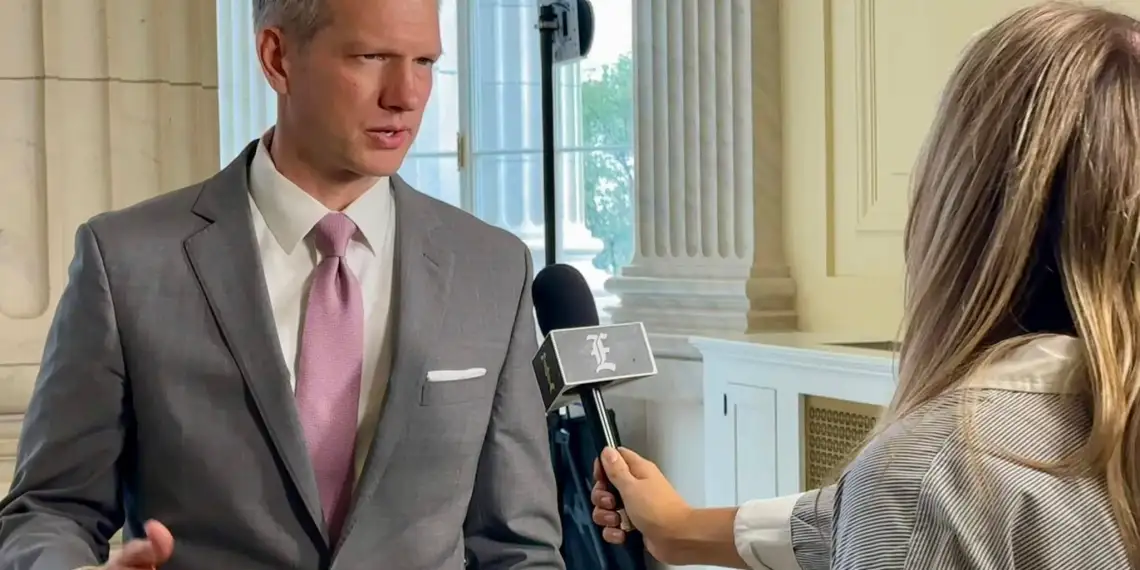
U.S. Congressman Riley Moore, a prominent advocate of claims that Christians are being persecuted in Nigeria, met with senior Nigerian officials in Washington, D.C., on Wednesday.
Moore said he held discussions with a delegation led by Nigeria’s National Security Adviser, Nuhu Ribadu, describing the meeting as “frank, honest, and productive” on issues ranging from alleged Christian persecution and ongoing terrorist threats to prospects for deeper U.S.–Nigeria cooperation aimed at ending the violence.
During the talks, Nigerian officials highlighted concerns about counterterrorism operations, security assistance, protection of vulnerable communities, and persistent violence across different regions of the country.
Moore emphasized that the United States is “ready to coordinate and cooperate with Nigeria” and asserted that it “will not tolerate continued violence against Christians or other forms of religious persecution,” echoing positions previously expressed by former President Donald Trump. He pledged to continue monitoring the situation and to encourage Nigeria to adopt measures to protect civilians and counter terrorist groups.
Since September, several U.S.-based politicians and campaigners, including Senator Ted Cruz, comedian Bill Maher, and CNN’s Van Jones, have amplified claims that Islamist militants in Nigeria are systematically targeting Christians. Cruz introduced the “Nigeria’s Religious Freedom Accountability 2025 Act” in September, aiming to hold Nigerian officials accountable for enabling jihadist violence or enforcing blasphemy laws. Moore has also written to U.S. Secretary of State Marco Rubio and supported petitions to designate Nigeria as a “Country of Particular Concern” over alleged religious persecution.
At the meeting, Moore stressed the need for “tangible steps” to protect Christians from violence, displacement, and death, while also offering U.S. support against Boko Haram, ISWAP, and violent Fulani militias. “President Trump and Congress are united and serious in our resolve to end the violence against Christians and disrupt and destroy terrorist groups within Nigeria,” Moore said.
The Nigerian delegation included National Security Adviser Nuhu Ribadu; Minister of State for Foreign Affairs Bianca Ojukwu; Inspector-General of Police Kayode Egbetokun; Attorney General Lateef Fagbemi; Chief of Defence Staff Olufemi Oluyede; Chief of Defence Intelligence E.A.P. Undiendeye; NSA Special Adviser Idayat Hassan; Director of Foreign Relations ONSA Ibrahim Babani; Acting Chargé d’Affaires, Embassy of Nigeria in the U.S., Nuru Biu; and Paul Alabi, head of the Political and Economic Section at the embassy.:
The Nigerian government, security analysts, and researchers maintain that the claim of a “Christian genocide” in Nigeria is false and misleading. Reports, including one by the BBC, found that much of the data cited in support of the genocide narrative cannot be independently verified. Nigerian officials have repeatedly described the allegations as “a gross misrepresentation of reality,” noting that terrorist attacks target all who reject their ideology, regardless of religion.
Former U.S. President Trump designated Nigeria as a “Country of Particular Concern” over alleged Christian persecution and warned of possible military intervention if the Nigerian government failed to stop the killings. Nigerian President Bola Tinubu has stated that the country is engaging the international community diplomatically and welcomes support from allies to combat terrorism.
Premium Times, in an October editorial, described the genocide claims as “false and misleading,” while acknowledging that both Christians and Muslims have suffered attacks largely carried out by non-state armed groups.












Military Pension Board: Onoja Declares Full Support for Abdulraheem

Police confirm abduction of 14 JAMB UTME candidates in Otukpo, Benue

Gunmen kidnap 18 passengers in Benue Links bus attack in Otukpo

Army foils abduction, rescues two victims in Benue

Late Brigadier General Braimah, others buried with full military honours in Maiduguri

BREAKING: 2027 will be my last attempt at the presidency – Atiku

‘I’ll send you to scatter them, they’re already confused’ – Tinubu tells Akpabio
Why ADC lost Anambra, FCT polls – Aregbesola

‘Road to Aso Rock begins now’ – David Mark speaks as ADC alters constitution at convention

Herdsmen Declare War on Idoma Community – Untold story of Edikwu-Ankpali massacre

Gov Alia orders immediate flush-out of armed herders from Benue forests