
news
Dangote Refinery extends free fuel delivery to four more states

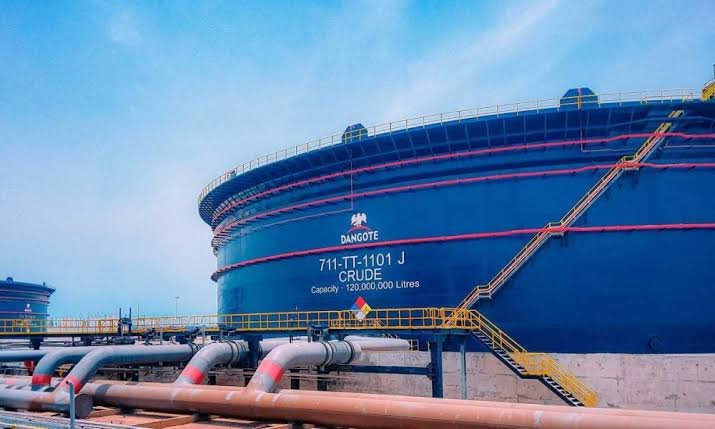
The Dangote Petroleum Refinery & Petrochemicals has expanded its free petroleum product delivery programme to four additional states — Kano, Imo, Anambra and Nasarawa.
The refinery said the expansion would help reduce distribution expenses for independent petroleum marketers and potentially create room for lower petrol prices across the affected markets.
The initiative was initially introduced for customers in Lagos, Ogun, Rivers, Kaduna, Abuja and Delta. It is aimed at taking petroleum products closer to marketers and retailers while eliminating the cost of transporting products over long distances from the refinery.
By covering delivery expenses, the company said it was addressing a major cost component within Nigeria’s downstream petroleum distribution chain.
Fatima Aliko Dangote, Group Executive Director, Commercial Operations, Oil & Gas, WAEP and Fertiliser, said the benefits of local refining should extend to businesses and consumers through lower operating costs.
“The value of domestic refining must ultimately be felt beyond the refinery gate. By absorbing the cost of delivering petroleum products to our customers, we are removing a significant component of the distribution burden and creating room for those savings to flow through the value chain to consumers. Our goal is to make fuel distribution more efficient, reduce avoidable costs and support more competitive pump prices across Nigeria.”
The Independent Petroleum Marketers Association of Nigeria (IPMAN) welcomed the development, saying it could ease some of the financial and logistical difficulties faced by independent marketers and eventually benefit consumers.
IPMAN National Publicity Secretary and Public Relations Officer, Chinedu Ukadike, said the initiative addressed a persistent challenge where marketers pay for products but sometimes wait for days or weeks before their orders are loaded and transported.
“This gesture, if sustained, will be able to alleviate the sufferings of independent marketers,” Ukadike said. “There has been the issue of financial hold-up, whereby marketers pay for products and are not loaded for days and weeks, and they suffer unnecessary hardship bringing the product down.”
He said the new arrangement could improve marketers’ cash flow by reducing the period their funds remain tied up in the distribution process.
“This time around, Dangote has made it very, very easy for marketers. Marketers are jubilating, and you will see the return on investment as an independent marketer. Your money will not be tied down,” he said.
Ukadike added that lower transportation expenses could also contribute to reduced pump prices because logistics costs are ultimately reflected in the amount paid by consumers.
“You also have less risk, and you have petroleum products at your doorstep. Other consumers will also see that our pump price will not continue to go up. The more Dangote brings down its pump price, the more independent marketers will bring down theirs,” he said.
The impact of the programme is expected to be particularly significant in areas located far from the refinery, where marketers normally incur additional expenses on haulage, vehicle operations, driver costs, insurance and other logistics.
Reducing these costs could make it more economical for marketers to supply distant markets and create greater room for competitive pricing.
The initiative may also reduce risks associated with transporting petroleum products over long distances by shortening the supply chain and improving the reliability of deliveries.
Ukadike praised the Dangote Refinery for the programme and called for its extension to additional parts of the country, particularly more northern states, to expand access to competitively priced petroleum products.
“This is the beauty of deregulation and competition,” he said.
The development comes as Nigeria’s downstream petroleum sector continues to adjust to increased domestic refining capacity and a more competitive market.
The Dangote Petroleum Refinery, which has a capacity of 700,000 barrels per day, has become a major supplier of refined petroleum products to the domestic market while also growing its presence in international markets.
The free delivery programme represents an additional step in the refinery’s efforts to influence the downstream sector by not only increasing local supply but also reducing the cost of distributing petroleum products.
For consumers, lower distribution costs could provide marketers with more room to reduce pump prices, depending on other factors affecting the retail price of petrol.













Suswam snubs Benue South, says Kwande will produce Alia’s successor in 2031

Hackers declare ‘war’ on Benue APC Senatorial candidate

Liverpool agree deal to sign Bradley Barcola from PSG

Troops foil ransom payment, rescue kidnapped victim in Kebbi

Dangote Refinery extends free fuel delivery to four more states

Bauchi: One killed, six injured as Buskuwa, Mabani youths clash

OKANGAMANIA: LP sinks APC, PDP, others in Ogbadibo

“No part of Benue will be given to herdsmen for ranching” – Alia declares

EPL match-week 1: Hull City shock Man Utd as Arsenal, Chelsea, Man City win

AMUFU TRAGEDY: Four siblings die in three days, after allegedly sharing bottle of drink in Edumoga community

Troops rescue six kidnap victims, arrest suspected gun runners in Zamfara
