
Education
Inside Nigeria’s forgotten classrooms: How a failing education system is failing millions of children

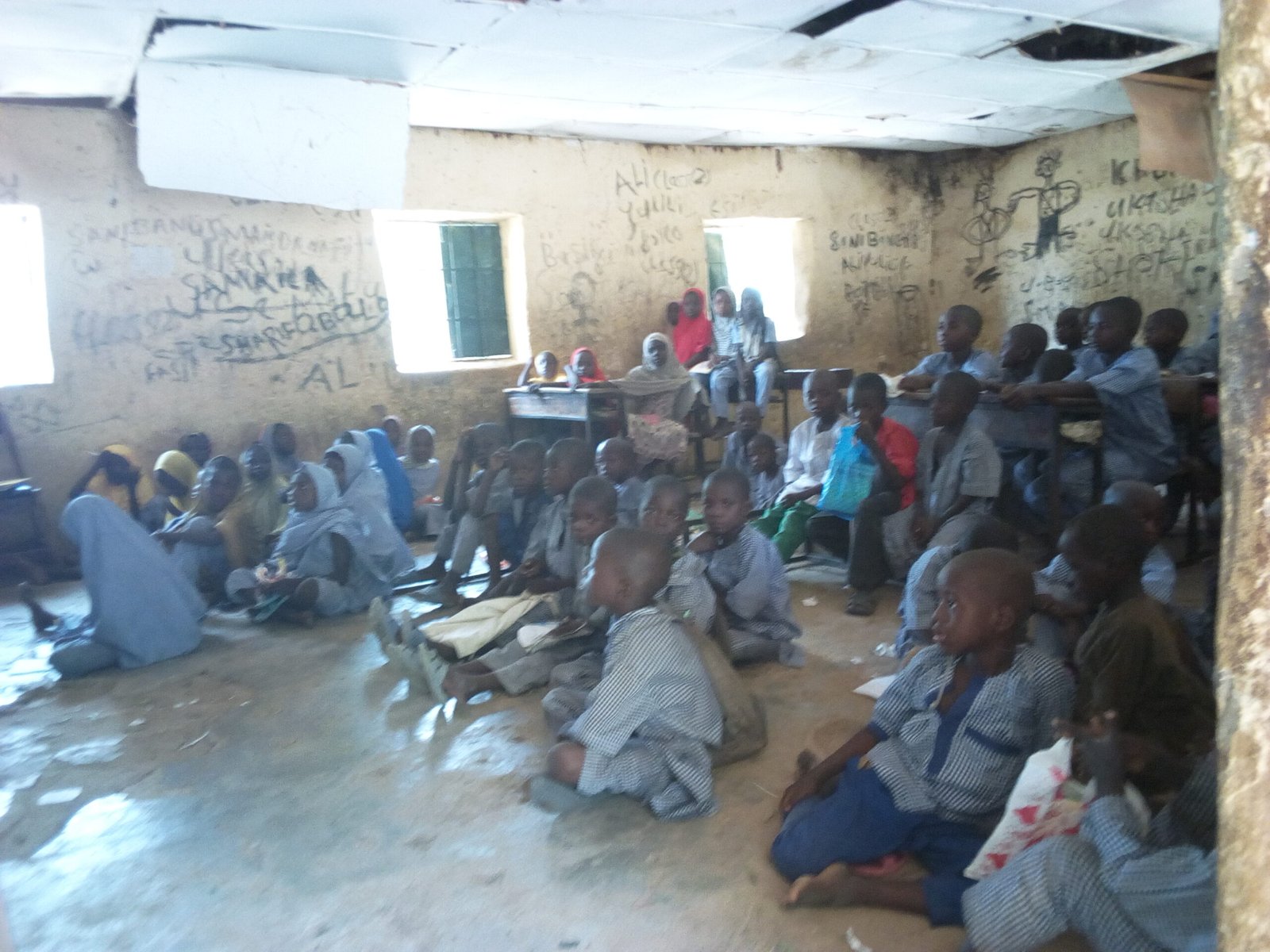
For millions of Nigerian children, going to school does not necessarily mean receiving a quality education. Behind rising enrolment figures and government promises to improve learning outcomes lies a troubling reality: overcrowded classrooms, inadequate teachers, deteriorating school buildings and unequal access to basic educational facilities continue to undermine the future of the country’s children.
In many public schools, pupils struggle to learn in classrooms that accommodate far more children than they were designed to hold. Some sit on broken desks, share limited learning materials or gather around teachers who must divide their attention among dozens of pupils.
For children in rural communities, the situation can prove even more difficult. Some schools lack adequate classrooms, functional toilets, electricity, clean water and sufficient teachers. In certain communities, children must travel considerable distances to reach the nearest school, while others have little choice but to abandon their education.
The crisis raises an important question about Nigeria’s future: what happens to a generation of children whose education suffers before they even enter the labour market?
Overcrowded classrooms and the struggle to learn
Nigeria’s education system faces mounting pressure as enrolment continues to increase without a corresponding expansion of classrooms and other essential facilities.
Data from the Federal Ministry of Education’s 2024/2025 Annual School Census show that Nigeria has approximately 40.1 million learners across its education system.
However, the country has not expanded its classrooms at the same pace as enrolment.
The national learner-to-classroom ratio stands at 60.1 pupils per classroom, significantly higher than the Universal Basic Education standard of 35 pupils.
This means that many Nigerian classrooms accommodate almost twice the recommended number of learners.
Some states face a particularly severe problem. The census records a learner-to-classroom ratio of 106.9 in Katsina, 93.1 in Kano, 91.3 in Taraba and 86 in Oyo State.
Such conditions create serious difficulties for both teachers and pupils.
In overcrowded classrooms, teachers may struggle to monitor individual pupils, identify learning difficulties and give each child the attention required for effective teaching.
Children at the back may find it difficult to hear lessons or see what teachers write on the board. Those who fall behind may progress through successive classes without acquiring the basic reading, writing and numeracy skills expected at their level.
The result is a learning environment where attendance does not always translate into meaningful education.
Too few teachers, too many pupils
Beyond the shortage of classrooms, the availability and distribution of qualified teachers remain major concerns.
Although Nigeria’s national learner-to-teacher ratio stands at 33.6 pupils per teacher, the national figure conceals significant differences between states.
The 2024/2025 education census records 67.2 learners per teacher in Kano, 78.5 in Katsina, 83.7 in Taraba and 63.6 in Jigawa.
These figures suggest that some schools operate under considerable staffing pressure.
The shortage involves more than the number of available teachers. Their qualifications, training, distribution and ability to deliver effective lessons also matter.
UNICEF’s 2024 Situation Analysis of Children and Adolescents in Nigeria identified inadequate teacher training as one of the challenges affecting educational quality.
The report noted that public primary schools had an average of approximately 47 pupils per teacher, above the recommended ratio of 35.
When teachers handle too many pupils, each child receives less individual attention. Children who struggle with reading, mathematics and other foundational subjects may not get the support they need.
The problem becomes more serious when education authorities post teachers to urban centres while rural schools continue to struggle with vacancies.
Dilapidated buildings and missing basic facilities
For many Nigerian pupils, the challenge begins before a lesson starts.
A classroom should provide a safe and comfortable environment where children can concentrate. Yet, in several communities, school buildings remain in poor condition, with damaged roofs, cracked walls, broken windows and inadequate furniture.
Some pupils learn in buildings that require urgent repairs, while others attend classes in temporary structures or open spaces.
The World Bank’s Human Capital Public Expenditure and Institutional Review documented the scale of Nigeria’s infrastructure challenge.
Earlier national data cited in the report showed that about 48 per cent of public primary school classrooms and 44 per cent of public junior secondary school classrooms had fallen into disrepair.
The report also found that only about 31 per cent of public primary schools had drinking water facilities, while approximately 43 per cent had toilet facilities.
The absence of basic amenities affects more than a school’s appearance.
Without clean water and functional toilets, pupils face hygiene and sanitation challenges. Schools that lack suitable menstrual hygiene facilities also create particular difficulties for girls.
Poor infrastructure can discourage attendance, reduce concentration and expose children to unsafe learning environments.
The rural-urban education divide
Where a child is born and raised in Nigeria can significantly influence the quality of education available to them.
While some urban schools have better facilities, electricity, trained teachers, libraries and digital learning resources, many rural communities continue to struggle with basic educational needs.
The difference goes beyond public and private school ownership. It also reflects unequal investment, infrastructure distribution, teacher deployment and access to learning opportunities.
A child attending a well-equipped school in an urban centre may have access to computers, science laboratories, internet facilities and extracurricular programmes.
Meanwhile, a child in a remote community may struggle to find enough desks, textbooks or teachers.
The World Bank has highlighted the difficulties rural children face when accessing schools. Its education review found that about 23 per cent of rural school-age children who had never attended school identified the absence of a nearby school as the main reason.
The same assessment estimated that 4.2 million children aged five to nine lacked access to a primary school within two kilometres, while 6.7 million children aged 10 to 14 had no junior secondary school within three kilometres.
These barriers deepen educational inequality and make it harder for children in disadvantaged communities to compete with their counterparts elsewhere.
The consequences can follow them into adulthood, affecting their chances of gaining employment, acquiring professional skills and escaping poverty.
Millions are in school but still struggling to learn
Perhaps the most disturbing aspect of Nigeria’s education crisis is that school attendance does not guarantee that a child can read, write or perform basic mathematical calculations.
In February 2025, UNICEF reported that more than 70 per cent of Nigerian children lacked foundational literacy and numeracy skills.
The findings point to a learning crisis that goes beyond the question of school enrolment.
Nigeria’s challenges also appear in learning assessments.
A September 2026 UNICEF report on public finance for basic education cited the 2022 National Assessment of Learning Achievement in Basic Education. The assessment found that 49 per cent of Primary 3 pupils, 67 per cent of Primary 5 pupils and 86 per cent of Junior Secondary School 2 learners failed to reach minimum proficiency in mathematics.
The figures raise concerns about what pupils actually learn during their years in school.
A child who completes primary education without basic literacy and numeracy skills may struggle to understand lessons at the secondary level. Such difficulties can eventually affect performance in external examinations and limit access to higher education.
The price children pay for government failures
Nigeria’s education crisis cannot be separated from the question of public investment and accountability.
The Universal Basic Education programme was established to improve access to free and compulsory basic education. The UBE Act of 2004 provides for compulsory, free basic education from primary to junior secondary school.
However, legal guarantees alone cannot deliver quality education without adequate funding, proper planning and effective implementation.
UNICEF’s September 2026 report on public finance for basic education identified chronic underfunding as a major factor behind poor access and learning outcomes.
It noted that government spending on education as a share of total public expenditure declined from 9.3 per cent in 2015 to 3.6 per cent in 2023, far below the internationally recommended benchmark of 15 to 20 per cent.
The report also urged governments to improve how they allocate and monitor education funds to ensure that spending translates into better classrooms, qualified teachers, textbooks and other essential facilities.
This raises questions about the responsibilities of federal, state and local governments.
While the Federal Government provides national policy direction and supports basic education funding, state governments and local authorities play critical roles in school management, teacher deployment, infrastructure and service delivery.
The failure to provide adequate learning conditions ultimately affects children who have little influence over the decisions that determine the quality of their education.
What future awaits children in forgotten classrooms?
The consequences of a weak education system extend far beyond the classroom.
Children who fail to acquire foundational skills may struggle to progress academically, secure meaningful employment or compete in an increasingly technology-driven economy.
Poor educational outcomes also reinforce poverty across generations. Parents who lack economic opportunities may find it difficult to support their children’s education, while children who receive inadequate schooling may face similar disadvantages as adults.
For Nigeria, the implications are even greater.
A country with a large young population needs an education system capable of preparing children for productive employment, innovation and responsible citizenship.
Without urgent improvements, the country risks producing generations of young people who possess school certificates but lack the skills required to succeed.
The situation also threatens efforts to reduce unemployment, improve productivity and build a competitive economy.
Beyond promises: What needs to change?
Addressing the crisis requires more than announcing new school projects or increasing enrolment figures.
Governments must prioritise classroom construction and rehabilitation, particularly in communities with the highest learner-to-classroom ratios.
Teacher recruitment must also reflect actual school needs, with greater attention to rural and underserved communities. Existing teachers need regular professional development to improve teaching methods and learning outcomes.
Schools must have functional toilets, clean drinking water, adequate furniture, textbooks and safe buildings.
Education authorities must also strengthen monitoring systems to ensure that public funds reach the schools and children they should benefit.
Most importantly, education authorities should measure performance not only by the number of children enrolled but also by how much they learn and how successfully they progress through the system.
Nigeria cannot afford to treat the education crisis as another policy challenge that can wait.
Every child deserves an opportunity to learn in a safe, adequately equipped classroom with a qualified teacher.
For the millions currently studying under difficult conditions, that opportunity remains uncertain.
The question is no longer simply whether Nigerian children are going to school. It is whether the country is giving them the education they need to build a better future.






Real Estate mogul, Igoche mark to bury mother in Otukpo November 27

Inside Nigeria’s forgotten classrooms: How a failing education system is failing millions of children

2027: Tiv elders, political leaders rally behind Aondoakaa in Ushongo

Why Agbese stands out among Benue South representatives – Idoma National Youth Leader

VIDEO: Several injured as bus conveying APC supporters to welcome Tinubu crashes in Akwa Ibom

2027: Enone goes agog as Okanga Sisters hold strategic meeting in Ojigo, assure Agbese of victory

Enone 2027: My works will speak for me, I won’t be distracted by political attacks – Agbese

Plateau pastor raises alarm over alleged terrorist plan to attack christians at christmas

CIoD warns executives against neglecting health for work

Adeyanju seeks stronger regional cooperation as UN envoy visits Nigeria

FG’s N50,000 relief: OPay explains how to check eligibility, warns against scams
