
Latest News
INEC: Amupitan under fire over partisan content in support of Tinubu on X

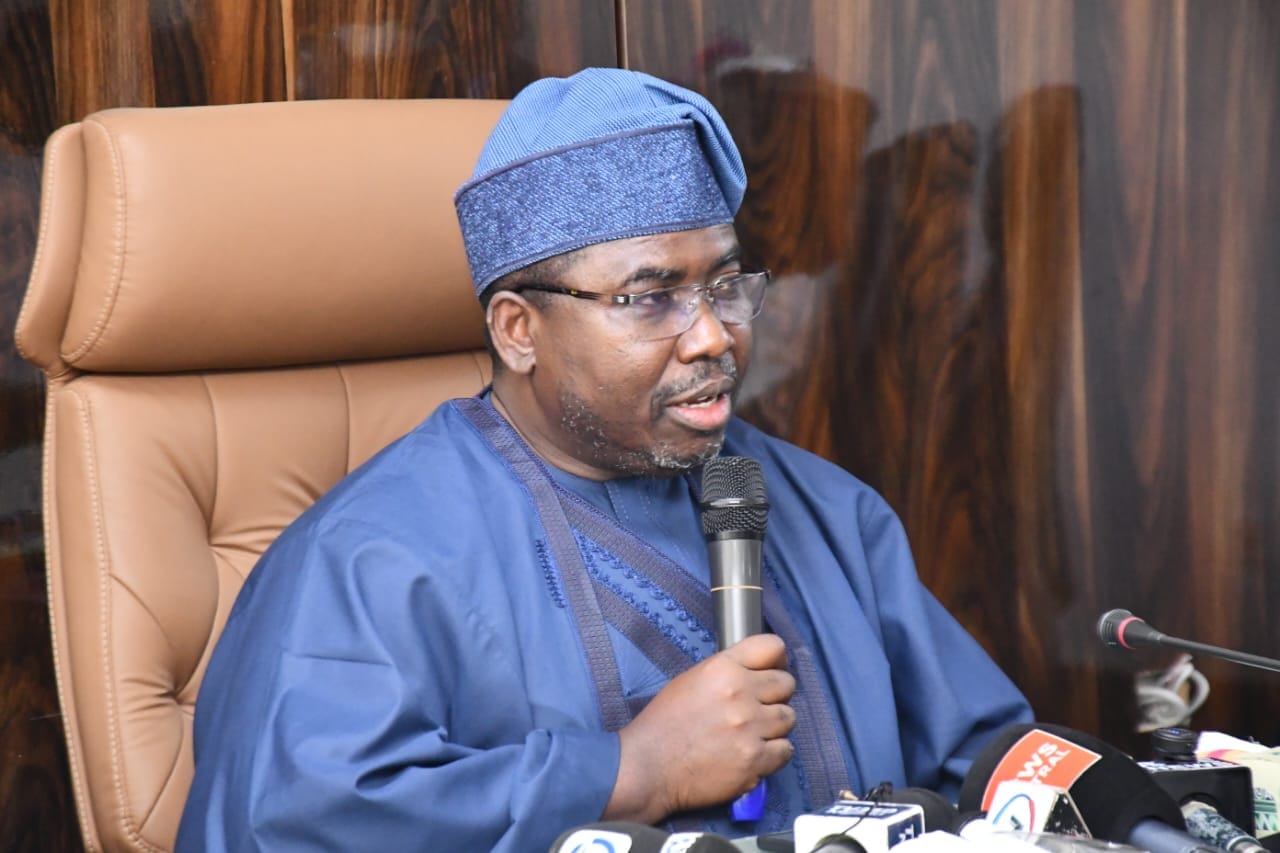
The Chairman of the Independent National Electoral Commission (INEC), Joash Amupitan, is under scrutiny following allegations linking him to an X (formerly Twitter) account that allegedly shared partisan content in support of the All Progressives Congress (APC) during the 2023 general election.
INEC has firmly denied the claim, insisting that Amupitan does not own or operate any personal X account and has never engaged in political commentary. The commission described the allegation as a “malicious and coordinated campaign of calumny” aimed at undermining its credibility and neutrality.
Speaking on Channels Television’s Sunday Politics, the Social Democratic Party (SDP) 2023 presidential candidate, Adewole Adebayo, and tech expert, Gbenga Sesan, offered contrasting perspectives on the controversy.
Adebayo noted that while digital content can be manipulated, ownership of online accounts can be established through forensic investigation. He said the matter could be resolved either through a court challenge or a legislative probe by the National Assembly.
“It is well known that in the digital space, you could manipulate anything, but there is forensic tracing of identity,” he said. “It is either someone will go to court to challenge his qualification on grounds of partisanship and present evidence, or the National Assembly will conduct an investigation, possibly through its INEC committees.”
He added that even if the account were linked to Amupitan, it would not automatically disqualify him, as electoral law only prohibits party membership at the time of appointment.
However, he stressed that a denial that is later disproved would raise serious integrity concerns.
“If it is traced to him and he denies it, then it raises questions about integrity,” Adebayo said. “If you are already lying to the public and we are to trust you with determining election outcomes, then it becomes a question of credibility.”
He further clarified that the legal requirement for the INEC chairmanship is non-membership of any political party at the time of appointment, not past political involvement or voting history.
“The requirement is that at the time of appointment, you should not be a member of any political party. It does not mean you could not have been a member in the past or that you did not vote. Someone who voted in 2023 can still become INEC chairman in 2025,” he added.
Tech expert Gbenga Sesan, however, questioned INEC’s categorical denial, pointing to digital archival tools that could help verify the existence of the alleged account.
“The counter from INEC is that he never had a Twitter account. But when a public institution denies something, you have to ask more questions,” he said.
He referenced web archival platforms such as the Wayback Machine, noting that snapshots of an account bearing the name “joash amupitan” reportedly exist.
“Anyone can check web archives, such as the Wayback Machine, which stores snapshots of web pages over time. I found records linked to the handle ‘joash amupitan’,” he said.
Sesan added that social media account creation typically requires access to a verified email address or phone number, suggesting that ownership can be technically traced.
“The reality is that you cannot use someone’s email or phone number to open an account without access to verification messages sent to them,” he said. “The denial by INEC falls flat, and it is unfortunate. When institutions rush to dismiss issues, they often generate more public interest.”
The controversy has triggered mixed reactions from political actors and civil society organisations, with some calling for a full investigation, while others dismiss the claims as politically motivated.
Meanwhile, some social media users have circulated screenshots alleging links between the account and details tied to the chairman’s academic background.
INEC, however, maintains that cybercriminals often impersonate public officials online and says it is working with security agencies to identify those responsible for any fraudulent activity.













Gov Adeleke has taken Osun backwards —Basiru

Osun poll: God has anointed Gov Adeleke for re-election — Primate Ayodele

‘God gave me that niche’ – Patience Ozokwor on why she plays witches, wicked roles in Nollywood

Osun guber: Accord factional chairman predicts Adeleke’s defeat

Police mourn as 10 officers killed in gun battle with bandits in Kebbi

Stop taking victims’ bodies to Och’Idoma’s Palace — ICUK President Obande tells Idoma youths

NDLEA: Italy-Based businessman excretes 98 wraps of cocaine after arrest at Enugu airport

Herdsmen attacks: ‘Idoma land is a wounded traveller’ — Abba Moro

2027: No deal with Ortom, Akume to back Atiku — Aondoakaa

One year after: Iwodi pays tribute to Audu Ogbeh, says his legacy lives on

Idoma Community in United Kingdom Honours Dr Austin Entonu
