
idoma news
Why Idoma should exit Benue — Godwin Obla

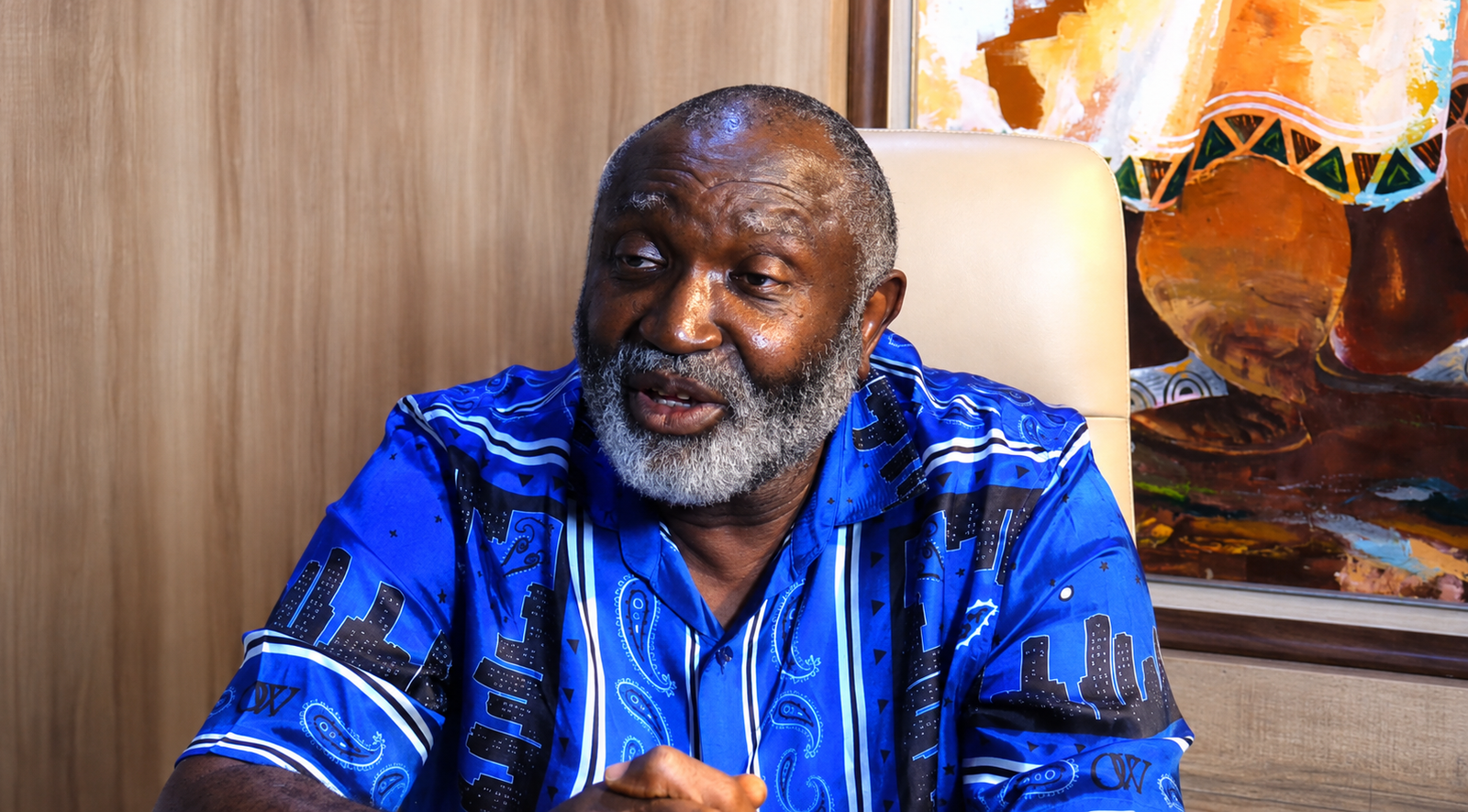
…Says ‘we have no business there’ after 50 years of political marginalisation
Prominent lawyer and Senior Advocate of Nigeria, Chief Godwin Obla, has renewed his call for the Idoma people to exit Benue State, declaring that they have “no business” remaining in a political arrangement in which, according to him, they have been marginalised for about 50 years.
Obla made the declaration during an exclusive interview on Encounter on Idoma Television, where he spoke extensively on the political future of the Idoma and Igede people, the agitation for Apa State and ongoing discussions around regionalism in Nigeria.
The former Chairman of Otukpo Local Government Area argued that developments over the years had demonstrated that the Idoma people were not treated as equal partners in the Benue political arrangement.
Asked what he meant by his earlier call for Idoma to exit Benue, Obla said his position was unambiguous.
“I mean, the English language is clear. Exit is depart, leave. We have no business there,” he said.
According to the senior lawyer, his position has been reinforced by ongoing conversations about restructuring and a possible return to regionalism.
He claimed that a proposal concerning a new Benue region did not include the Idoma and Igede areas, describing the development as further evidence that the two ethnic groups should pursue their own political future.
“We are clearly not wanted. Our names and our local governments are not in the proposal for the new Benue region. We are not there,” Obla said.
“We don’t want to force ourselves on anybody. And we don’t want to be where we are not wanted. We feel that we are more than competent to manage our affairs and, more than anything, manage our affairs more efficiently than it is presently being managed by people who have had the benefit of 50 years to manage a place and are still doing a game of try your luck.”
Drawing an analogy from the biblical account of the Israelites’ departure from Egypt, Obla said the long-running demand for political self-determination by the Idoma would eventually become a reality.
“We have been saying it: ‘Let my people go.’ Someday, that refrain will cease to be a refrain; it will become a reality. That day is coming. We are looking forward to that day,” he said.
Obla further rejected the suggestion that the Idoma had been part of a mutually beneficial political arrangement in Benue State since the creation of the state.
According to him, five decades without an Idoma occupying the governorship position demonstrated the political imbalance he was referring to.
“There’s no Benue arrangement, because any Benue arrangement assumes that the Idoma people are part of the arrangement. We’ve never been part of any arrangement,” he said.
“In 50 years, we have not had the benefit of aspiring to leadership, and you say we are part of an arrangement? We’re not.
“If you are with somebody for 50 years and they say, ‘Oh no, you cannot aspire to this position,’ and even the former ones that they used to give you have now been appropriated and taken away from you, are you part of that arrangement or are you not? You are not.”
The senior lawyer said he was prepared to speak openly about the situation irrespective of political considerations.
“A lot of people want to be politically correct, so they can’t say what I’m saying. I have decided I do not want to be politically correct. I want to be Idoma correct, not politically correct,” he declared.
On where the Idoma people would go if they exited Benue, Obla said the agitation had gone beyond the creation of Apa State, pointing to the possibility of an Idoma-Igede region should Nigeria eventually return to regional government.
He, however, maintained that Apa State remained the fallback option if the regional arrangement failed.
“It’s beyond that. You see, we’re going towards the region now. So if the region doesn’t work, the fallback option is the state. And the state is the Apa State — that is the Idoma-speaking area and the Igede-speaking area constituting their own state,” he said.
“That is what we want. That is how it will end up. It is not a matter of choice. Domination and oppression cannot continue indefinitely.”
Obla expressed confidence that even if the present generation did not witness the political separation he envisaged, it would eventually happen.
“We may not be around, but one of these things will manifest. It will surely happen,” he said.
The SAN also reflected on the failure of previous generations of Idoma political leaders to secure a separate state despite wielding considerable influence at different periods in Nigeria’s history.
He recalled a period when three Idoma sons held governorship positions simultaneously, mentioning Chris Garuba, David Mark and Lawrence Onoja, and questioned why such political influence did not translate into the creation of a state for the Idoma people.
“At one time, when Nigeria had 19 states, three of the governors were Idoma people — Chris Garuba, David Mark, Lawrence Onoja. I don’t know what happened. They couldn’t get a state,” he said.
Obla said his own generation came behind those political heavyweights and remained heavily dependent on them, limiting its ability to chart an independent political course.
He also cited the period when David Mark served as Senate President for eight years, saying many younger political figures remained “foot soldiers” without sufficient influence to challenge the older generation.
“My generation was like an offshoot of that generation who came behind. We were contaminated too by that generation. So we did not achieve much because we were still dependent on that generation,” he said.
“A lot of us too wanted to survive, so we couldn’t disagree with that generation. Only a few renegades like myself disengaged.”
Obla said he eventually broke away politically in May 2007 and decided to chart an independent course.
“I was the renegade. I left because I couldn’t take it. In May 2007, I disengaged completely and charted my path for myself,” he said.








Gov Alia denied me house, annual medical checks – Ortom

Ebola: Avoid kisses, hugs, handshakes, medical expert warns Nigerians

I’m waiting for Obi, Atiku to call me for alliance — YPP candidate, Agada

Stop making empty promises, present workable plans — Agada tells Tinubu, Atiku, Obi

Zamfara: Gov Lawal, 14 others sign peace accord ahead of 2027 elections

Peter Obi needs counselling — Onanuga

Mexico approves Reno Omokri’s appointment as Nigeria’s ambassador

How Mobile banking makes everyday transactions easier

Court dismisses El-Rufai’s N120m fundamental rights suit against DSS, EFCC, ICPC

Zamfara youths chase deputy governor during visit to bandit attack victims

BREAKING: Former Delta Governor Uduaghan dies at 71
