
Sport
Man United’s latest crisis: Why rebuilding the fallen giant remains difficult

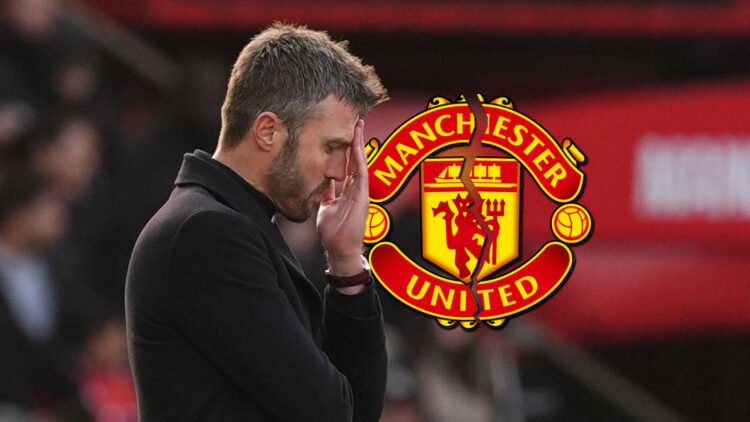
Manchester United’s latest defeat has renewed questions about the club’s direction, with the 3–0 home loss to Bournemouth exposing the problems facing manager Michael Carrick and a team struggling to rediscover its former authority.
United suffered the defeat at Old Trafford on Sunday, October 25, after conceding three goals to Rayan, Marcus Tavernier and Evanilson. The result left the club with seven points from eight Premier League matches, placing them 16th in the table and just one point above the relegation zone.
The performance intensified pressure on Carrick, whose team had gone eight matches without a victory in all competitions. However, the latest setback raises a bigger question: why has rebuilding one of English football’s most successful clubs proved so difficult?
A club still searching for stability
Manchester United’s struggles have continued across several managerial eras, with changes in the dugout failing to establish lasting consistency.
The club has repeatedly attempted to restore its former dominance through managerial appointments, squad changes and tactical adjustments. Yet sustained progress has remained elusive, raising questions about whether United have developed a clear long-term football strategy.
Carrick helped United finish third last season after taking over from Ruben Amorim. That improvement raised expectations, but the team’s current struggles have put the manager under intense pressure.
The contrast between last season’s progress and the present campaign highlights the difficulty of maintaining momentum at a club where poor results quickly trigger scrutiny of the manager, players and executives.
Changing managers may offer a short-term response, but it cannot automatically resolve deeper problems involving recruitment, squad balance, tactics and the club’s football structure.
Recruitment and the cost of rebuilding
Recruitment remains central to United’s rebuilding challenge.
The club has spent heavily on players over several transfer windows, yet its results have not consistently reflected that investment. The latest defeat also renewed comparisons with Bournemouth, whose recruitment has helped them assemble a competitive team without operating on the same financial scale as United. <Cite refs={[“turn121217news4″,”turn121217search0”]}/>
United’s challenge is not simply to sign expensive players. The club must identify footballers who fit a clear tactical plan, address weaknesses in the squad and contribute consistently over several seasons.
Recruitment becomes more complicated when managerial changes lead to different tactical demands. Players brought in for one system may struggle when a new coach introduces different roles or priorities.
A sustainable rebuilding project therefore requires cooperation between the manager, recruitment staff and club leadership. Without a shared vision, transfer spending can produce a collection of talented individuals rather than a balanced, cohesive team.
Tactical questions and dressing-room pressure
The defeat to Bournemouth also exposed concerns about United’s organisation and ability to respond when opponents apply pressure.
Bournemouth scored twice before half-time, taking advantage of defensive errors and poor coordination. Evanilson added a third in the 71st minute after goalkeeper Senne Lammens misjudged a long ball and left his goal exposed. United struggled to turn possession into clear opportunities.
The decision to leave captain Bruno Fernandes on the bench added another dimension to the debate.
Fernandes had publicly questioned United’s tactics after their 4–1 Champions League defeat to Como. Carrick insisted that his decision to omit the midfielder against Bournemouth was based purely on football considerations. Fernandes remained an unused substitute as United suffered another defeat.
The episode illustrates the pressure surrounding selection and tactical decisions at a club seeking immediate improvement. However, the defeat cannot be attributed to one selection decision alone. United’s defensive mistakes, lack of attacking threat and inability to recover from setbacks point to broader team problems.
The pressure to restore United’s identity
Manchester United’s history creates expectations that few clubs face on the same scale.
Supporters expect the team to compete for major trophies, play with intensity and demonstrate the determination associated with the club’s most successful sides. When performances fall short, frustration quickly spreads beyond the manager to the players and those responsible for running the club.
During the Bournemouth defeat, supporters voiced their anger at the team’s performance, while chants in support of Carrick suggested that some fans continued to back the manager despite the poor results.
Restoring that connection requires more than promises of improvement. Players must produce consistent performances, recruitment must address weaknesses, and the club’s leadership must communicate a credible plan.
United also need to distinguish between their historical reputation and their current competitive position. Past success can inspire a rebuilding effort, but it cannot substitute for sound decisions and consistent results on the pitch.
What must change
United’s immediate priority is to arrest their poor run and move away from the lower reaches of the Premier League table. Beyond that, the club faces several connected challenges.
First, the football leadership must establish a clear playing philosophy and recruit players suited to it. Second, the squad must improve its defensive organisation and ability to create chances. Third, the club must decide how to balance short-term results with the longer process of building a team capable of competing consistently.
The future of Carrick is another pressing question following the Bournemouth defeat. Reports indicated that United’s hierarchy was considering his position, although the manager said he would continue working as normal.
Replacing the manager could change the immediate direction of the team, but the appointment alone would not guarantee success. Whoever leads United must work within a coherent structure that supports recruitment, player development and tactical consistency.
The way forward
Manchester United’s latest crisis is about more than one defeat or the future of one manager. It reflects the difficulty of translating the club’s resources and history into sustained performance.
The Bournemouth result exposed familiar weaknesses: defensive errors, limited attacking effectiveness and growing uncertainty surrounding the team’s direction. The club must address those issues while restoring confidence among its players and supporters.
For United, rebuilding will require patience, accountability and a consistent football strategy. Until those elements produce better performances and results, questions about the club’s decline are likely to continue.
The challenge is no longer simply to return to the top. It is to establish a reliable foundation that allows Manchester United to remain competitive once they get there.












BREAKING: Court orders El-Rufai to defend Himself in phone-tapping trial

2027: Those around you will ruin your chances – Ayodele tells Tinubu

Davido’s aide offers cash reward for phone stolen at Zlatan’s wedding

I feel for Tinubu — Rufai Oseni reacts to president’s Kaduna speech

Man United’s latest crisis: Why rebuilding the fallen giant remains difficult

Ballon d’Or 2026: Has Harry Kane finally done enough to end England’s long wait

Apa/Agatu 2027: Fear in Ojotu Ojema’s camp as ex-lawmaker, Godday Samuel endorses Apochi

Senator Abba Moro sympathizes with Ngozi Okonjo-Iweala over mother’s death

Woman remanded for allegedly cutting husband’s manhood in Niger

Govt that cannot protect lives does not deserve power — Kwankwaso

‘I saw a dead vulture on my bed after winning election’ — Okpebholo
