
news
After 20 years, FG moves to give Nigerian shipowners up to $25m each under CVFF

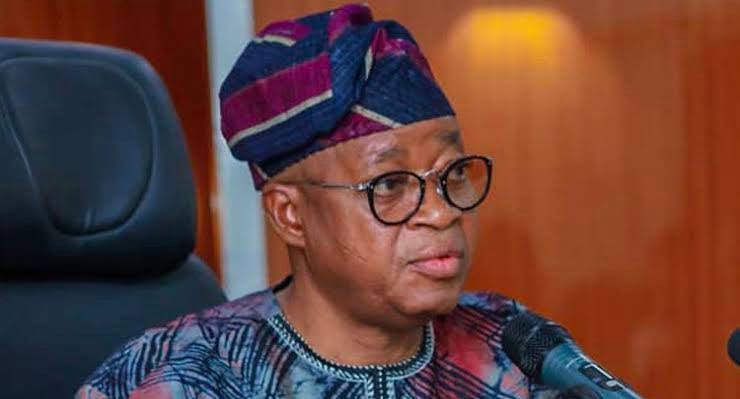
The Federal Government will provide qualified Nigerian shipowners with up to $25 million each under the Cabotage Vessel Financing Fund (CVFF), Minister of Marine and Blue Economy Adegboyega Oyetola has said.
Oyetola said the long-awaited disbursement of the fund would soon begin, more than two decades after the CVFF was established.
According to the minister, the initiative could strengthen indigenous shipping, reduce foreign dominance in Nigeria’s maritime sector and create more than 30,000 direct and indirect jobs.
Oyetola disclosed this on Monday in a post on his X handle. He described the planned disbursement as a major step towards developing a stronger Nigerian-owned shipping industry.
“After more than 20 years, we are finally moving to unlock the Cabotage Vessel Financing Fund (CVFF) for Nigerian shipowners,” he said.
The minister explained that successful applicants could access up to $25 million to acquire vessels, subject to the required assessment and approval process.
He said affordable, long-term financing remains one of the major challenges limiting the growth of Nigerian-owned shipping companies.
Oyetola added that low-interest financing would enable shipowners to acquire modern vessels, expand their fleets and compete for coastal and offshore contracts currently dominated by foreign operators.
He said the government wants more Nigerian-owned vessels to operate on the country’s waters and ensure that local businesses and citizens benefit more from the maritime economy.
92 Applications Received
Oyetola said he had directed the Nigerian Maritime Administration and Safety Agency (NIMASA) to accelerate the disbursement process.
He said NIMASA had received 92 applications so far. The agency has forwarded 20 applications to the 12 approved Primary Lending Institutions (PLIs), while one application has undergone review and moved forward for approval.
The minister said the government increased the number of approved banks from five to 12 to speed up access to the fund. It also launched the CVFF Application Portal to make the process more transparent and accessible.
Fund Expected to Create 30,000 Jobs
Oyetola said the impact of the CVFF would extend beyond vessel acquisition.
He explained that a stronger indigenous fleet could increase activity in shipyards, marine engineering, vessel maintenance, maritime logistics and other supporting industries.
According to him, the initiative could create more than 30,000 direct and indirect jobs while strengthening Nigeria’s ship-owning and shipbuilding ecosystem.
He said the programme forms part of the Tinubu administration’s efforts to unlock Nigeria’s Blue Economy and increase indigenous participation in the maritime sector.
Government Highlights Seafarer Training
The minister also highlighted efforts to develop the workforce required to support the sector.
He said 222 seafarers had received free professional training, while 333 cadets had completed academic training and obtained degrees.
Another 135 cadets under the Nigerian Seafarers Development Programme (NSDP) had obtained Certificates of Competency, Oyetola added.
He further disclosed that 7,059 Nigerian seafarers had secured placement onboard vessels to gain sea-time experience.
Oyetola said vessel financing alone would not be enough to build a strong indigenous maritime industry.
He stressed the need to combine financing with skills development, local enterprise and strategic investment to ensure Nigerians own, operate and benefit from activities in the country’s maritime space.
The CVFF was established under the Coastal and Inland Shipping (Cabotage) Act of 2003 to help Nigerian shipping companies acquire vessels and build indigenous capacity. However, the fund has remained largely undisbursed for more than two decades.
The Federal Government launched the CVFF application portal in January 2026, with successful applicants eligible to access up to $25 million in financing. NIMASA subsequently opened the application process to interested operators.
The latest figure of 92 applications represents an increase from the more than 60 applications NIMASA reported receiving in April, four months after the portal opened.












2027: Idoma group endorses Alia for second term, cites projects in Benue South

Benue Deputy Speaker Backs Idoma governorship, says Zone Should Produce Alia’s Successor in 2031

Idoma Hall of Fame to honour more Idoma icons every two years — Advisory Board Chairman, Okwoche

Miss Nigeria 1963, Alice Adepe Inducted into Idoma Hall of Fame

Idoma contributions to Nigeria must be celebrated – Wike declares at Idoma Hall of Fame

Grace Ogwuche, first female minister from Idoma land inducted into Hall of Fame

Alia’s govtech honour: A recognition that did not come as a surprise

Idoma Hall of Fame to honour military icons from Idoma land

Fidelity Bank, Foremost Radiology Champion Early Breast Cancer Detection

Idoma Hall of Fame to honour 14 distinguished Idoma women

Idoma Hall Of Fame will preserve history, inspire future leaders – AVM Morgan
