
Nigeria News
FG moves to evacuate Nigerians over renewed xenophobic attacks in South Africa

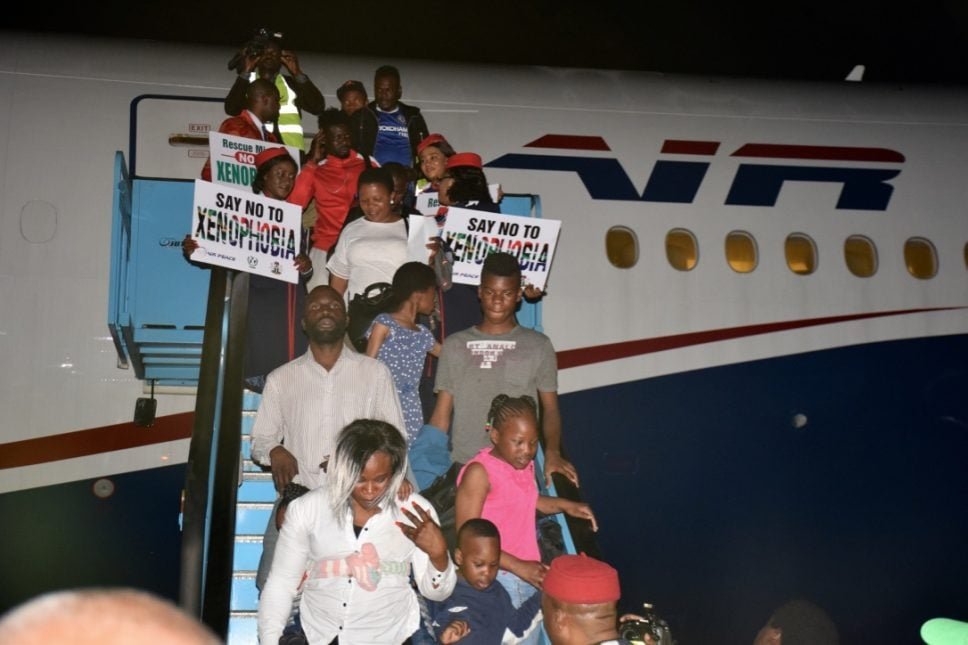
Nigeria has announced plans to evacuate its nationals from South Africa following a fresh wave of xenophobic unrest in the country.
The Minister of Foreign Affairs, Bianca Odumegwu-Ojukwu, revealed in a statement on Sunday that the evacuation exercise will be optional for affected citizens.
“…arrangements are currently underway to collate details of Nigerians in South Africa for voluntary repatriation flights for those seeking assistance to return home,” the minister wrote.
She disclosed that about 130 Nigerians have so far signified interest in returning to the country.
“So far, 130 applicants have duly registered for the exercise with our mission in S.A, but this figure is expected to rise. Nigerian associations in South Africa are also assisting our mission in this regard,” the minister wrote.
According to reports by Premium Times, violent demonstrations targeting African migrants, including Nigerians, have resurfaced in parts of South Africa.
Clips circulating online show groups attacking Black foreigners with sticks, ordering them to leave the country.
There are also allegations that some security personnel took part in the assaults.
In April, two Nigerians reportedly lost their lives following encounters with personnel of the South African National Defence Force in Port Elizabeth. One victim, Ekpenyong Andrew, was arrested and later found dead in Pretoria, while the other, Amaramiro Emmanuel, succumbed to injuries sustained during an attack. Their deaths came amid rising anti-foreigner tensions.
Mrs Odumegwu-Ojukwu condemned the killings, describing them as “condemnable” and “unacceptable,” while warning of intelligence suggesting renewed protests between May 4 and 8.
She added that the Ministry is closely monitoring developments, which informed the decision to summon South Africa’s High Commissioner to Nigeria, Thamsanqa Mseleku.
“The Nigerian High Commission and the Consulate are in constant communication with relevant host authorities to ensure that the exposure of our nationals to the current tensions is minimised amidst ongoing Consultations with SA’s highest authorities.
“Nigerian lives and businesses in SA must not continue to be put at risk, and we remain committed to working with South Africa to explore ways to put an end to this xenophobic pattern.
It has become a recurring wave, especially before elections in South Africa, and anti-foreigner opposition parties leverage it to garner votes.
“Nigeria recently signed a memorandum of understanding with South Africa on early warning to protect citizens of both countries, especially in times such as these,” she noted.
Earlier, the minister had also summoned the South African envoy to address what she described as the “mistreatment of Nigerians and their businesses.”
The Ministry of Foreign Affairs said the meeting was intended to “convey the Nigerian Government’s profound concern” over the violence, warning that the situation could strain the long-standing relationship between both countries.
Other African nations have taken similar diplomatic steps. Ghana, for instance, recently invited South Africa’s envoy, Thando Dalamba, over reports of “acts of intimidation and harassment” against its citizens.
During the engagement, Ghana formally protested the recent “xenophobic incidents” affecting foreigners, including its nationals.



Instagram is for girls – Elon Musk again

Sowore challenges DSS DG to honour subpoena, appear in court

Oyo govt condemns abduction of corps members, seeks safe release

WAEC appoints Amos Dangut as registrar, CEO
PHOTOS: Joke Silva, sons, dignitaries attend Olu Jacobs’ funeral mass

How I killed my girlfriend after HIV dispute — Suspect

66th Independence: Tinubu worsened Nigeria’s condition to stage four cancer — Momodu

2027: Tinubu unpopular but may win re-election — Economist

2027: ACF calls for responsible voting, warns against political violence

Woman appeals for rescue of daughter, 18 other abducted NYSC members

After over 20 years, Messi set for Argentina farewell appearance on Sunday
